
Equipment · Maharashtra
Protected cultivation equipment for Nagpur farms
By Editorial Team, Kryzen Biotech · Updated 13 November 2026
Nagpur needs protected-cultivation equipment that can handle a very hot, dry April–May, four humid months from July to October, and concentrated monsoon rain. Polyhouse Constructions supplies complete material kits and individual equipment from its Satara factory; erection is carried out by Kryzen Biotech’s construction team.
- Pad cooling
- Works: ~32°C inside
- Humid months
- 4
- Shading need
- High
- Delivery
- ~4 days
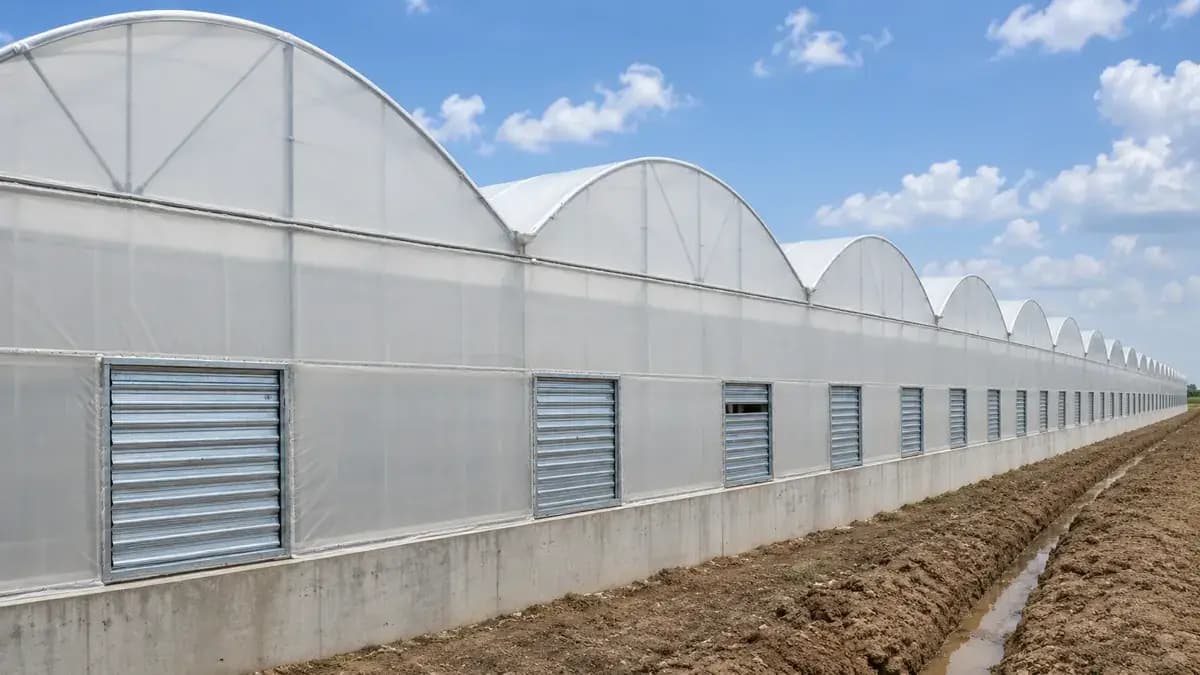
Start with Nagpur’s real equipment loads
A naturally ventilated polyhouse or nethouse here must do more than provide shade. April has the strongest sun at 7 kWh/m²/day and an average afternoon high of 42.1°C; May rises to 44.1°C, with only 25% humidity. Shading, adequate ventilation and a crop-appropriate cooling decision are therefore central to the specification, not later add-ons.
The monsoon changes the priority. Nagpur receives about 1,234 mm annually, including about 361 mm in July, 310 mm in August and 200 mm in September. Humidity is 82% in July, 87% in August and 85% in September. A house needs dependable drainage and air movement through this period, while curtains, insect net and openings need regular attention.
Cold-night protection is not the main equipment requirement in this climate: the coolest average night is 11.7°C in December. The practical focus is heat removal before the rains, then keeping humid air moving without compromising insect exclusion. The table below sets out the priorities for these conditions.
- For April and May: reflective or double-layer shading, ventilation and, where selected, fan-and-pad cooling.
- For July to September: GI gutters, gutter funnels, side skirting apron, sound film tension and air circulation.
- For October to February: a nethouse is suited to the stated October–February nethouse season; check nets, clamps and fixing springs before the next hot period.
| Need | For Nagpur | Why |
|---|---|---|
| Cooling | Exhaust fans + cellulose pads | Pads bring 44°C to ~32°C in May |
| Air movement | Air circulation fans | Humid from July to October |
| Shading | Aluminium or double-layer net | Sun peaks at 7 kWh/m² in April |
| Rain | Wide gutters, funnels, skirting apron | July: ~361 mm |
| Nights | No extra need | — |
Should a Nagpur farm choose fan-and-pad cooling?
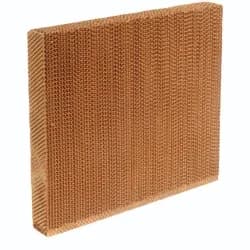
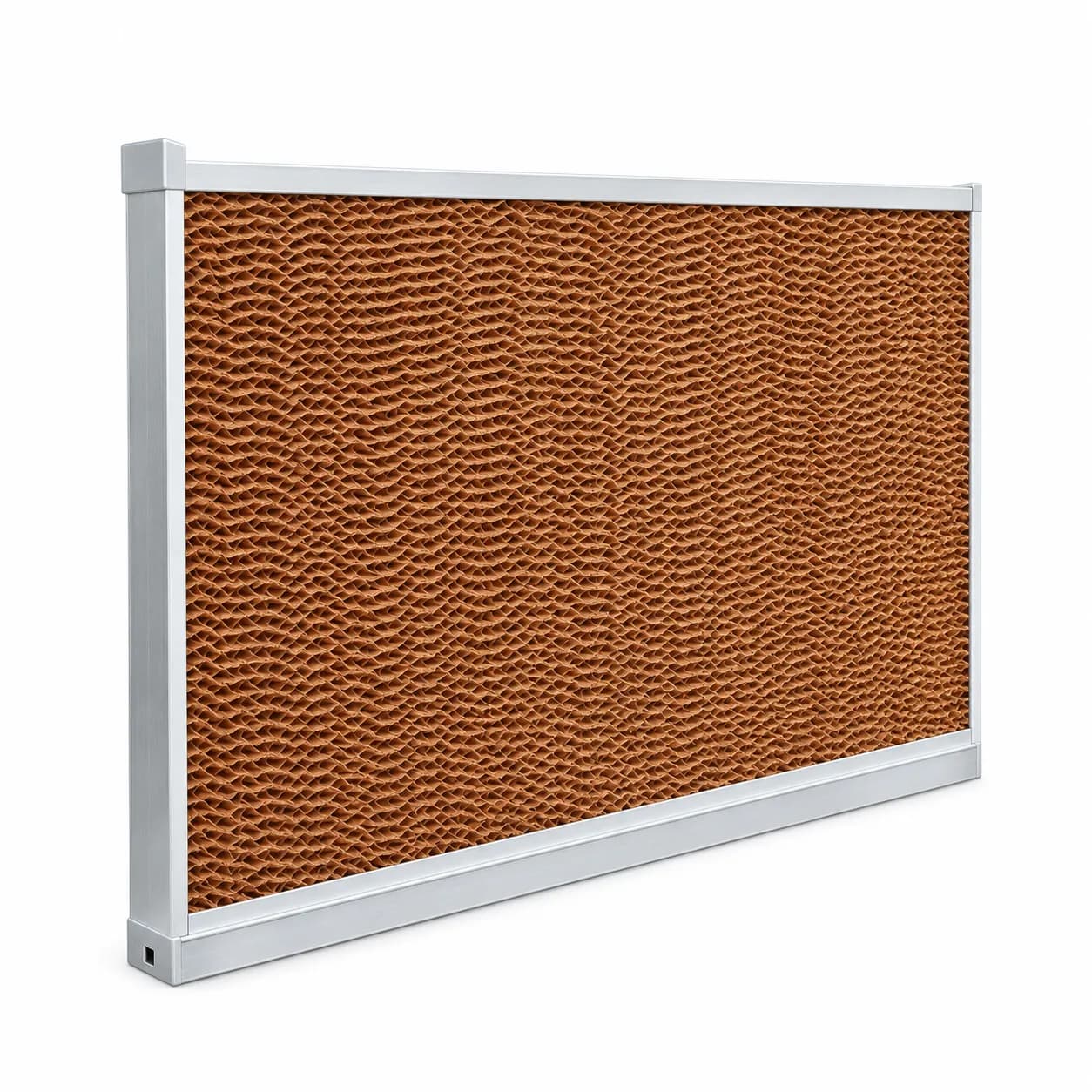
For a crop and production plan that needs meaningful temperature reduction during the May peak, fan-and-pad cooling is technically relevant in Nagpur. The supplied sizing guidance indicates that pads can bring 44°C conditions to about 32°C in May. This is a substantial reduction, whereas shade alone does not actively extract hot air from a closed house.
Whether it pays for a particular farm is a crop-and-marketing decision, rather than a claim that can be made from temperature alone. First match the cooling requirement to the crop calendar, likely market window, water and power arrangements, and the size of the planned house. District mandi records show, for example, tomato’s highest recorded month was November at ₹2,948/q and cucumber’s was January at ₹2,953/q; these are historical modal-price observations, not a price assurance.
For scale context, a 52 × 76 m fan-and-pad house is 3,952 m² and uses 12 exhaust fans and 82 cellulose pads in the cited sizing figure. Its listed material figure, including GST, is ₹32,48,775. A design should be prepared for the actual structure and crop instead of applying this example as a universal cost.
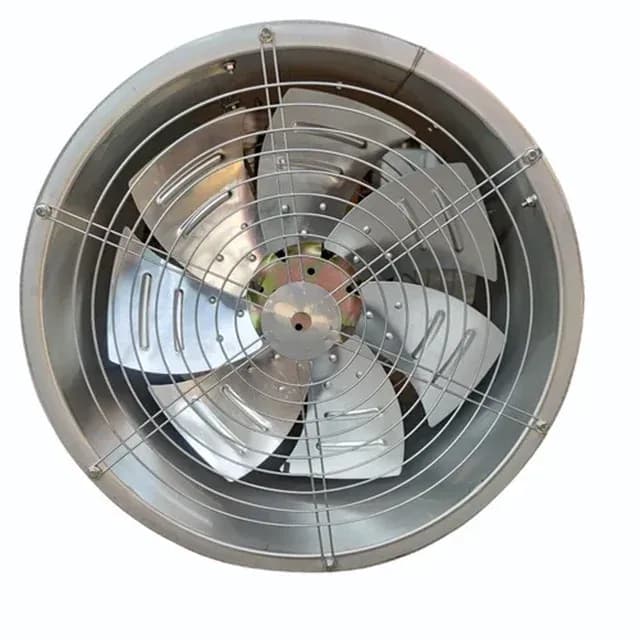
- Exhaust Fan: ₹22,700 per piece + GST.
- Cellulose Pad (600X150X1800): ₹2,616 per piece + GST.
- Aluminium Pad Frame (150 mm): ₹815 per metre + GST.
- Air Circulation Fan: ₹8,999 per piece + GST; useful as an optional upgrade in NVPH or fan-and-pad houses.
Covering and air movement for the hot, humid cycle
For an NVPH, combine the covering decision with side ventilation rather than treating them separately. A 250-micron white diffused UV-stabilised polyfilm can be used on NVPH and fan-and-pad systems. In April and May, when sun reaches 7 kWh/m²/day, an aluminium shade net is the reflective shade option; white 50% shade net is another listed option. The right choice depends on the system and desired shade, not simply on the calendar month.
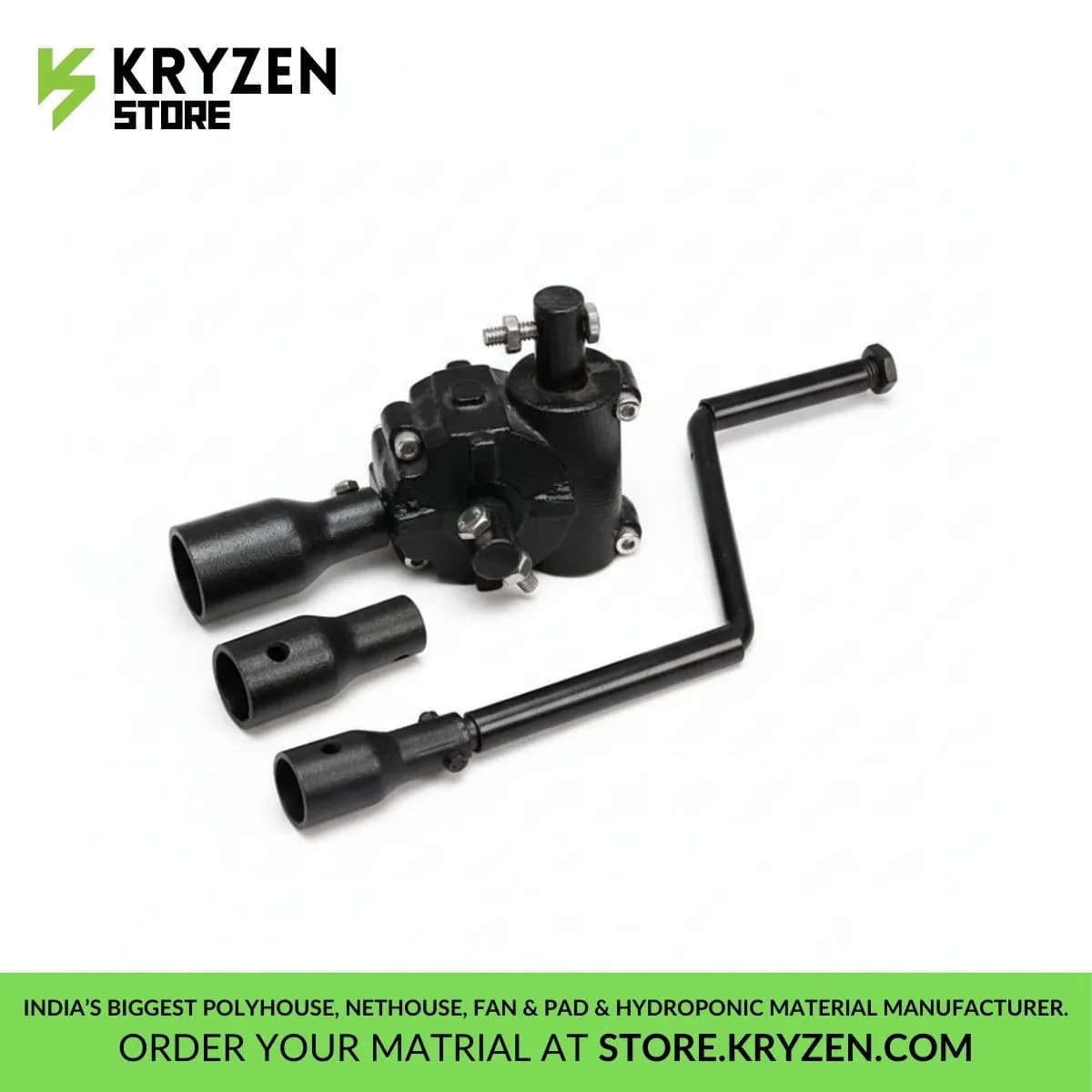
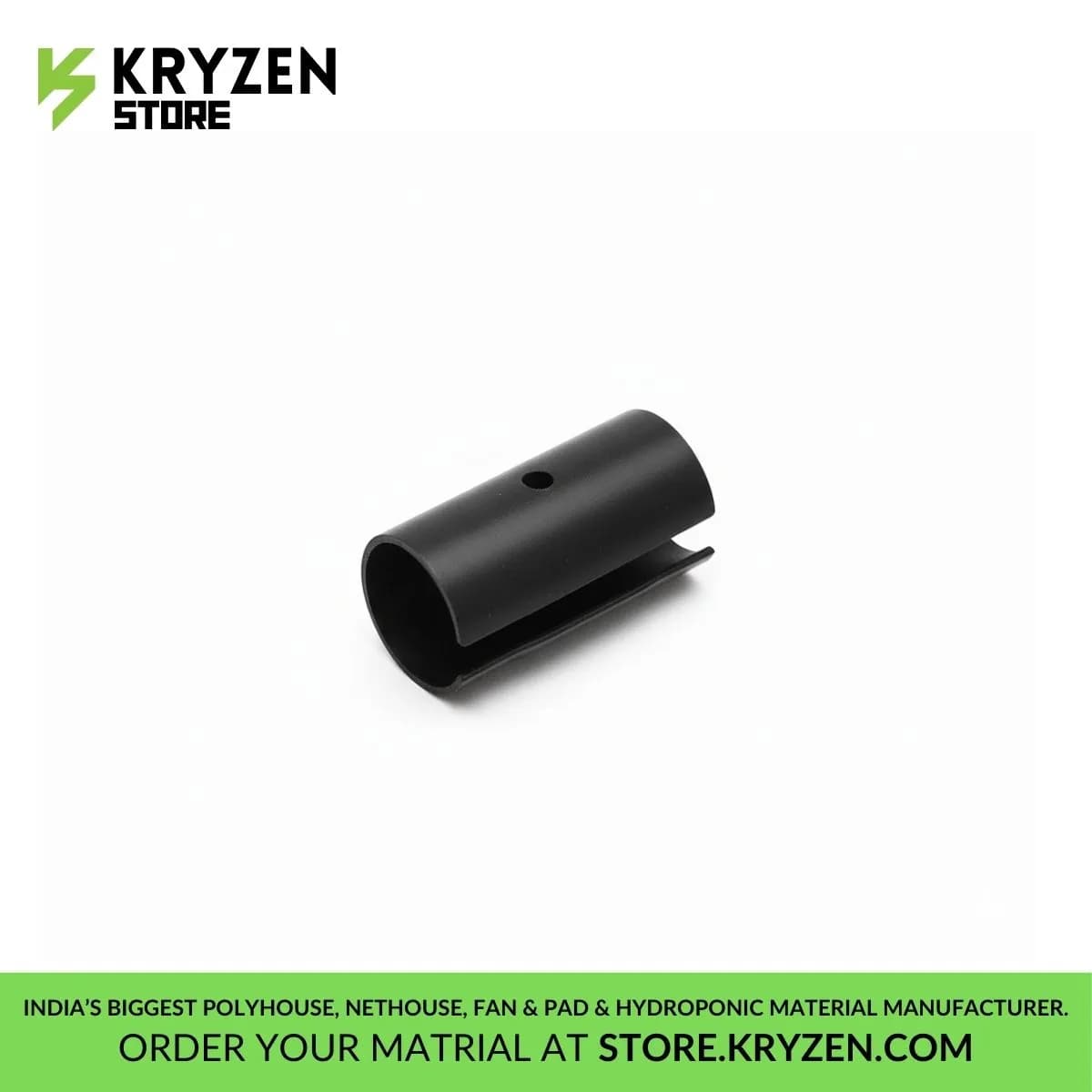
When humidity climbs from July through October, warm, still air inside a covered house can become a management issue. Use air circulation fans where specified, maintain the side insect net, and operate side curtains as crop conditions permit. For NVPH, the manual gear roll-up curtain unit, curtain pipe and curtain clamp form the practical operating hardware for this task.
- Polyfilm White Diffused 250 Micron (4.5 m): ₹254 per metre + GST.
- White Shade Net 50%: ₹27 per metre + GST.
- Aluminium Shade Net (4 m): ₹315 per metre + GST.
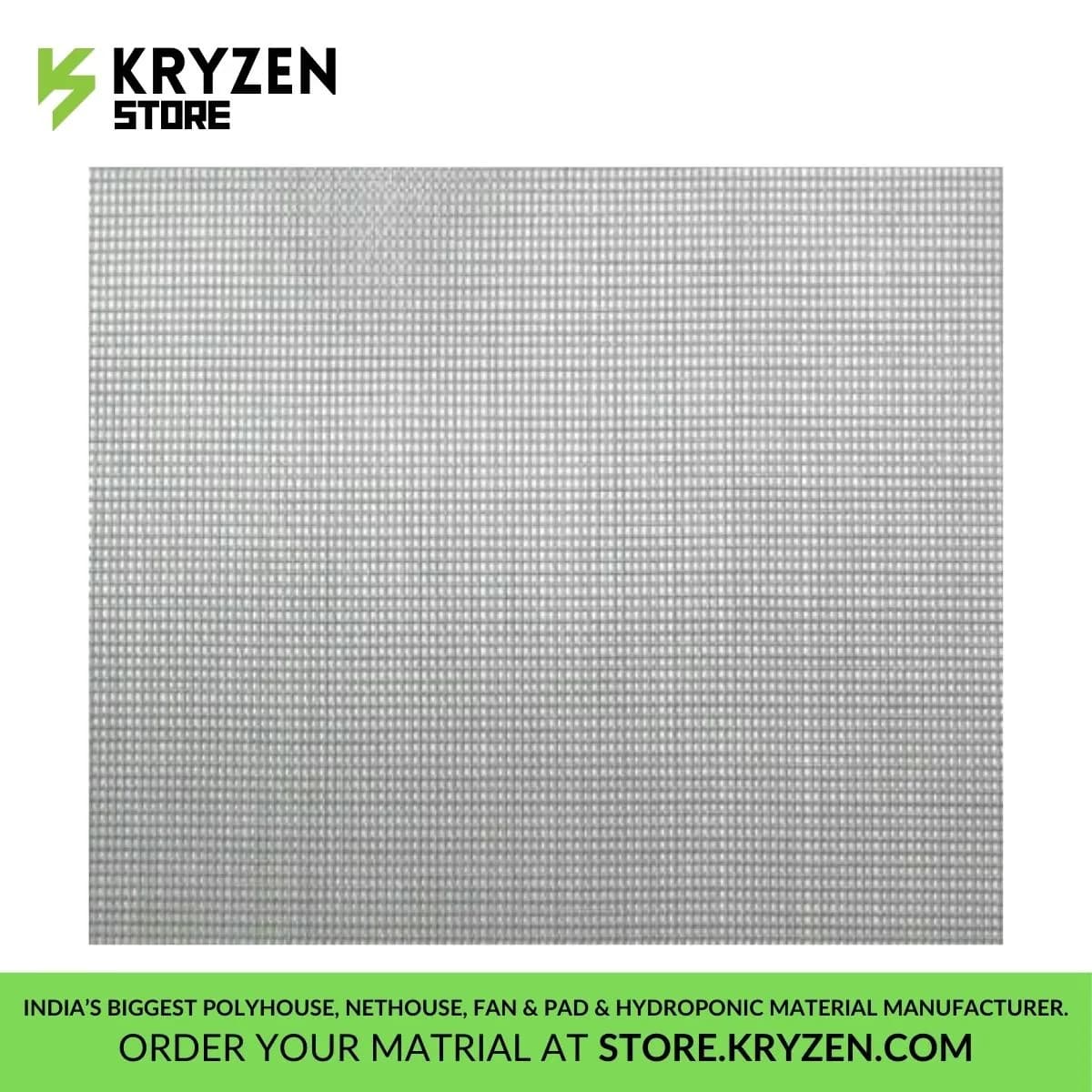
- Manual Gear Roll Up Curtain Unit: ₹1,050 per piece + GST; Side Insect Net (5.2 m): ₹221 per metre + GST.
Build rain handling into the material list
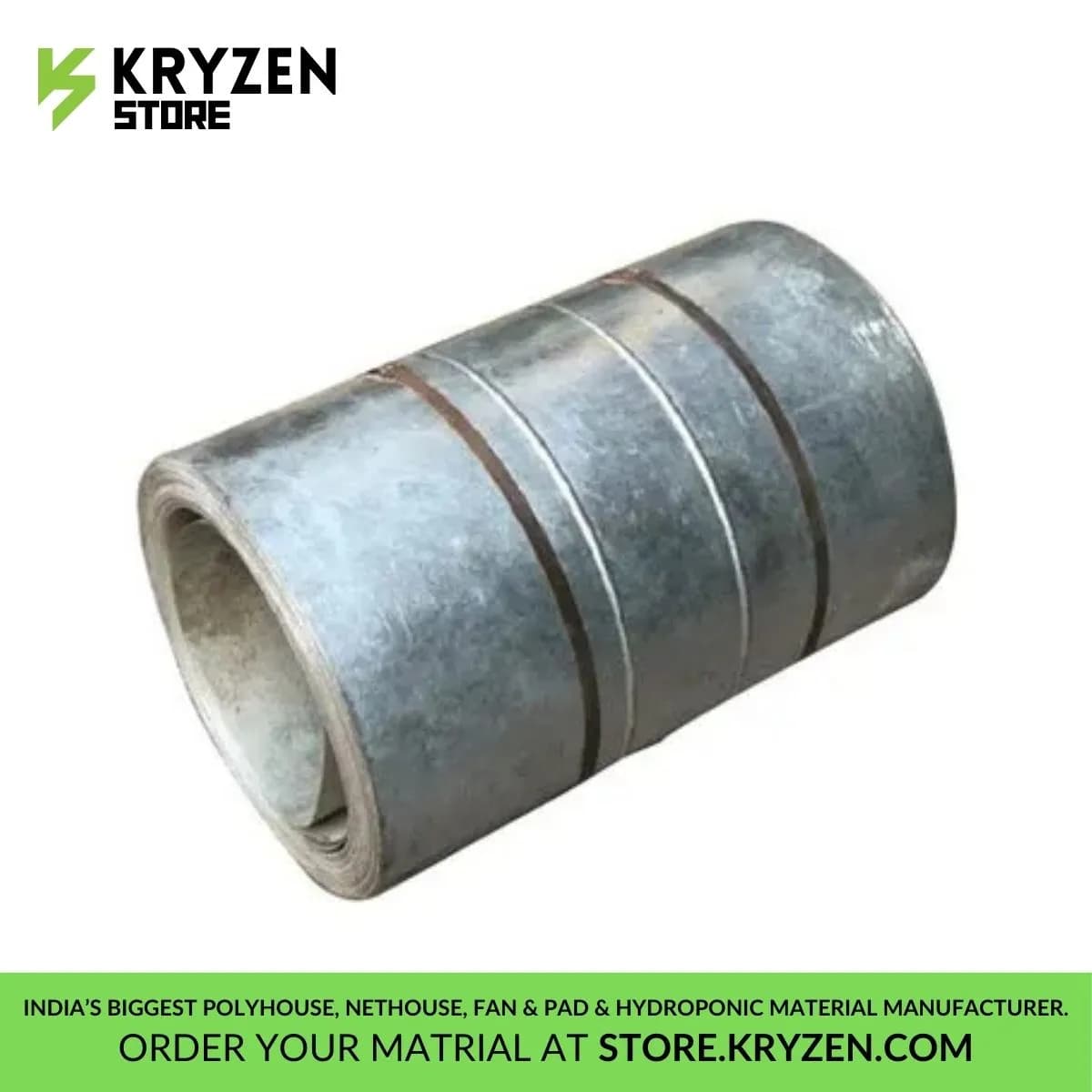
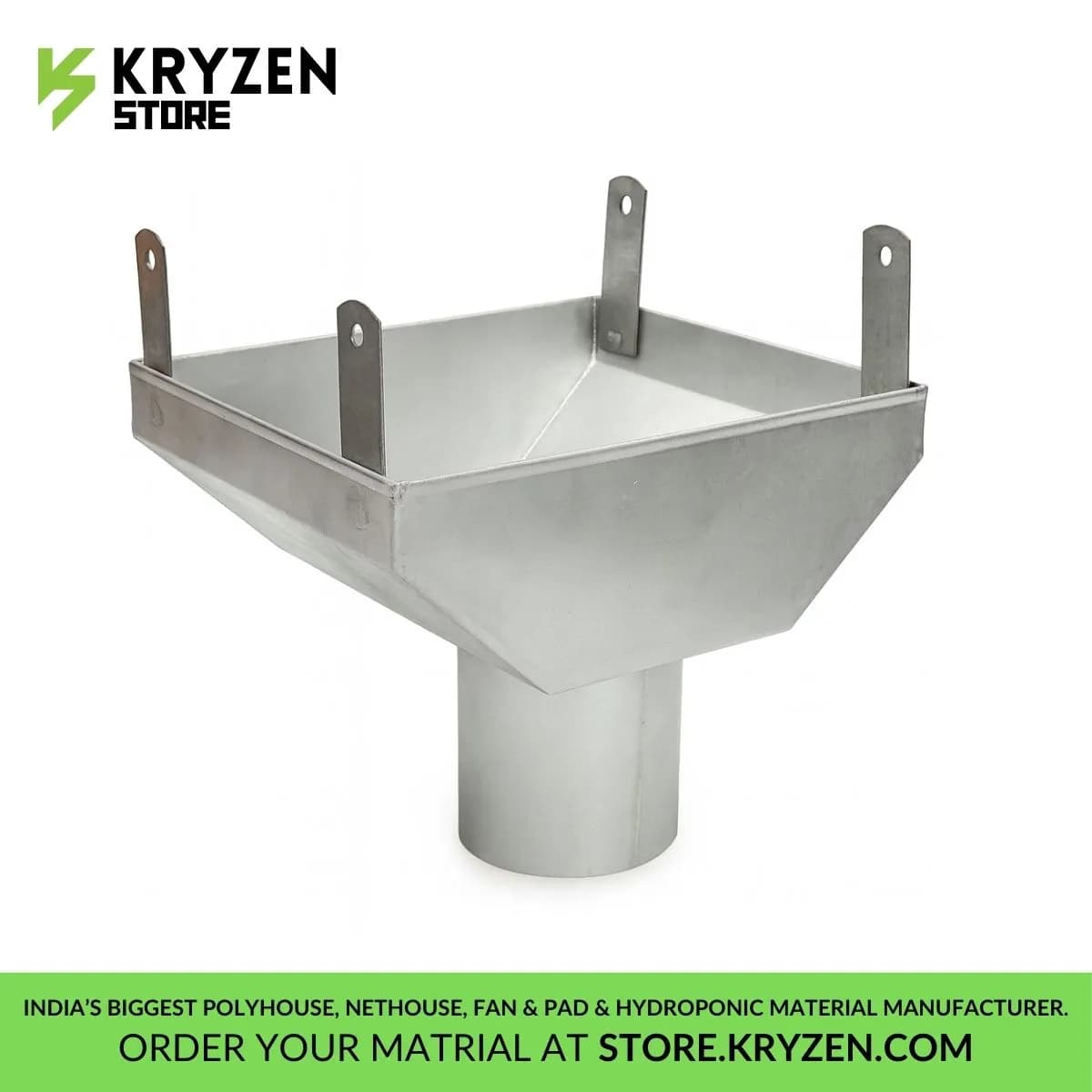
July’s roughly 361 mm of rain makes water collection and discharge equipment a basic part of a covered-house order. For NVPH and fan-and-pad structures, specify the GI gutter sheet and gutter funnels with the structure. The side skirting apron is used across NVPH, fan-and-pad, square nethouse and curved nethouse systems, and should be checked again before the wet season.
Do not wait for a leak or overflowing gutter to order these small components. Confirm that every item and quantity is present in the kit drawing, including fastening material. At the end of the rains, inspect the apron position, gutter cleanliness and film tension before the drier production months begin.
- GI Gutter Sheet: ₹335 per metre + GST.
- Gutter Funnel: ₹1,350 per piece + GST.
- Side Skirting Apron (1.5 m): ₹64 per metre + GST.
- Aluminium Profile is ₹27 per metre + GST and GI Spring is ₹6 per metre + GST for securing covering material.

Choose the system around the crop window and market
Nagpur district market data can help a farmer frame a selling window, although it cannot guarantee a future price. Coriander leaves recorded their highest month in October at ₹7,249/q, methi in October at ₹6,876/q, tomato in November at ₹2,948/q, brinjal in December at ₹1,946/q and cucumber in January at ₹2,953/q. The data covers markets in Nagpur district over the last two years.
This supports planning harvest and protection together. A nethouse can be considered for the stated October–February nethouse season, while an NVPH adds polyfilm, side insect net and roll-up curtain capability. Fan-and-pad uses exhaust fans and cellulose pads; square and curved nethouses use different material combinations. Compare the system’s equipment list before choosing only on the initial structure type.
- Tomato: average modal price ₹2,019/q across 19 markets; lowest recorded month March at ₹753/q.
- Green chilli: average modal price ₹3,694/q across 20 markets; highest recorded month July at ₹5,414/q.
- Okra: average modal price ₹2,864/q across 19 markets; highest recorded month December at ₹3,888/q.
- These are Agmarknet daily-price records via data.gov.in, expressed per quintal.
| Crop | Markets | Average modal price | Highest month | Lowest month |
|---|---|---|---|---|
| Tomato | 19 | ₹2,019/q | Nov (₹2,948) | Mar (₹753) |
| Brinjal | 19 | ₹1,429/q | Dec (₹1,946) | Feb (₹813) |
| Green chilli | 20 | ₹3,694/q | Jul (₹5,414) | Dec (₹2,704) |
| Okra (bhindi) | 19 | ₹2,864/q | Dec (₹3,888) | Sep (₹1,892) |
| Coriander (leaves) | 19 | ₹3,875/q | Oct (₹7,249) | Feb (₹1,810) |
| Cabbage | 17 | ₹1,214/q | Aug (₹1,667) | Apr (₹630) |
| Cauliflower | 17 | ₹1,901/q | Jul (₹3,465) | Mar (₹894) |
| Spinach | 19 | ₹2,017/q | Oct (₹3,379) | Jan (₹746) |
| Cucumber | 16 | ₹1,962/q | Jan (₹2,953) | Aug (₹1,317) |
| Methi (fenugreek leaves) | 18 | ₹3,771/q | Oct (₹6,876) | Jan (₹1,024) |
A maintenance calendar that follows the weather
Maintenance is most effective when it is carried out before the load arrives. Before May, wash or replace cellulose pads, clean the pad gutter and filter, and check every exhaust-fan belt and shutter ahead of the 44°C peak. This is also the time to check shade material and the operation of curtains before heat and sun are at their highest.
Before July, clear gutters and funnels, re-seat the side skirting apron and check film tension. Through July–October, run air-circulation fans in the mornings, grease curtain gear units and inspect insect nets for tears. Once the wetter period is past, October–February is the time to tighten clamps and bolts, check GI springs in aluminium profiles, and arrange any replacement film or net before the next season.
- Keep a small record of fan, curtain and gutter checks so a worn part is identified before the season.
- Inspect net and film fixings after heavy-rain periods rather than only at crop change.
- Use replacement items that suit the existing system and drawing.
- 1
Before May
Wash or replace cellulose pads, clean the pad gutter and filter, and check every exhaust fan belt and shutter before the 44°C peak.
- 2
Before July
Clear gutters and funnels, re-seat the side skirting apron and check film tension; July brings about 361 mm.
- 3
July to October
Run air circulation fans in the mornings, keep curtain gear units greased and check insect net for tears; humid air brings fungal disease and pests.
- 4
October to February
Tighten clamps and bolts, check GI springs in the aluminium profiles, and order replacement film or net before the next season.
Material checks, written warranty and how supply works
Polyhouse Constructions is a manufacturer of protected-cultivation structures and material, and a venture of Kryzen Biotech Pvt Ltd. Material is manufactured and supplied from the factory at Degaon, on the Pune–Bangalore Highway in Tal. Wai, Satara; it is not a Nagpur office. Delivery to Nagpur is stated as 4 days after dispatch. Kryzen Biotech’s construction team handles construction and erection.
For the structure, ask for the engineering and quality documents along with the dispatch. GI pipes are ISI-marked branded steel from Tata, Jindal and JSW. Every part undergoes a 32-point QA checklist, and each dispatch has a lab test certificate; a technical data sheet is supplied for every product. The listed laboratory checks cover tensile strength, salt-spray corrosion resistance and chemical composition of the steel.
The manufacturing warranty is 15 years for the GI structure, 2.5 years for polyfilm and 3 years for shade and insect nets. These are material warranties, so keep the documentation, installation records and component details available for future service needs.
- Build a complete kit online to see every item, quantity and that week’s rate.
- Prices follow weekly GI and plastic rates and are updated every Friday.
- A 5% bulk discount applies on 10+ units of an item. Booking is with 5% advance and 95% before dispatch.

Tensile test
Strength of the GI pipe steel, by a third-party lab.
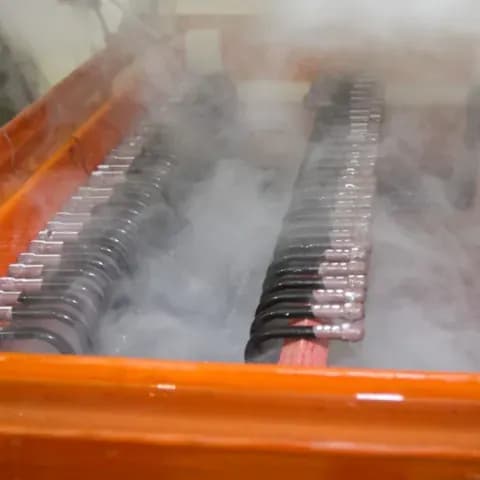
Salt spray test
Corrosion resistance; worth it in humid Nagpur.
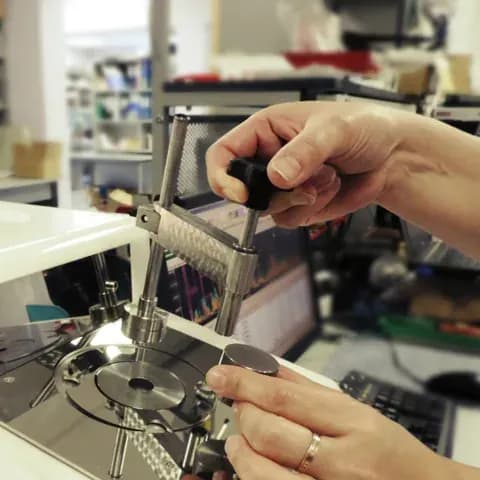
Chemical analysis
Spectrometer check of the steel composition.
| Part | Warranty |
|---|---|
| GI structure | 15 years |
| Polyfilm | 2.5 years |
| Shade and insect nets | 3 years |
Order a complete kit or replace only the part needed
A complete material kit can include GI structure, polyfilm, nets and fittings for an NVPH, fan-and-pad polyhouse, square nethouse or curved nethouse. Individual items are also available, which is useful when a Nagpur grower needs a replacement fan, pad, net, fitting, door or curtain component rather than a new structure.
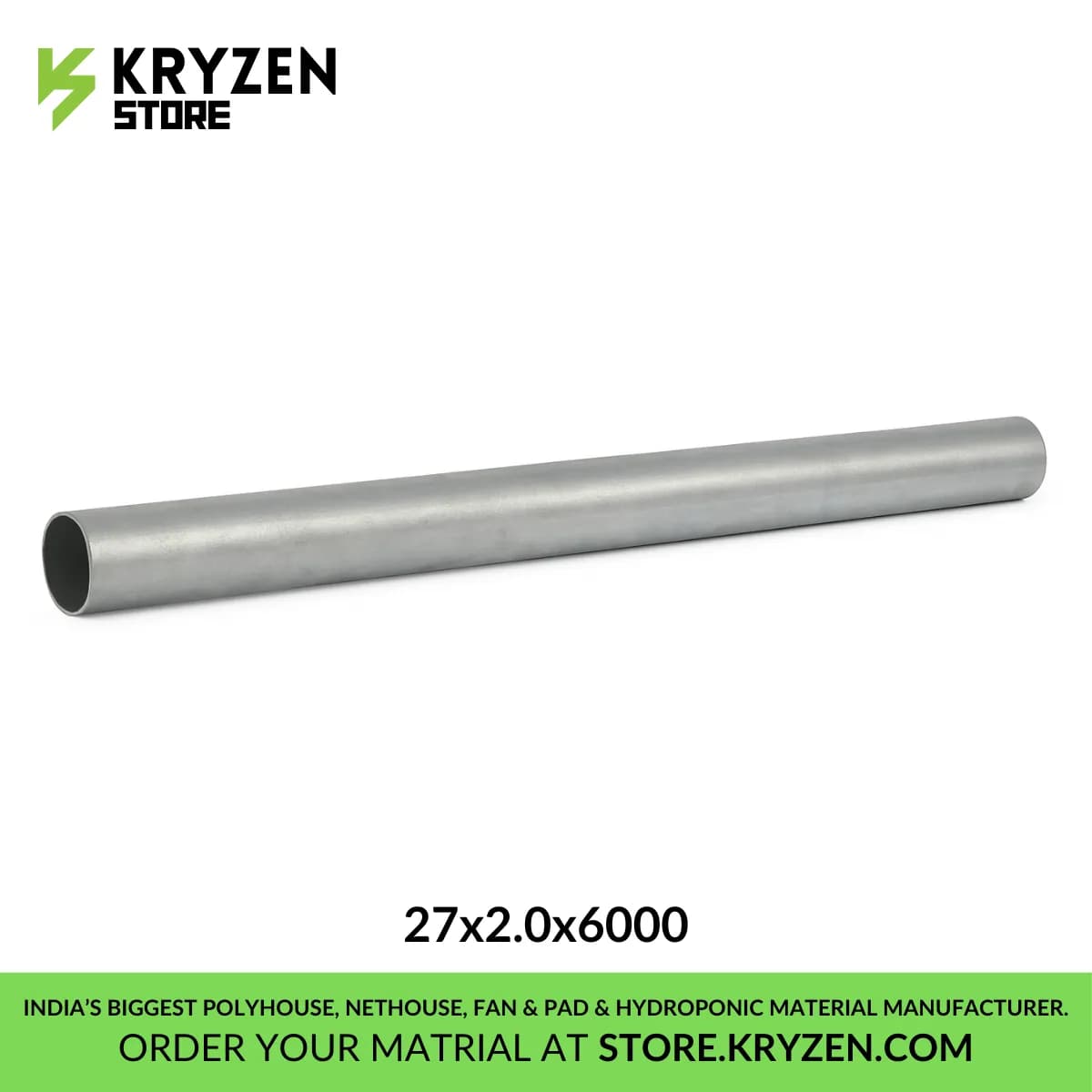
For example, an aluminium door is ₹3,250 per piece + GST, a fibre door is ₹2,050 per piece + GST, Clamps 60 mm Full are ₹17 per piece + GST and a Four Way Pipe Coupler (48 OD) is ₹130 per piece + GST. Check the system type, dimensions and quantity before ordering a spare, particularly for covering, curtain and fan-and-pad parts. Individual items are sold at the weekly rate for repairs and extensions.
- Order compatible replacement parts rather than substituting an unverified fitting.
- Retain the kit list and technical data sheet to identify a part accurately.
- Farmers around Savner, Ramtek, Umred, Sausar and Narkhed can use the same material-supply route from the Satara factory.
Need only a few items?
Every fan, pad, net and fitting is sold on its own at the weekly rate, for repairs and extensions.
Buy from India's biggest CEA manufacturing company
Choose your structure and size and get the complete material list, priced this week.
FAQs
Do I need fan-and-pad cooling for a polyhouse in Nagpur?
It is technically suitable where the crop needs cooling through May, when the average high reaches 44.1°C. The stated pad performance is about 32°C inside during May conditions, but whether it pays depends on the crop plan, market window, water, power and house size.
What equipment is most important before Nagpur’s monsoon?
Clear and check GI gutters and gutter funnels, re-seat the side skirting apron, and inspect film tension before July, which averages about 361 mm of rain. During July–October, maintain insect nets, curtain gear and air circulation because humidity is high.
Can I buy only replacement nets, fans or fittings?
Yes. Individual fans, pads, nets and fittings are sold separately at the weekly rate for repairs and extensions. Confirm the existing system, part dimensions and quantity before ordering.
How quickly can material reach Nagpur?
The stated delivery time is 4 days after dispatch from the Satara factory. Polyhouse Constructions supplies material from Degaon, Tal. Wai, Satara; it does not have a Nagpur office, and erection is done by Kryzen Biotech’s construction team.
What warranty and quality documents come with the material?
The GI structure has a 15-year manufacturing warranty, polyfilm has 2.5 years and shade and insect nets have 3 years. Dispatch includes a lab test certificate, and every product has a technical data sheet; QA includes a 32-point checklist.
Equipment supply near Nagpur
Nearby towns on the same route, and whether pad cooling works there.
| Town | From Nagpur | Pad cooling | Humid months | Hottest month |
|---|---|---|---|---|
| Equipment supplier in Savner | ~40 km | Works (~31°C) | 3 | May, 43°C |
| Equipment supplier in Ramtek | ~50 km | Works (~31°C) | 4 | May, 43°C |
| Equipment supplier in Umred | ~50 km | Works (~32°C) | 4 | May, 44°C |
| Equipment supplier in Sausar | ~80 km | Works (~31°C) | 3 | May, 43°C |
| Equipment supplier in Narkhed | ~90 km | Works (~31°C) | 3 | May, 43°C |
| Equipment supplier in Pauni | ~90 km | Works (~32°C) | 4 | May, 44°C |