
Naturally Ventilated Polyhouse guide
Advantages of a naturally ventilated polyhouse
By Editorial Team, Kryzen Biotech · Updated 12 November 2026
Most protected-cultivation projects in India are NVPHs for one reason: they deliver most of the benefit of a polyhouse at a fraction of the running cost. Here is what you actually gain, and which part of the structure gives it to you.
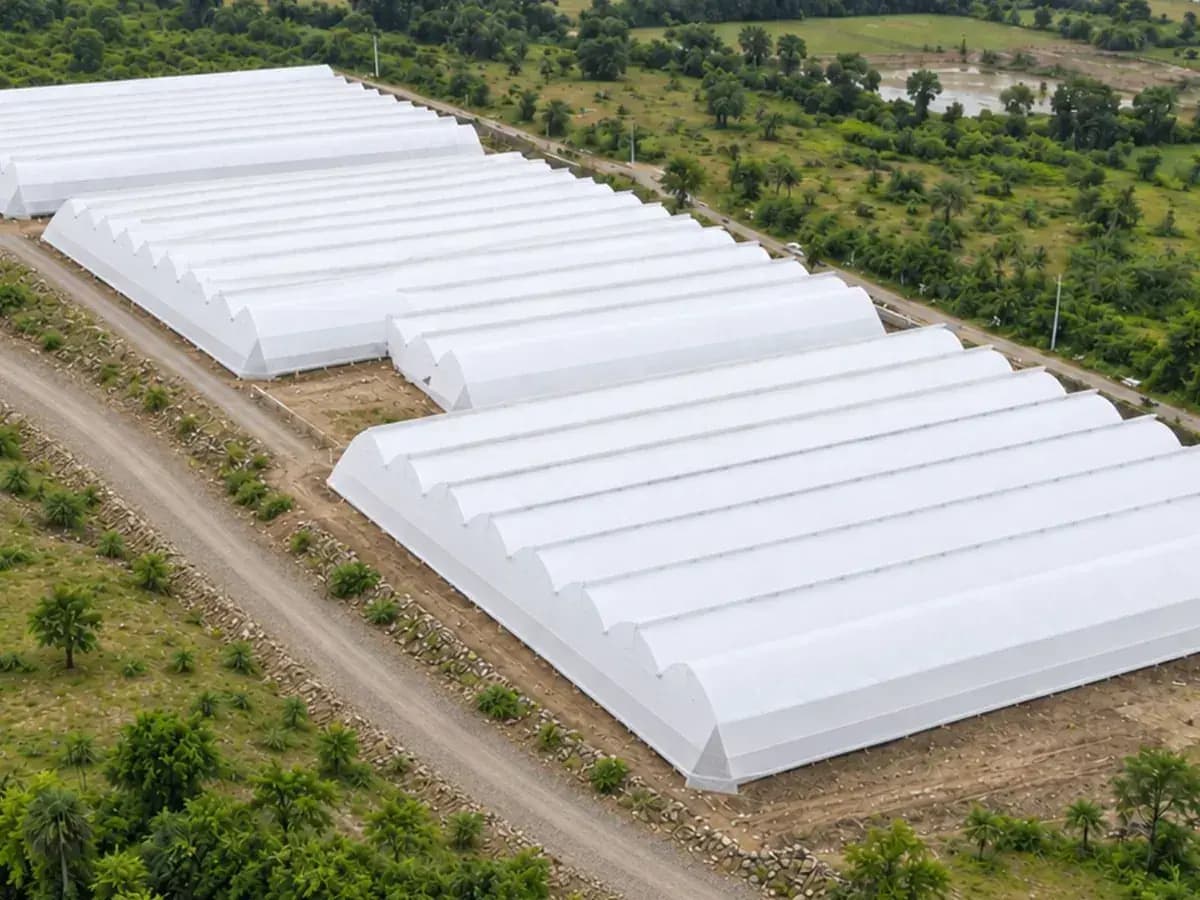
What you gain, and the part that delivers it
| Advantage | What makes it happen |
|---|---|
| Lower build cost | No fan wall, pad wall or pumps to buy |
| Low electricity bill | Air moves through vents and curtains; power is mainly for drip irrigation |
| Crops in every season | Film roof keeps off rain and hail; curtains close against cold nights |
| Fewer sprays | 40-mesh insect net on every opening keeps most pests out |
| Uniform, better-priced produce | Even light under diffused film and steady growing conditions |
| Less water | Drip lines feed only the roots |
| Subsidy eligible | Built to NHM / NHB norms, so you can apply for assistance |
| Weather risk off the table | Heavy rain, hail and heatwaves stay outside the film |
Where an NVPH is not the best choice
If your summer regularly crosses what your crop can tolerate and the air is dry, a fan and pad polyhouse will hold the temperature better. If your budget is tight and your crop mainly needs shade and insect protection, a nethouse may be enough. An NVPH sits in the middle, which is why it suits most growers.
Getting the advantages from your material
Diffused film
Spreads light to lower leaves; it is the default for capsicum, cucumber and gerbera.
Taller structure
A higher ridge with bigger vents runs cooler; check heights before comparing prices.
Proper insect net
Ask for the mesh count and UV rating, and check it covers vents as well as curtains.
Gutter slope
About 2% slope keeps rainwater moving to the funnels and into a harvesting tank.
Material you will order
Aluminium Shade Net (4 m)
3 years warranty · SKU MAT-CEA-00358
Black Shade Net 50%
3 years warranty · SKU MAT-PC-00030
Black Shade Net 50% (8 m)
3 years warranty · SKU MAT-PC-00035
Green Shade Net 50%
3 years warranty · SKU MAT-PC-00029
Green Shade Net 50% (8 m)
3 years warranty · SKU MAT-PC-00034
Polyfilm White Diffused 250 Micron (4.5 m)
2.5 years warranty · SKU MAT-CEA-00095
Terms used on this page
- Diffused film
- Film that scatters sunlight instead of letting it pass straight through. Light reaches lower leaves too, shadows are softer and leaves are less likely to scorch.
- Insect net mesh
- The number of openings per inch in an insect net. A finer mesh keeps out smaller insects such as whiteflies and thrips, but also lets less air through.
- Gutter
- A GI channel running along the top of the columns between two spans. It collects rainwater from both roofs and carries it to the funnels at the ends.
- UV stabilised
- Additives that slow down the breakdown of plastic in sunlight. Without them, film and nets turn brittle within months; with them they last years.
Get NVPH material from India's biggest CEA manufacturing company
Choose your size and see every item, quantity and weekly rate before you pay.
FAQs
Is an NVPH cheaper to run than fan and pad?
Yes. Kryzen estimates running cost at about ₹47,500 per acre per month for an NVPH against about ₹71,000 for fan and pad, mainly because of electricity.
Can I grow in summer in an NVPH?
Yes, with open vents, rolled-up curtains and the shade net drawn. A quick cucumber crop is a common summer choice.