
Nethouse guide
What is a nethouse?
By Editorial Team, Kryzen Biotech · Updated 12 November 2026
A nethouse, or shade net house, is a GI steel frame covered with shade net on top and insect net on the sides, instead of plastic film. It cuts harsh sun, keeps out most insects and takes the impact of wind and hail. It costs much less than a polyhouse but gives less protection from heavy rain and cold.
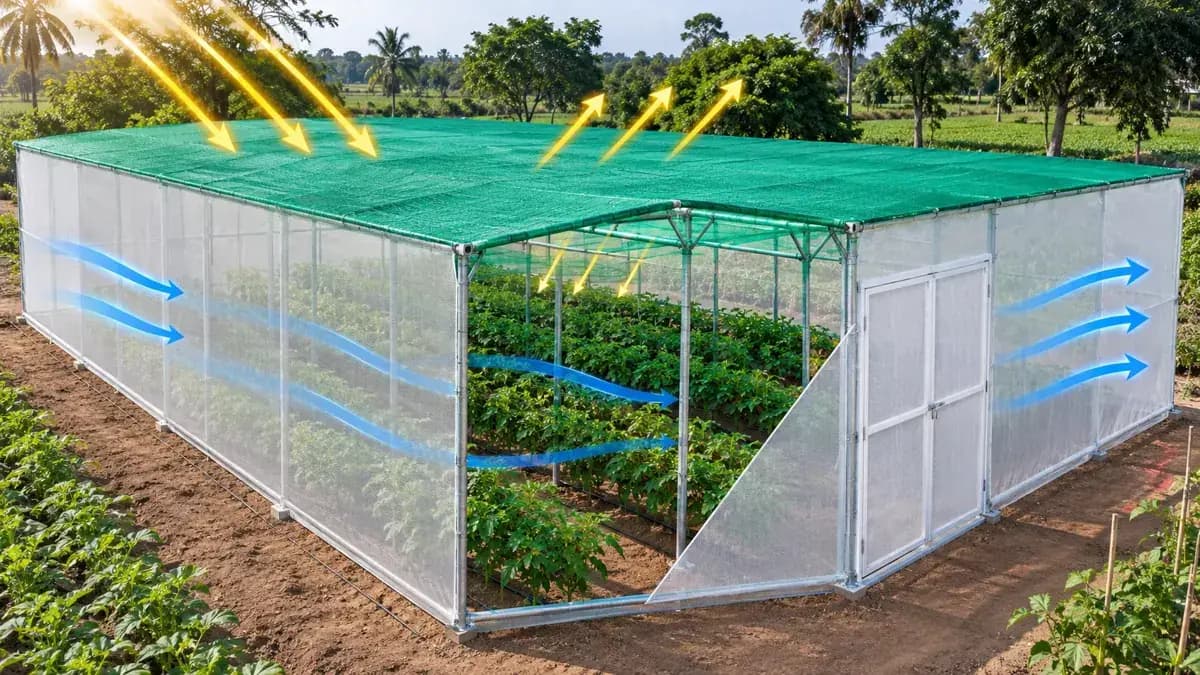
Designs and roof options
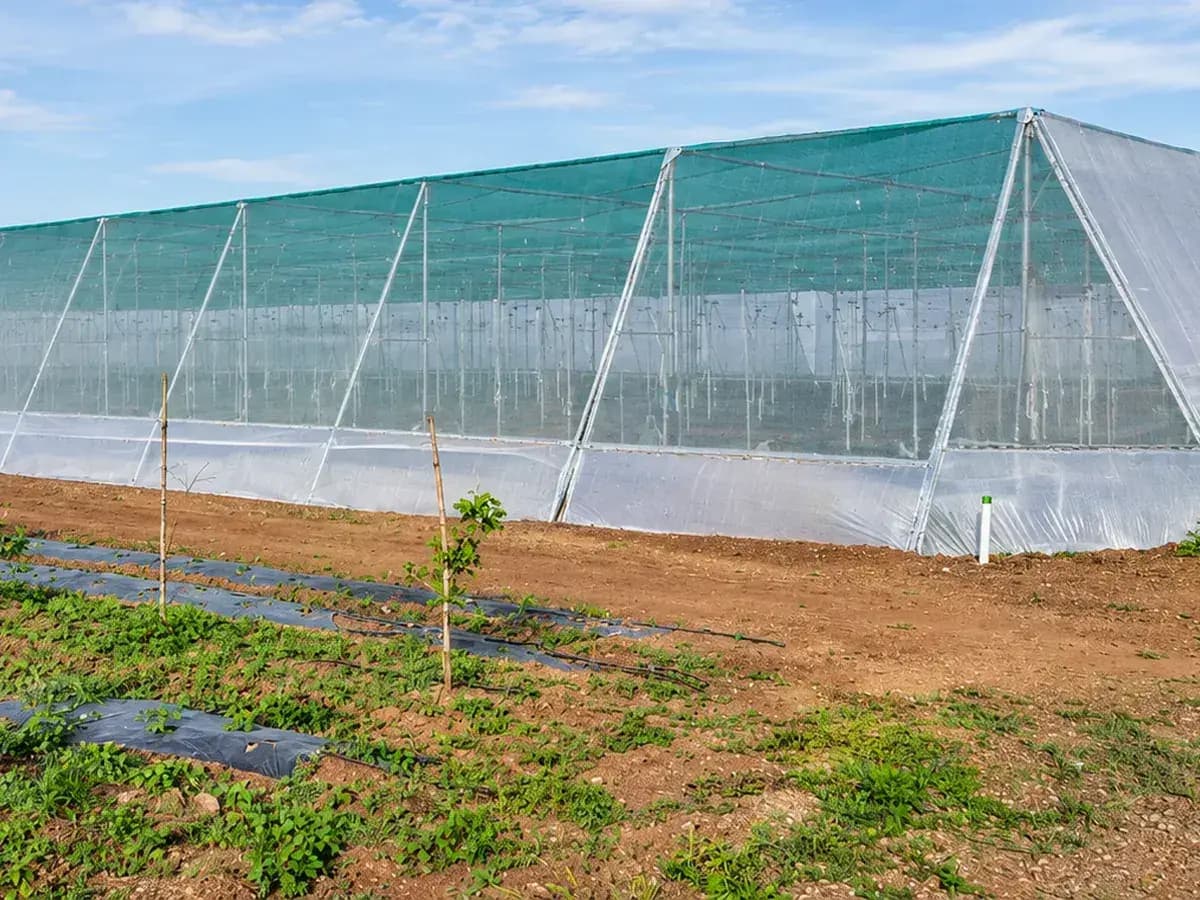
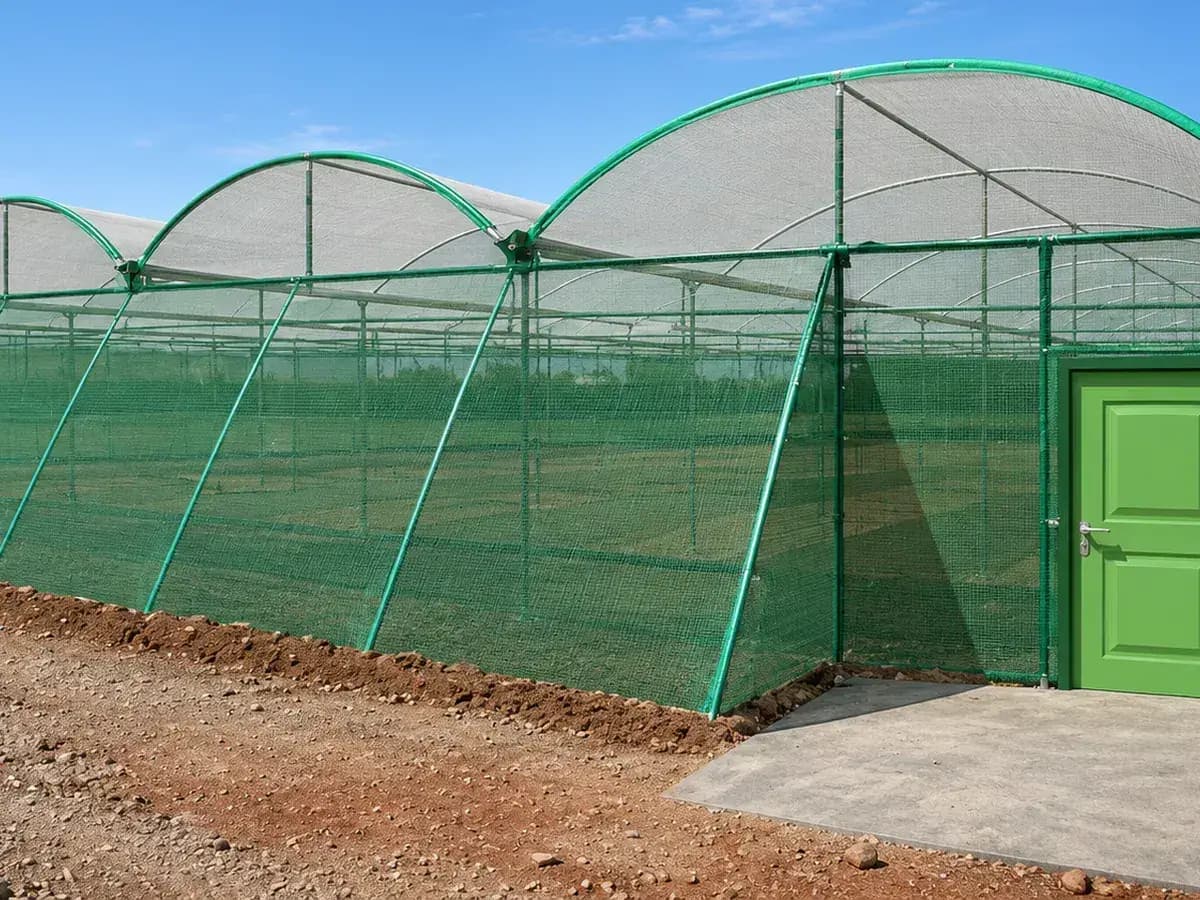
| Option | What it is | Best for |
|---|---|---|
| Flat-roof | Net on a grid of GI pipes and tensioned wires | Large, low-cost vegetable farms on level land |
| Dome | Curved, tunnel-like roof | Windy and rainy areas, longer life |
| Cable purlin | Tensioned GI cables hold the roof net | Lower cost, low-wind sites |
| Pipe purlin | GI pipes in place of cables | Exposed, windy plots |
| Double layer | Second 50% white net or aluminet under the roof | Very hot regions, heat-sensitive crops |
Choosing the shade factor
| Shade | Use |
|---|---|
| 35% | Tomato, capsicum, cucumber, leafy greens |
| 50% | Nurseries, young orchard plants, turmeric, ginger |
| 75% | Rose, gerbera, carnation and crops that scorch |
| 80–90% | Not for agriculture |
Tape or monofilament net?
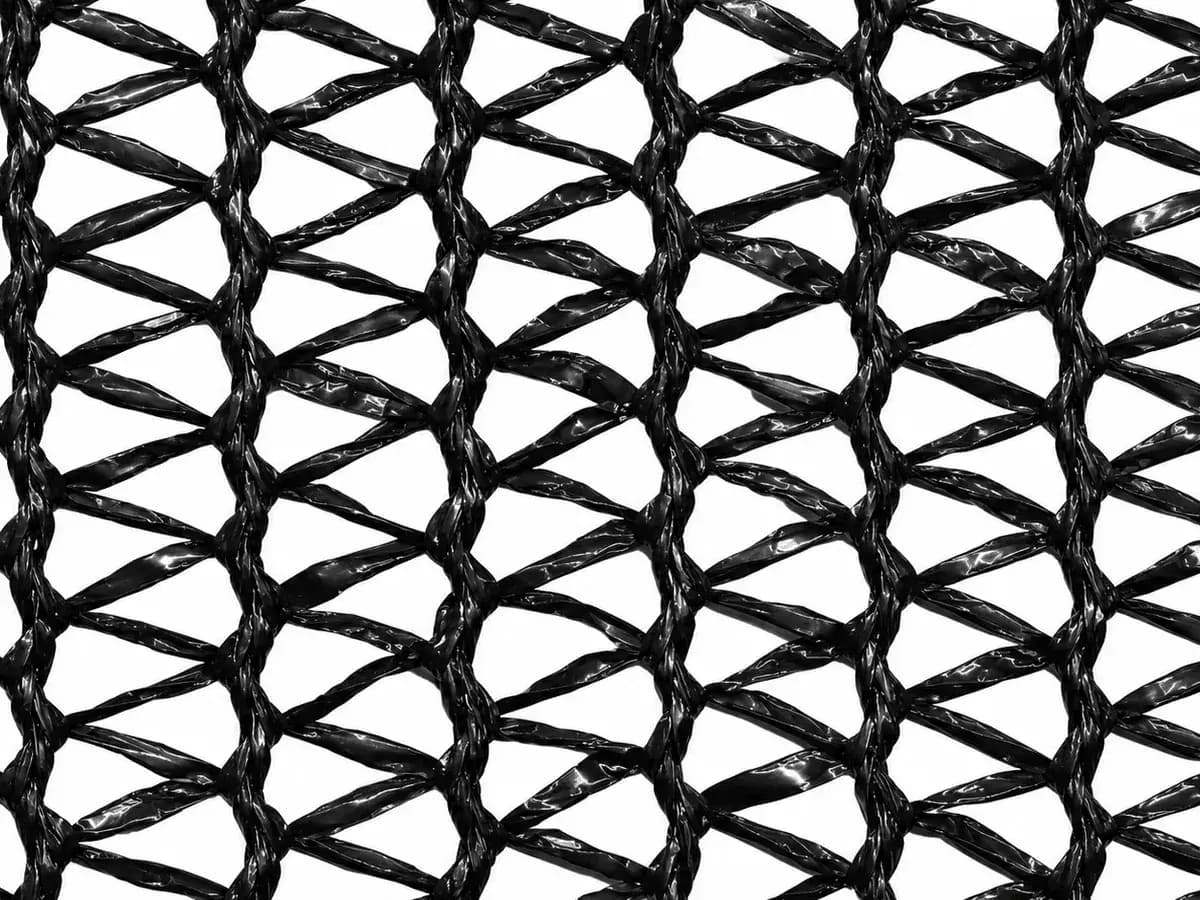
Tape net is woven from flat HDPE tapes: economical and fine for most vegetable and nursery farms, but it can stretch and sag over time. Monofilament net uses round threads (100–125 GSM): it costs more, stays tight and stands up better to wind on large sites. Both are UV-stabilised with about a 3-year life.
Where summers cross 40 °C, aluminet (an aluminium-coated net) reflects heat and can keep the crop about 5 °C cooler, with a UV life of about 4 years.
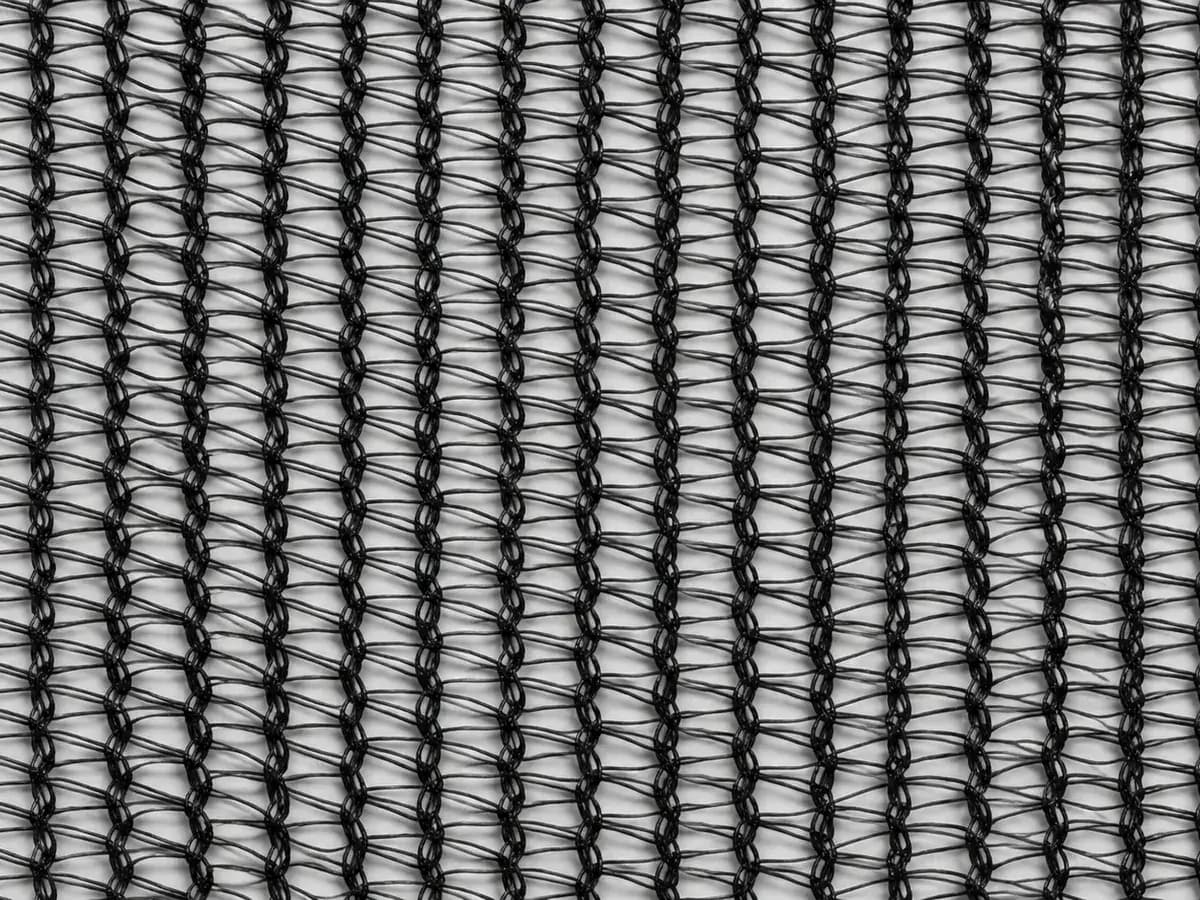
Material you will order
Aluminium Shade Net (4 m)
3 years warranty · SKU MAT-CEA-00358
Black Shade Net 50%
3 years warranty · SKU MAT-PC-00030
Black Shade Net 50% (8 m)
3 years warranty · SKU MAT-PC-00035
Green Shade Net 50%
3 years warranty · SKU MAT-PC-00029
Green Shade Net 50% (8 m)
3 years warranty · SKU MAT-PC-00034
Shade Net GI Wire (12 Gauge)
SKU MAT-CEA-00359
Terms used on this page
- Shade percentage
- How much sunlight a shade net blocks. A 50% shade net cuts sunlight by half; a 95% reflective aluminium net blocks almost all direct sun and sends heat back out.
- HDPE
- A strong, stiff plastic used for shade nets and insect nets. It resists chemicals and, with UV stabilisers, lasts several seasons in the sun.
- Knitted net
- Net made by knitting plastic tape or monofilament, rather than weaving it. A knitted net does not unravel when it is cut and keeps its shape under wind.
- Virgin HDPE
- HDPE made from new raw material, not recycled plastic. It is stronger, more uniform and lasts longer outdoors.
Get nethouse material from India's biggest CEA manufacturing company
Choose your size and see every item, quantity and weekly rate before you pay.
FAQs
How long does a nethouse last?
The GI frame lasts many years; shade and insect nets carry about a 3-year warranty and are replaced as they age.
Which net colour is best?
Black gives the full rated shade and is most common; white reflects more heat and spreads light; green gives soft shade and is popular for nurseries.