
Fan & Pad Polyhouse guide
Advantages of a fan and pad polyhouse
By Editorial Team, Kryzen Biotech · Updated 12 November 2026
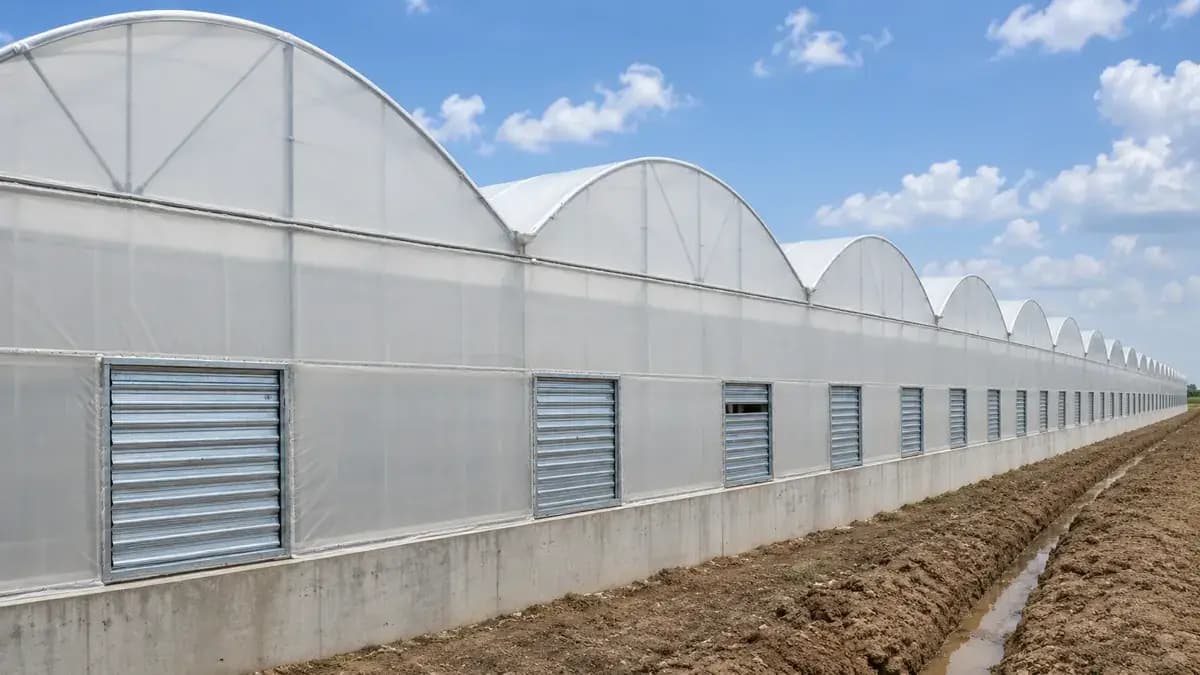
A fan and pad polyhouse costs more than an NVPH, so it has to earn more. It does that by holding a narrow climate range that premium crops need, through seasons when other structures struggle.
What you gain
| Advantage | Why it matters |
|---|---|
| Precise climate | Temperature and humidity stay where you set them |
| Export-grade flowers | Roses, gerbera, carnation and orchids to premium grade |
| Grows through hot summers | Crops keep growing in heat that stalls an open-vent house |
| Fewer pests | Closed house, insect net on every opening, no open roof vents |
| Planned harvests | Time crops for festivals, weddings and export orders |
| Higher value per m² | Premium crops all year from the same area |
| Subsidy eligible | Higher cost norm than NVPH under NHM / MIDH |
Choose it when…
Heat
Summer regularly goes past what your crop can take.
Crop
You grow roses, gerbera, orchids or carnation for premium buyers.
Utilities
You have reliable 3-phase power, backup and enough water for the pads.
Terms used on this page
- Fan and pad polyhouse
- A closed polyhouse cooled by exhaust fans and wet cellulose pads. It works best in hot, dry weather, where evaporation can bring the inside several degrees below the outside.
- Insect net mesh
- The number of openings per inch in an insect net. A finer mesh keeps out smaller insects such as whiteflies and thrips, but also lets less air through.
Get fan & pad material from India's biggest CEA manufacturing company
Choose your size and see every item, quantity and weekly rate before you pay.
FAQs
Is fan and pad worth it for capsicum?
Usually not. Capsicum, cucumber and tomato do well in an NVPH in most climates; fan and pad pays off with premium flowers and exotics.