
Nethouse guide
Advantages of a nethouse
By Editorial Team, Kryzen Biotech · Updated 12 November 2026
A nethouse is the lowest-cost way into protected farming. It does not control climate like a polyhouse, but for many vegetables and nurseries it solves the problems that hurt most: sun scorch, pests, wind and hail.
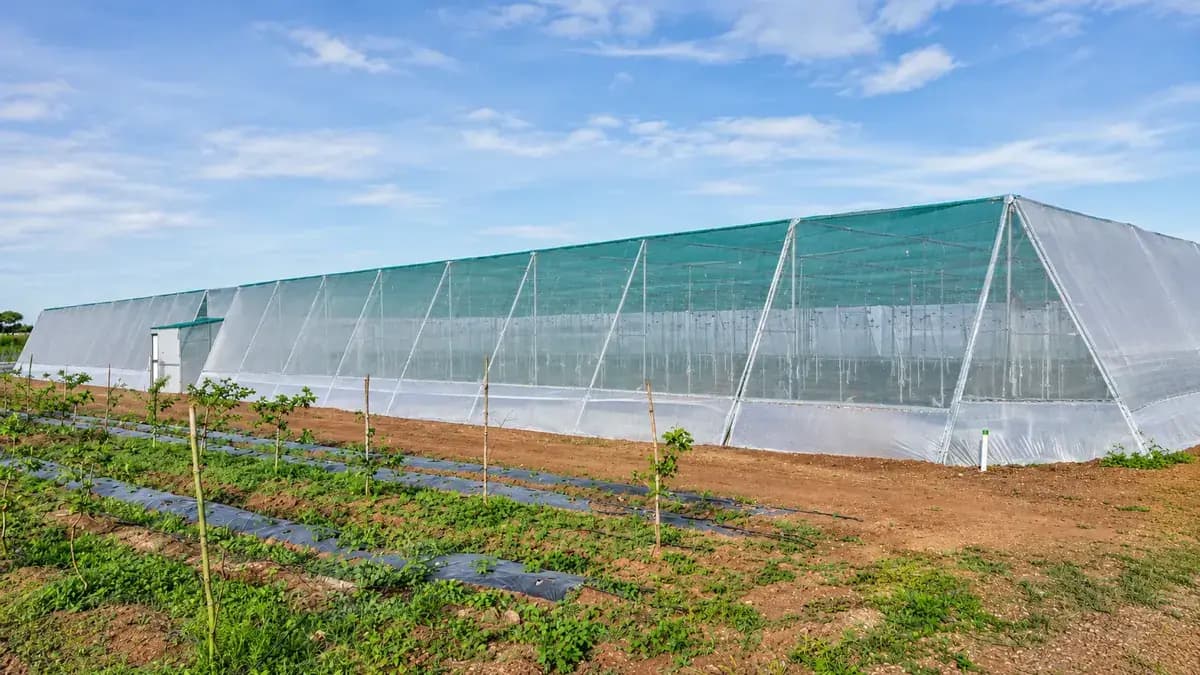
What you gain
| Advantage | Why |
|---|---|
| Low cost | Far cheaper per acre than a polyhouse |
| Quick to build | A simple frame and nets |
| Cooler crop | Shade net lowers leaf temperature and stops scorch |
| Fewer sprays | Insect net keeps most pests out |
| Wind and hail protection | The net takes the impact |
| Almost no running cost | No fans, pumps or curtains; only irrigation uses power |
| Two crops a year | Cucumber in summer, capsicum or tomato in winter |
| Subsidy eligible | NHM / MIDH cost norm of ₹710 per m² |
The trade-off
Rain passes through the net, and cold nights are not kept out. For coloured capsicum, roses or crops that need rain protection, step up to an NVPH.
Material you will order
Aluminium Shade Net (4 m)
3 years warranty · SKU MAT-CEA-00358
Black Shade Net 50%
3 years warranty · SKU MAT-PC-00030
Black Shade Net 50% (8 m)
3 years warranty · SKU MAT-PC-00035
Green Shade Net 50%
3 years warranty · SKU MAT-PC-00029
Green Shade Net 50% (8 m)
3 years warranty · SKU MAT-PC-00034
Shade Net GI Wire (12 Gauge)
SKU MAT-CEA-00359
Terms used on this page
- Shade percentage
- How much sunlight a shade net blocks. A 50% shade net cuts sunlight by half; a 95% reflective aluminium net blocks almost all direct sun and sends heat back out.
- Insect net mesh
- The number of openings per inch in an insect net. A finer mesh keeps out smaller insects such as whiteflies and thrips, but also lets less air through.
Get nethouse material from India's biggest CEA manufacturing company
Choose your size and see every item, quantity and weekly rate before you pay.
FAQs
Is a nethouse good for cucumber?
Yes. Cucumber is the most common summer crop in a nethouse; it grows fast and the shade keeps the plants cool.