
Equipment · Thane district, Maharashtra
Protected cultivation equipment for Navi Mumbai farms
By Editorial Team, Kryzen Biotech · Updated 13 November 2026
For Navi Mumbai, protected cultivation equipment has to handle two very different periods: April heat of 38.4°C with 7.2 kWh/m²/day sun, and a June–October monsoon that is humid and exceptionally wet. Polyhouse Constructions manufactures complete material kits and individual equipment at its Satara factory; Kryzen Biotech’s team carries out construction/erection.
- Pad cooling
- Works: ~32°C inside
- Humid months
- 5
- Shading need
- High
- Delivery
- Next day
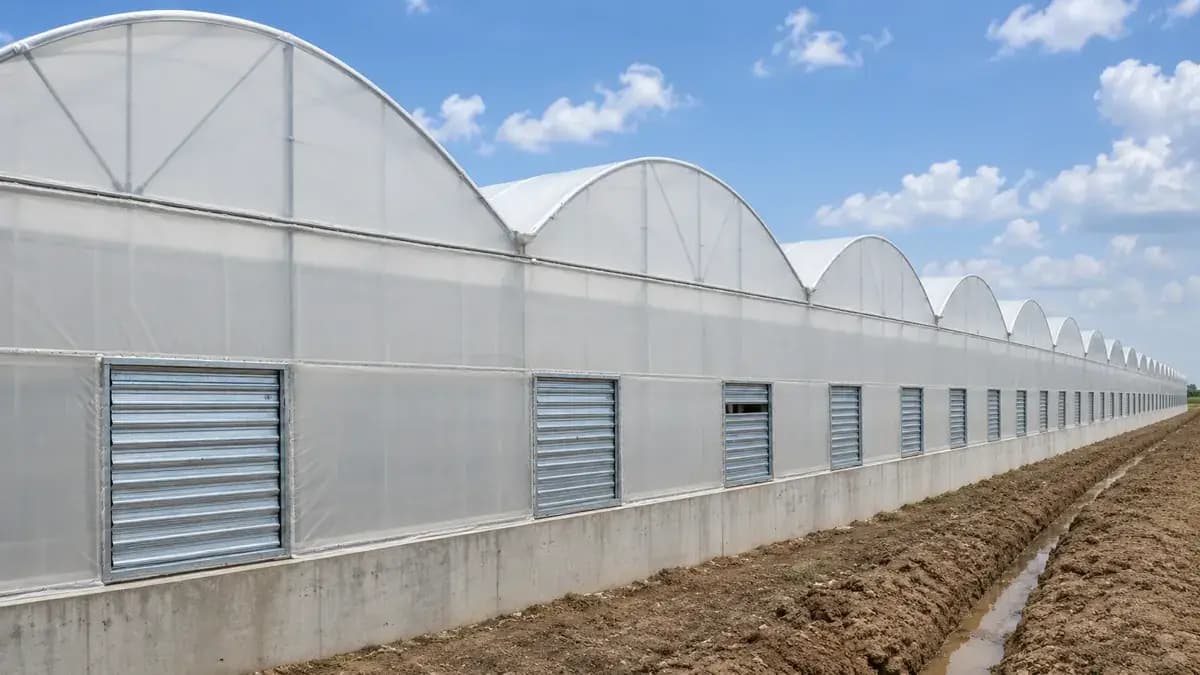
Choose equipment for heat, humidity and very heavy rain
Navi Mumbai is not among Maharashtra’s hottest locations, but April still reaches an average afternoon high of 38.4°C. March is 36.8°C and May is 37°C. The strong April and May sun makes roof shading and controlled cooling relevant, particularly for a crop that cannot take sustained heat. April’s average night is 23.1°C, so the concern is daytime heat rather than cold protection.
From June through October, the priority changes. Humidity stays from 78% to 90%, with 535 mm rain in June, 834 mm in July, 606 mm in August and 376 mm in September. Navi Mumbai ranks 6th for rain among 130 Maharashtra towns in the comparison supplied. A protected structure here should not treat gutters, drainage outlets, skirting and air movement as optional finishing work.
January is the coolest night at 15.4°C; December is 16.3°C and February is 17.6°C. These figures do not indicate an extra equipment requirement for cold nights. November–February is the stated nethouse season, while a film-covered house can use side ventilation equipment to respond to changing conditions.
- Cooling: exhaust fans and cellulose pads for the April peak where active cooling is required.
- Air movement: air-circulation fans are useful through the humid June–October stretch.
- Shading: aluminium or double-layer net addresses the 7.2 kWh/m²/day sun in April and May.
- Rain management: use gutters, funnels and a side skirting apron before the monsoon.
| Need | For Navi Mumbai | Why |
|---|---|---|
| Cooling | Exhaust fans + cellulose pads | Pads bring 38°C to ~32°C in April |
| Air movement | Air circulation fans | Humid from June to October |
| Shading | Aluminium or double-layer net | Sun peaks at 7.2 kWh/m² in April |
| Rain | Wide gutters, funnels, skirting apron | July: ~834 mm |
| Nights | No extra need | — |
The month-by-month operating picture
The climate table below is useful when deciding when to fit equipment, inspect it and operate it. In February to May, afternoon highs rise from 33.8°C to 37°C and sun rises from 5.8 to 7.2 kWh/m²/day. In July and August, afternoons are lower at 28.4°C and 27.9°C, but humidity is 90% and rainfall is at its heaviest. That is why ventilation and rain disposal should be planned separately from heat control.
Wind averages peak at 4 m/s in July and 3.7 m/s in June. Check covers, curtains, nets and their fittings before this period rather than waiting for a leak or tear during the monsoon. October still has 104 mm rain and 78% humidity, so do not remove monsoon attention immediately after September.
| Month | Afternoon high | Night low | Humidity | Rain | Sun (kWh/m²/day) | Wind (m/s) |
|---|---|---|---|---|---|---|
| Jan | 31°C | 15.4°C | 51% | 0 mm | 4.9 | 2 |
| Feb | 33.8°C | 17.6°C | 44% | 2 mm | 5.8 | 2.1 |
| Mar | 36.8°C | 20.6°C | 45% | 5 mm | 6.6 | 2.2 |
| Apr | 38.4°C | 23.1°C | 53% | 3 mm | 7.2 | 2.3 |
| May | 37°C | 25.4°C | 60% | 22 mm | 7.2 | 2.9 |
| Jun | 31.5°C | 25.8°C | 80% | 535 mm | 4.8 | 3.7 |
| Jul | 28.4°C | 24.9°C | 90% | 834 mm | 3.3 | 4 |
| Aug | 27.9°C | 24.2°C | 90% | 606 mm | 3.3 | 3.5 |
| Sep | 28.8°C | 23.6°C | 89% | 376 mm | 4.3 | 2.3 |
| Oct | 30.8°C | 21.6°C | 78% | 104 mm | 5.2 | 1.8 |
| Nov | 30.6°C | 18.6°C | 69% | 17 mm | 4.9 | 2 |
| Dec | 30.3°C | 16.3°C | 60% | 5 mm | 4.6 | 2 |
Does fan-and-pad cooling make sense here?
Yes, fan-and-pad cooling works in Navi Mumbai for a crop or production plan that needs a lower daytime temperature during the hot period. The supplied climate assessment indicates that pads can bring a 38°C April condition to about 32°C inside. That is a practical cooling difference; whether the system pays for a particular farm depends on the crop, crop timing, operating practice and market outcome, not on equipment alone.
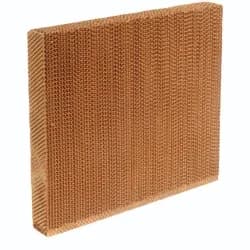
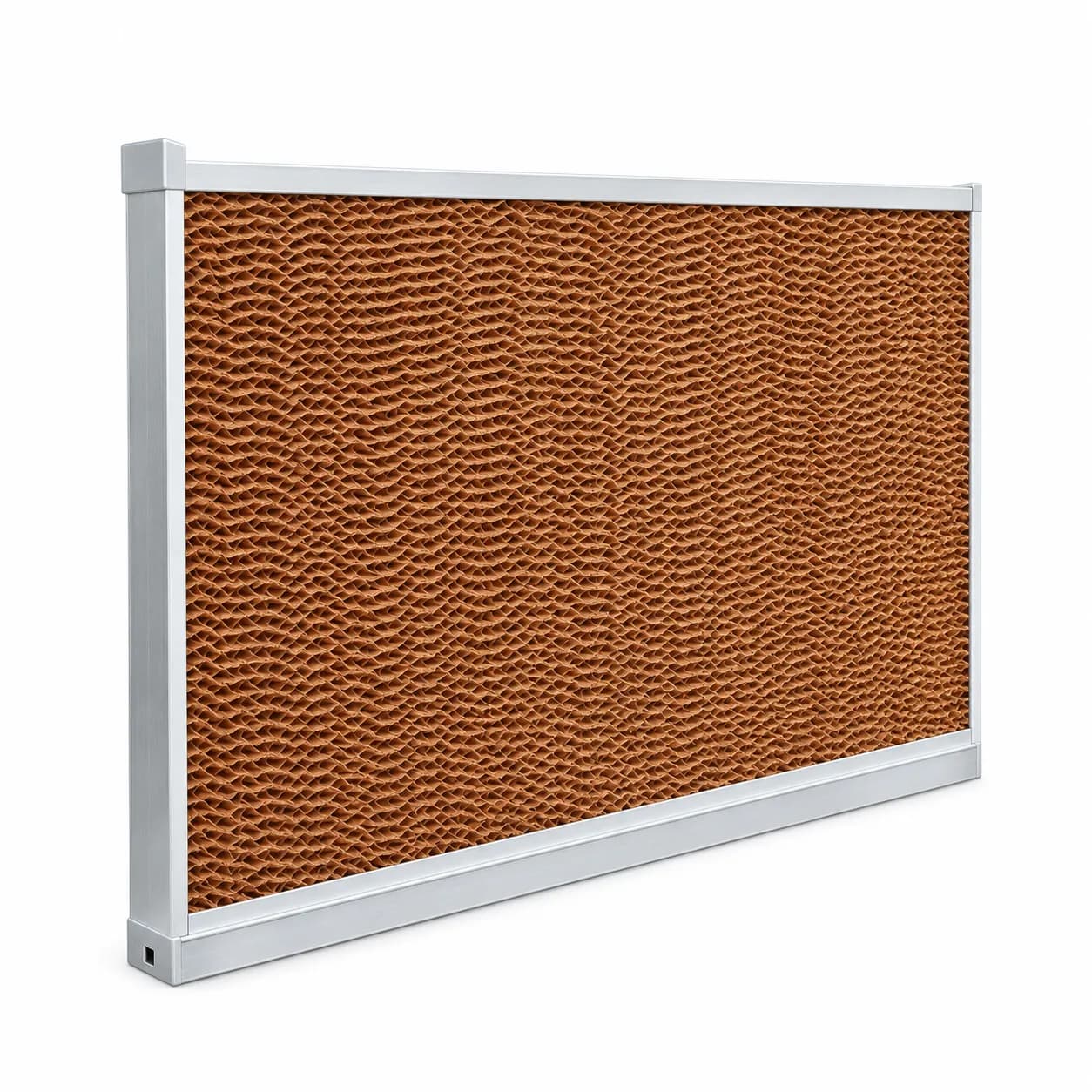
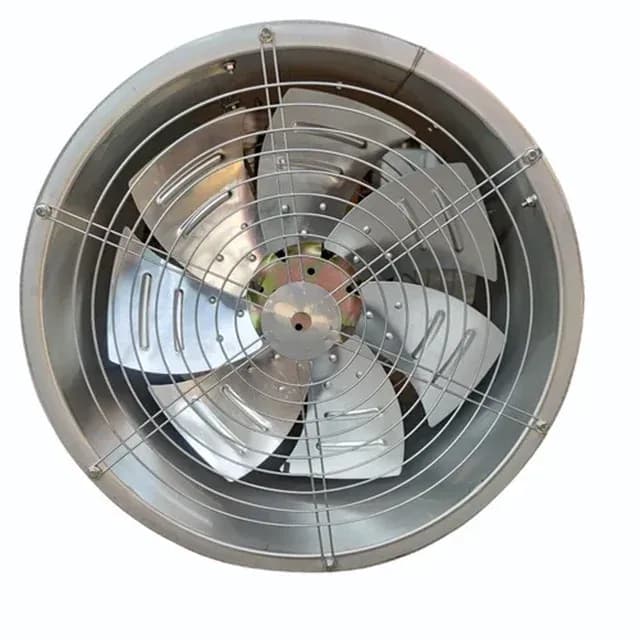
A fan-and-pad house is more than a purchase of fans. It uses exhaust fans, cellulose pads and aluminium pad frames, and needs regular cleaning before hot weather. The reference sizing supplied is for a 52 × 76 m house (3,952 m²): 12 exhaust fans and 82 cellulose pads, with material including GST shown as ₹32,48,775. This is a sizing reference, not a universal requirement for every plot.
For a naturally ventilated polyhouse, use roll-up curtains and side insect net for ventilation instead. Air-circulation fans are an optional upgrade for both NVPH and fan-and-pad systems, and are especially relevant when outside humidity is high from June to October.
- Exhaust Fan: ₹22,700 per piece + GST.
- Cellulose Pad (600X150X1800): ₹2,616 per piece + GST.
- Aluminium Pad Frame (150 mm): ₹815 per metre + GST.
- Air Circulation Fan: ₹8,999 per piece + GST.
Rainproof the structure before the July peak
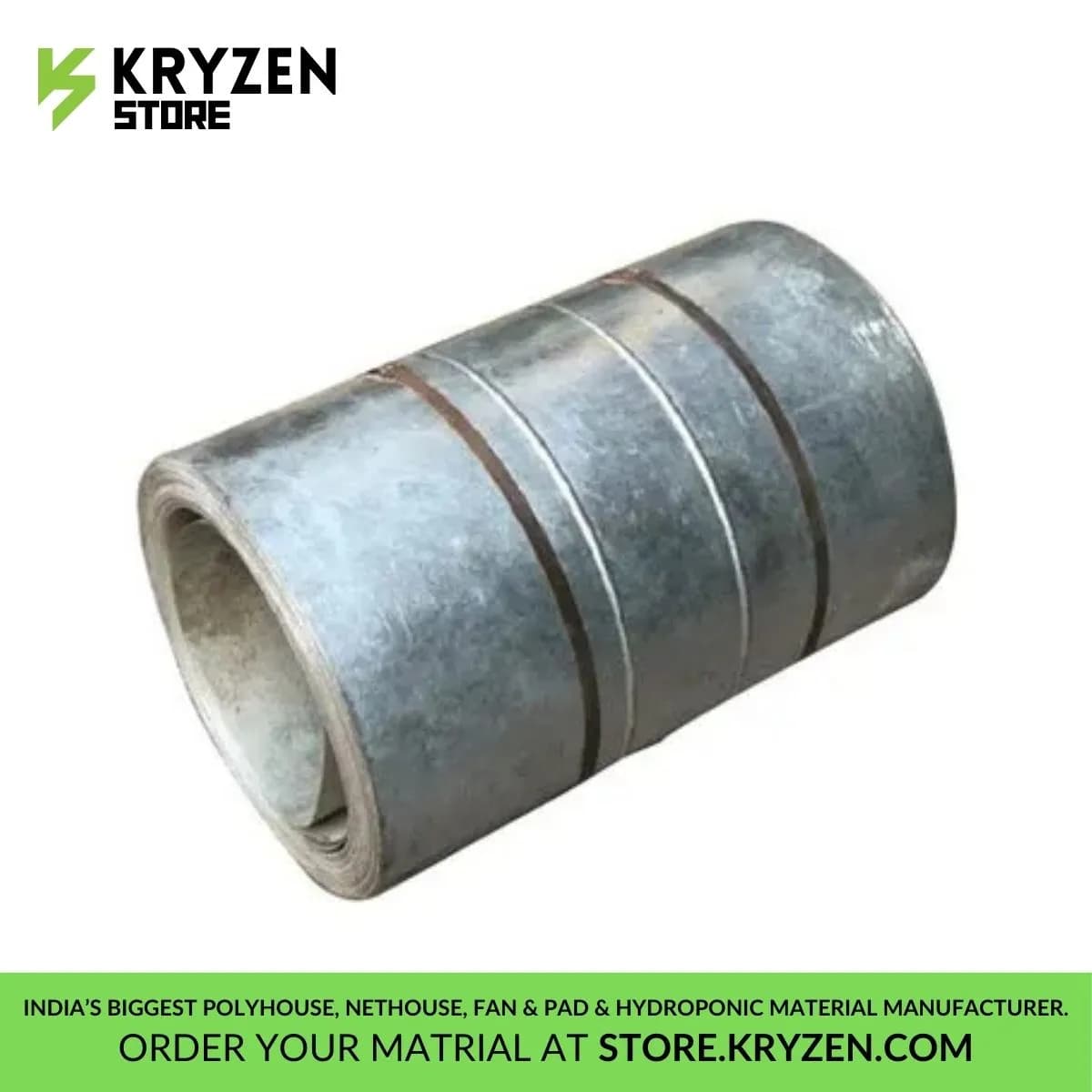
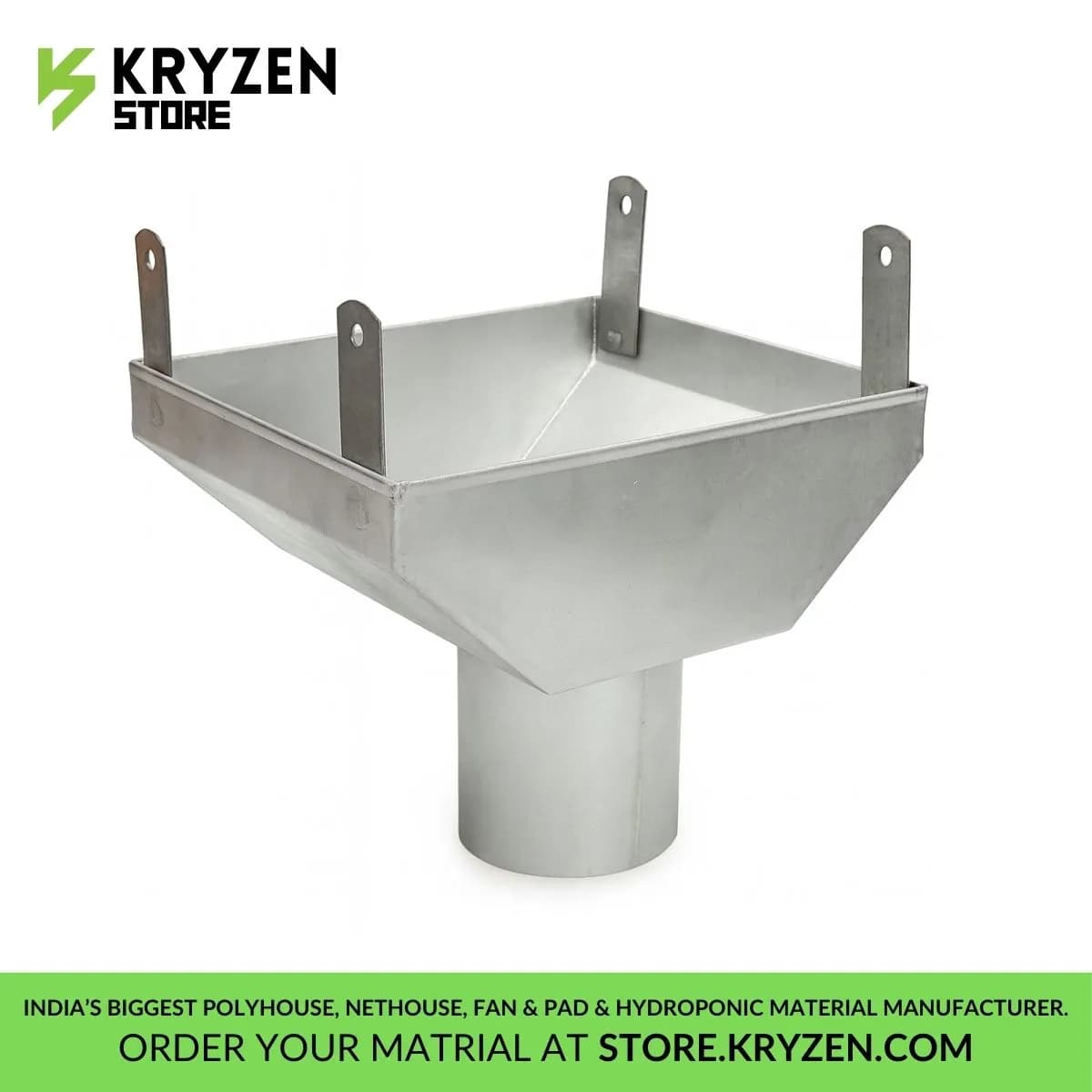
July’s average 834 mm rain is the central design and maintenance challenge for a covered polyhouse in Navi Mumbai. GI gutter sheets collect roof runoff; gutter funnels take it onward; a 1.5 m side skirting apron helps protect the lower edge. These components are used in NVPH and fan-and-pad houses, while the skirting apron is also used in square and curved nethouses.
Do not base the equipment choice only on the roof cover. A 250-micron white diffused, UV-stabilised polyfilm is available for NVPH and fan-and-pad houses. For sun management, white 50% shade net is used across the listed systems, while aluminium shade net is an optional reflective upgrade. The appropriate system—NVPH, fan-and-pad polyhouse, square nethouse or curved nethouse—should follow crop needs as well as weather exposure.
- GI Gutter Sheet: ₹335 per metre + GST.
- Gutter Funnel: ₹1,350 per piece + GST.
- Side Skirting Apron (1.5 m): ₹64 per metre + GST.
- Polyfilm White Diffused 250 Micron (4.5 m): ₹254 per metre + GST.
- Aluminium Shade Net (4 m): ₹315 per metre + GST.

Plan crop timing with Thane district market signals
Protected cultivation equipment cannot assure a mandi price, but crop and harvest timing should be checked against the available Thane district data before selecting a system. Markets listed include APMC Kalyan, Kalyan, Murbad, Shahapur and their APMC listings. The table below reports daily-price observations from the last two years, expressed as ₹ per quintal.
Some seasonal movements are clear in this dataset. Green peas reached ₹12,125/q in November and cucumber ₹2,732/q in December, while okra’s highest month was December at ₹4,479/q. Several crops show July high months—beans ₹6,932/q, capsicum ₹6,111/q, green chilli ₹5,774/q, brinjal ₹4,493/q, ridge gourd ₹5,548/q and bottle gourd ₹2,732/q. These are observed market figures, not a forecast or a promise of farm-gate realisation.
| Crop | Markets | Average modal price | Highest month | Lowest month |
|---|---|---|---|---|
| Okra (bhindi) | 8 | ₹3,376/q | Dec (₹4,479) | May (₹2,446) |
| Green peas | 3 | ₹9,410/q | Nov (₹12,125) | Mar (₹6,785) |
| Beans | 6 | ₹4,475/q | Jul (₹6,932) | Jan (₹2,290) |
| Bitter gourd | 8 | ₹3,310/q | Jun (₹4,667) | Oct (₹2,336) |
| Cucumber | 5 | ₹2,202/q | Dec (₹2,732) | Feb (₹1,686) |
| Ridge gourd | 5 | ₹3,636/q | Jul (₹5,548) | Oct (₹2,513) |
| Capsicum | 7 | ₹3,893/q | Jul (₹6,111) | Feb (₹2,614) |
| Green chilli | 4 | ₹4,056/q | Jul (₹5,774) | Sep (₹2,734) |
| Brinjal | 7 | ₹2,949/q | Jul (₹4,493) | Feb (₹2,087) |
| Bottle gourd | 6 | ₹1,689/q | Jul (₹2,732) | Apr (₹1,276) |
Material checks, certificates and warranty
A monsoon-facing structure needs traceable material and clear documentation. Polyhouse Constructions uses ISI-marked, branded GI steel from Tata, Jindal and JSW. Its in-house engineering and manufacturing process includes a 32-point QA check for every part, a lab test certificate with dispatch, and a technical data sheet for every product.
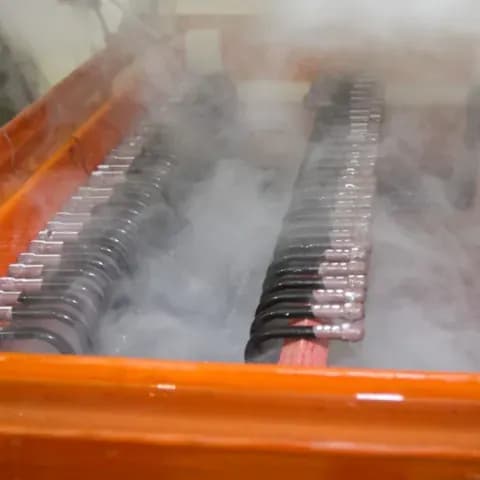
The quality evidence below includes a third-party tensile test for GI pipe steel strength, salt-spray testing for corrosion resistance, and chemical analysis through a spectrometer check of steel composition. Salt-spray resistance is particularly relevant to humid Navi Mumbai conditions. The written warranties are 15 years on the GI structure, 2.5 years on polyfilm and 3 years on shade and insect nets.

Tensile test
Strength of the GI pipe steel, by a third-party lab.
Salt spray test
Corrosion resistance; worth it in humid Navi Mumbai.
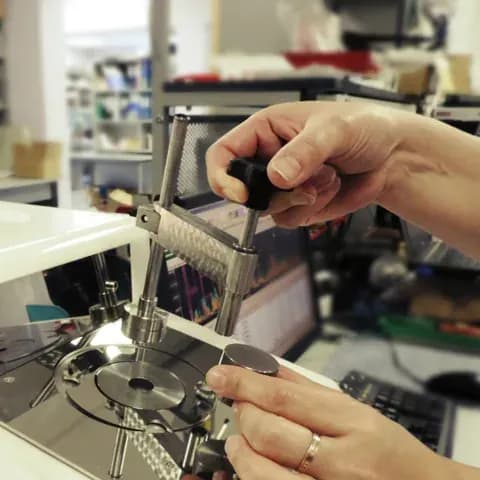
Chemical analysis
Spectrometer check of the steel composition.
| Part | Warranty |
|---|---|
| GI structure | 15 years |
| Polyfilm | 2.5 years |
| Shade and insect nets | 3 years |
Ordering kits, replacements and construction
We manufacture material at Degaon, on the Pune–Bangalore Highway in Tal. Wai, Satara, and supply Navi Mumbai from there; the stated distance is 200 km and delivery is 1 day after dispatch. We do not have an office in Navi Mumbai. Farmers can build a complete kit online with GI structure, polyfilm, nets and fittings, and see each item, quantity and that week’s rate. Construction/erection is undertaken by Kryzen Biotech’s construction team.
Listed item prices are live product prices plus GST, while GI and plastic rates are updated every Friday. A 5% bulk discount applies on 10+ units of an item. Booking is with 5% advance and 95% before dispatch. For a repair, extension or monsoon replacement, individual fans, pads, nets and fittings are also sold separately at the weekly rate.
- Manual Gear Roll Up Curtain Unit: ₹1,050 per piece + GST.
- Side Insect Net (5.2 m): ₹221 per metre + GST.
- Aluminium Door: ₹3,250 per piece + GST.
- Clamps 60 mm Full: ₹17 per piece + GST.
Need only a few items?
Every fan, pad, net and fitting is sold on its own at the weekly rate, for repairs and extensions.
Buy from India's biggest CEA manufacturing company
Choose your structure and size and get the complete material list, priced this week.
FAQs
Is fan-and-pad cooling suitable for Navi Mumbai?
Yes. The supplied assessment says pad cooling works here and can bring an April condition of about 38°C to roughly 32°C inside. It is most relevant for crops needing active daytime cooling; the financial return depends on the farm’s crop, timing and operations.
What must a polyhouse handle in Navi Mumbai’s monsoon?
It must handle humidity from June to October and heavy rain, especially July’s average 834 mm. GI gutters, gutter funnels, a side skirting apron, sound film tension and regular checks before July are important equipment and maintenance priorities.
Are cold-night heating systems needed in Navi Mumbai?
The coolest average night is 15.4°C in January, with 16.3°C in December. The climate priority supplied for Navi Mumbai states no extra equipment need for nights.
Can I buy only replacement nets, fans or fittings?
Yes. Individual fans, pads, nets and fittings are sold for repairs and extensions at the weekly rate. Prices follow weekly GI and plastic rates, updated every Friday.
What warranty and quality documents come with the material?
The GI structure has a 15-year manufacturing warranty, polyfilm has 2.5 years, and shade and insect nets have 3 years. Dispatch includes a lab test certificate, and each product has a technical data sheet; the process includes a 32-point QA check.
Equipment supply near Navi Mumbai
Nearby towns on the same route, and whether pad cooling works there.
| Town | From Navi Mumbai | Pad cooling | Humid months | Hottest month |
|---|---|---|---|---|
| Equipment supplier in Panvel | ~10 km | Works (~32°C) | 5 | Apr, 38°C |
| Equipment supplier in Mumbai | ~20 km | Works (~32°C) | 5 | Apr, 38°C |
| Equipment supplier in Thane | ~20 km | Works (~32°C) | 5 | Apr, 38°C |
| Equipment supplier in Ambernath | ~30 km | Works (~32°C) | 5 | Apr, 38°C |
| Equipment supplier in Kalyan-Dombivli | ~30 km | Works (~32°C) | 5 | Apr, 38°C |
| Equipment supplier in Ulhasnagar | ~30 km | Works (~32°C) | 5 | Apr, 38°C |