
Equipment · Ahmedabad district, Gujarat
Protected cultivation equipment for Ahmedabad farms
By Editorial Team, Kryzen Biotech · Updated 13 November 2026
For Ahmedabad, protected-cultivation equipment has to deal first with extreme dry heat: May averages 43.5°C in the afternoon, with strong sun at 7.5 kWh/m²/day. It must then shed July rain of about 267 mm and keep air moving through the humid August–September period. Polyhouse Constructions supplies complete material kits and individual equipment from its Satara factory; erection is carried out by Kryzen Biotech’s construction team.
- Pad cooling
- Works: ~33°C inside
- Humid months
- 2
- Shading need
- High
- Delivery
- ~3 days
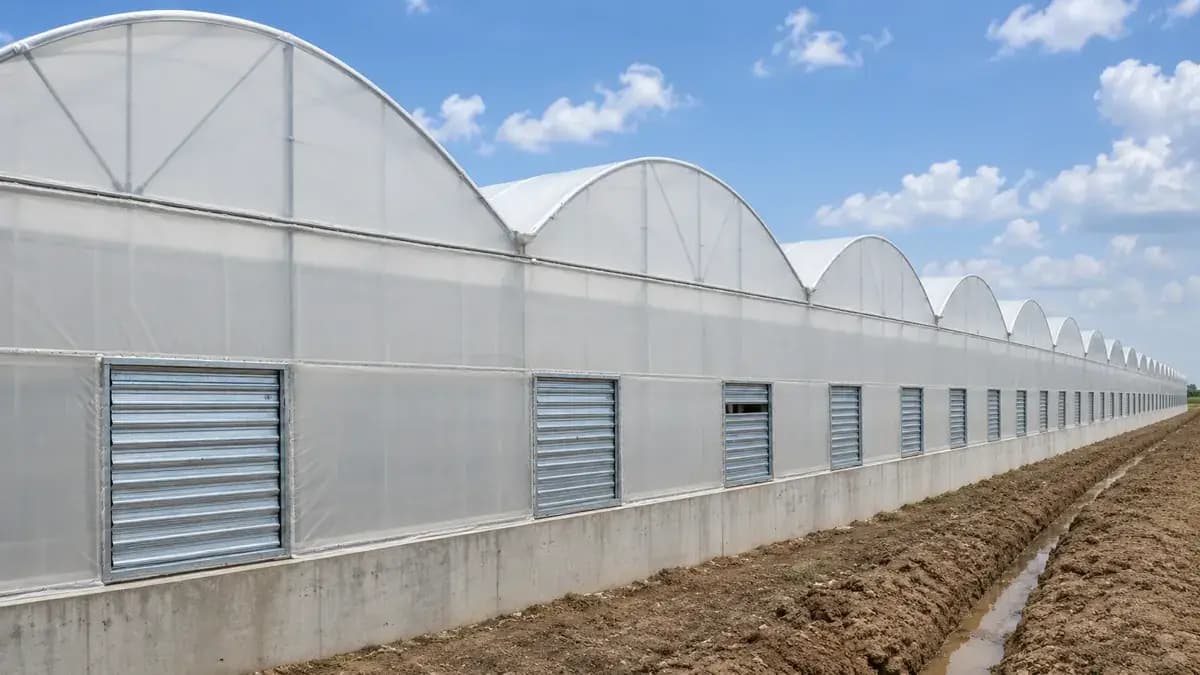
Start with the Ahmedabad weather, not a standard kit
Ahmedabad is among Gujarat’s hotter locations, ranking 2 out of 74 towns for heat in the available comparison. April already averages 41.7°C, May reaches 43.5°C, and June remains at 39.2°C. In these months, a cover alone is not a heat-management plan. The equipment selection should combine reflective or shade protection, ventilation and, where the crop and operating plan justify it, active fan-and-pad cooling.
The monsoon changes the priority. Rain rises from 96 mm in June to 267 mm in July and 256 mm in August. Humidity is 74% in July, 83% in August and 79% in September. Gutters, correctly seated skirting, intact insect net and usable side ventilation matter during this phase. Ahmedabad’s January low of 11.1°C is cool, but the local equipment priority is not extra night heating.
For a nethouse, October to February is the stated suitable season. Day highs then range from 33.8°C in October to 28.8°C in January, while rainfall is low. A farmer choosing between a nethouse and a film-covered polyhouse should therefore begin with crop timing, required protection and the level of temperature control needed in the April–June heat.
- April–June: shade, cooling and air movement are the main requirements.
- July–September: rain discharge, curtain operation and humidity management take priority.
- October–February: inspect and prepare nets, covers and fittings for the next hot season.
| Month | Afternoon high | Night low | Humidity | Rain | Sun (kWh/m²/day) | Wind (m/s) |
|---|---|---|---|---|---|---|
| Jan | 28.8°C | 11.1°C | 31% | 1 mm | 4.6 | 2 |
| Feb | 32.6°C | 14°C | 26% | 1 mm | 5.6 | 2 |
| Mar | 37.4°C | 18.8°C | 24% | 5 mm | 6.6 | 2.1 |
| Apr | 41.7°C | 23.4°C | 27% | 3 mm | 7.3 | 2.4 |
| May | 43.5°C | 26.7°C | 36% | 4 mm | 7.5 | 3.5 |
| Jun | 39.2°C | 28°C | 54% | 96 mm | 6.3 | 3.9 |
| Jul | 33.8°C | 25.8°C | 74% | 267 mm | 4.5 | 3.6 |
| Aug | 31.6°C | 24.5°C | 83% | 256 mm | 4.3 | 2.8 |
| Sep | 32.3°C | 23.7°C | 79% | 122 mm | 5.2 | 1.9 |
| Oct | 33.8°C | 20.6°C | 60% | 10 mm | 5.6 | 1.3 |
| Nov | 32.1°C | 16.4°C | 46% | 4 mm | 4.7 | 1.6 |
| Dec | 29.3°C | 12.4°C | 38% | 1 mm | 4.3 | 1.8 |
The equipment priorities for this site
A naturally ventilated polyhouse (NVPH) can use white diffused 250-micron polyfilm, side insect net and manual roll-up curtains. Curtains allow the grower to open the sides when conditions permit; roof ventilation and curtains are particularly relevant when humid air needs to be exhausted. Air-circulation fans are an optional upgrade for an NVPH.
For the May sun, an aluminium shade net is worth considering where a reflective shading option is needed. White 50% shade net is also used across NVPH, fan-and-pad houses, square nethouses and curved nethouses. The correct system is not simply the one with the most equipment: a curved or square nethouse, NVPH, and fan-and-pad polyhouse serve different levels of weather control.
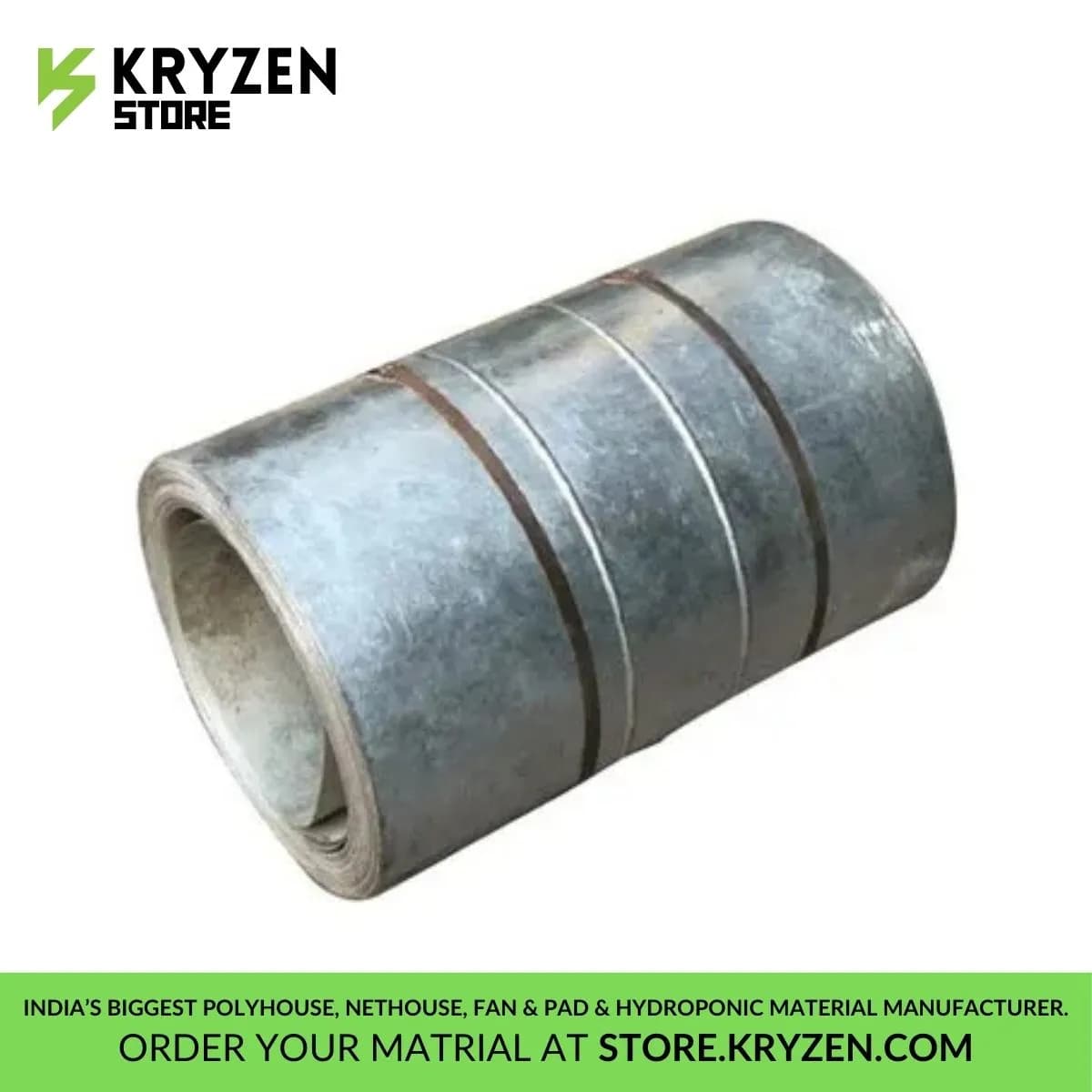
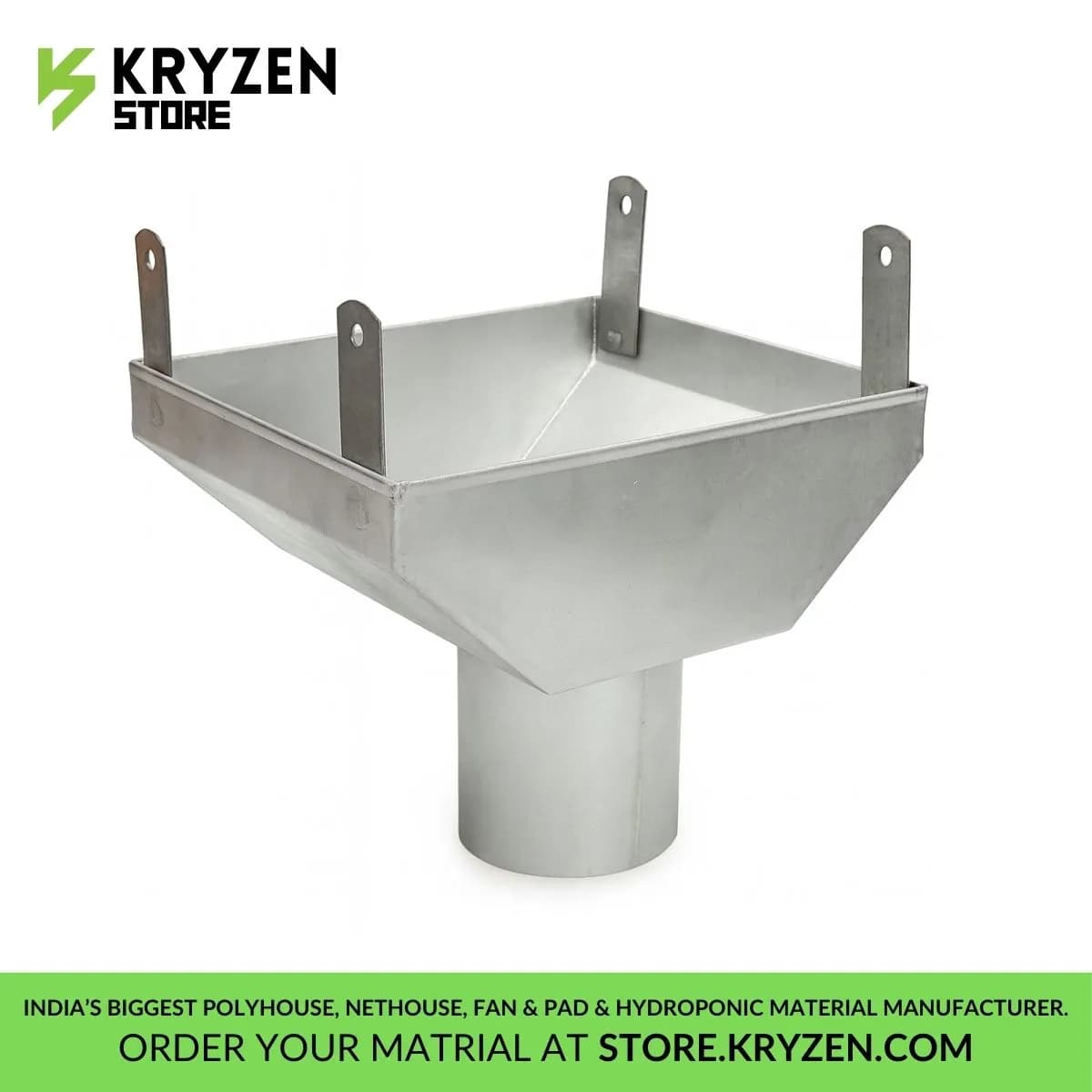
For rain, use GI gutter sheets and gutter funnels on NVPH and fan-and-pad structures. A side skirting apron is used across the listed systems and should be checked before the wet period. This is practical protection against the months when rain arrives with higher humidity, rather than an item to postpone until leakage or splash becomes visible.
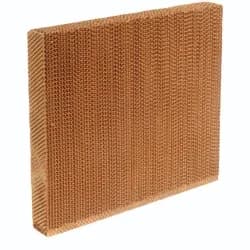
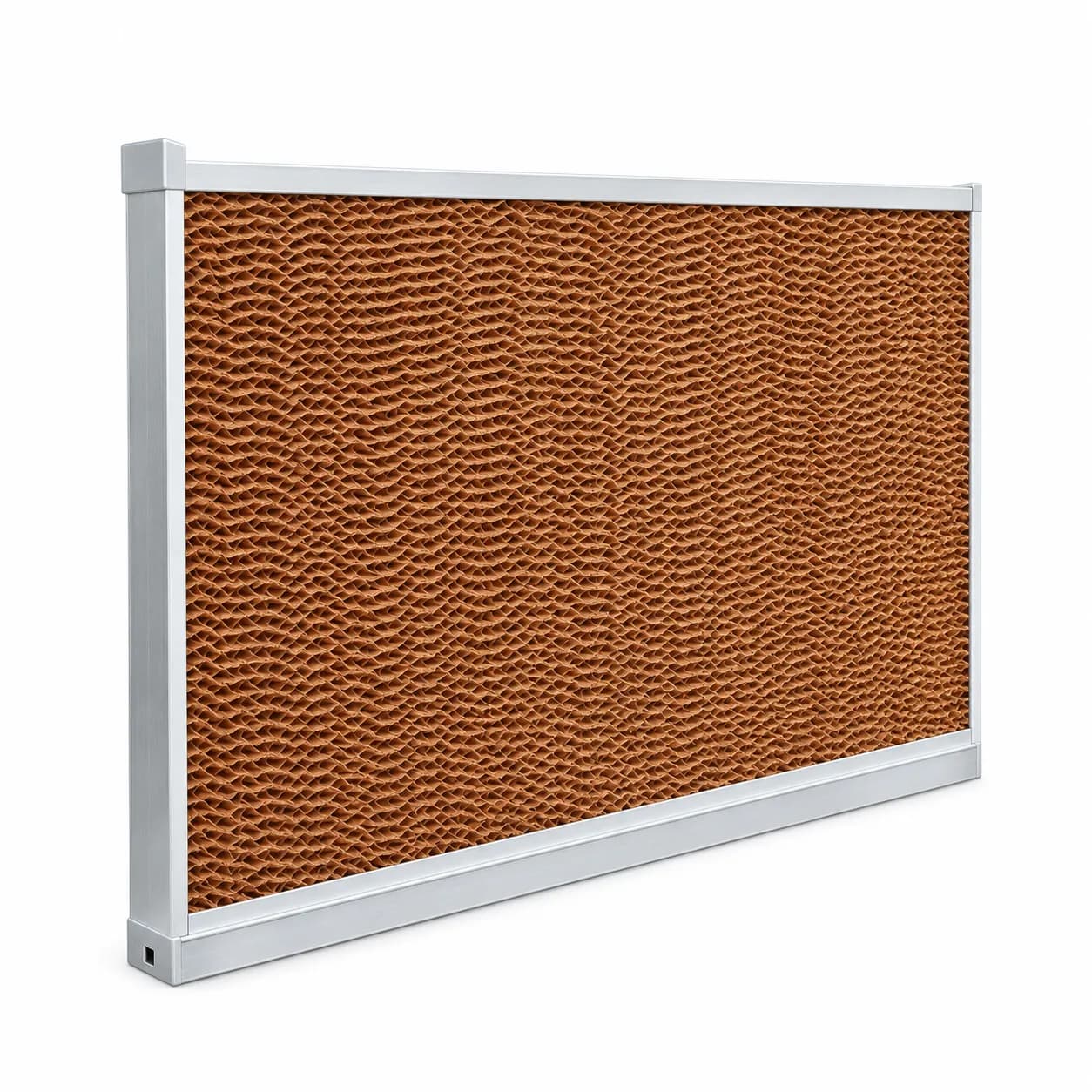
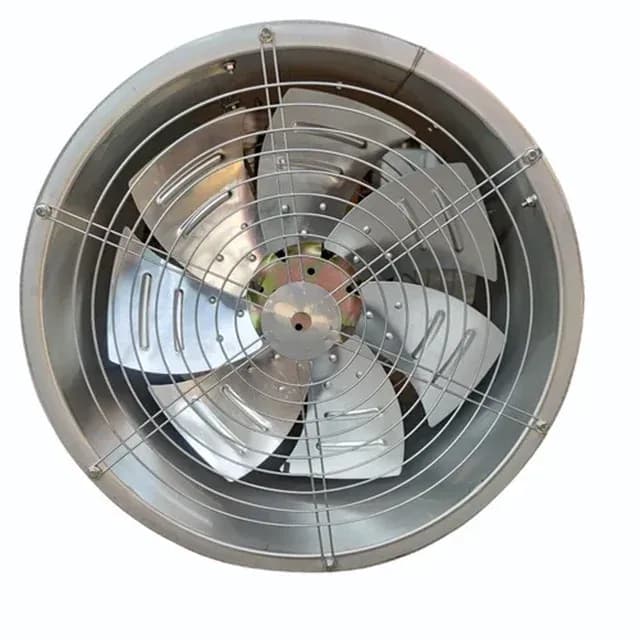
- Cooling: exhaust fans and cellulose pads for a fan-and-pad house.
- Ventilation: roof vent, roll-up curtains and side insect net for an NVPH.
- Shading: aluminium or double-layer net for the May solar peak.
- Rain: standard gutters are identified for Ahmedabad’s July rainfall.
| Need | For Ahmedabad | Why |
|---|---|---|
| Cooling | Exhaust fans + cellulose pads | Pads bring 44°C to ~33°C in May |
| Air movement | Roof vent + curtains | Humid from August to September |
| Shading | Aluminium or double-layer net | Sun peaks at 7.5 kWh/m² in May |
| Rain | Standard gutters | July: ~267 mm |
| Nights | No extra need | — |
Does fan-and-pad cooling make sense in Ahmedabad?
Yes, Ahmedabad is a location where pad cooling works. The available climate guidance indicates that pads can bring May conditions of about 44°C down to around 33°C inside. That is a meaningful temperature difference during the hottest period, and it is why exhaust fans plus cellulose pads are the recommended cooling combination here.
Whether it pays for an individual farm cannot be decided from temperature alone. Compare the crop’s need for controlled summer conditions, the intended selling season, water and power arrangements, and the added equipment cost against a naturally ventilated approach. Ahmedabad APMC and Ahmedabad market data show seasonality rather than a guaranteed return: capsicum has its highest recorded month in July at ₹5,763/q and lowest in February at ₹1,701/q; cucumber peaks in June at ₹3,055/q and is lowest in March at ₹1,136/q.
The material shown for a 52 × 76 m fan-and-pad house is a useful scale reference, not a universal design: 3,952 m² uses 12 exhaust fans and 82 cellulose pads, with material including GST shown at ₹32,48,775. Engineering should match the selected structure and crop rather than copying those quantities to another area.
- Exhaust Fan: ₹22,700 per piece + GST.
- Cellulose Pad (600X150X1800): ₹2,616 per piece + GST.
- Aluminium Pad Frame (150 mm): ₹815 per metre + GST.
- Air Circulation Fan: ₹8,999 per piece + GST; optional for NVPH and fan-and-pad houses.
Rain, ventilation and entry items to specify clearly
Ask for the ventilation and rain items as named parts in the material list, not as a vague allowance. For an NVPH, the Manual Gear Roll Up Curtain Unit is ₹1,050 per piece + GST, Curtain Pipe (27X2.0X6000) is ₹758 per piece + GST, Side Insect Net (5.2 m) is ₹221 per metre + GST, and Curtain Clamp 0.75 inch is ₹11 per piece + GST. These items support side opening while maintaining an insect-net barrier.
For monsoon water handling, GI Gutter Sheet is ₹335 per metre + GST and a Gutter Funnel is ₹1,350 per piece + GST. Side Skirting Apron (1.5 m) is ₹64 per metre + GST. Film and net retention components also deserve attention: Aluminium Profile is ₹27 per metre + GST and GI Spring is ₹6 per metre + GST. They are used across the listed protected-cultivation systems.
Access equipment is also available separately. An Aluminium Door is ₹3,250 per piece + GST, while a Fibre Door is ₹2,050 per piece + GST. Exact quantities belong to the approved design and kit, not to a generic per-acre estimate.
- White Diffused 250 Micron Polyfilm (4.5 m): ₹254 per metre + GST.
- White Shade Net 50%: ₹27 per metre + GST.
- Aluminium Shade Net (4 m): ₹315 per metre + GST.
- Clamps 60 mm Full: ₹17 per piece + GST.

Use the market calendar alongside crop planning
Equipment should be selected for the crop window and crop protection need, then checked against marketing seasonality in Ahmedabad district. In the two listed markets, tomato’s highest observed month is December at ₹3,280/q, while bhindi reaches ₹5,844/q in December. Bitter gourd’s highest listed month is February at ₹4,015/q. These figures are modal-price observations, not promised farm-gate prices or a reason to plant without checking current demand.
Several crops show weak March values in the district data: tomato ₹676/q, cabbage ₹516/q, cauliflower ₹1,059/q, brinjal ₹1,209/q and cucumber ₹1,136/q. Green chilli and capsicum have their highest months in July, at ₹5,046/q and ₹5,763/q respectively, but July is also wet and humid. That is exactly where rain control, insect exclusion and air movement become operational requirements rather than optional upgrades.
Ahmedabad farmers near Adalaj, Gandhinagar, Sanand, Mahemdabad or Kadi can use the same climate-led approach, while confirming their own crop collection and selling arrangements.
- Tomato average modal price: ₹2,094/q across 2 markets.
- Capsicum average modal price: ₹3,720/q across 2 markets.
- Green chilli average modal price: ₹3,319/q across 2 markets.
| Crop | Markets | Average modal price | Highest month | Lowest month |
|---|---|---|---|---|
| Tomato | 2 | ₹2,094/q | Dec (₹3,280) | Mar (₹676) |
| Okra (bhindi) | 2 | ₹4,197/q | Dec (₹5,844) | May (₹3,123) |
| Bitter gourd | 2 | ₹3,122/q | Feb (₹4,015) | Sep (₹2,266) |
| Cabbage | 2 | ₹1,129/q | Nov (₹1,912) | Mar (₹516) |
| Cauliflower | 2 | ₹1,886/q | Nov (₹2,795) | Mar (₹1,059) |
| Bottle gourd | 2 | ₹1,626/q | Sep (₹2,173) | Mar (₹1,154) |
| Brinjal | 2 | ₹2,217/q | Nov (₹3,298) | Mar (₹1,209) |
| Green chilli | 2 | ₹3,319/q | Jul (₹5,046) | Sep (₹1,929) |
| Capsicum | 2 | ₹3,720/q | Jul (₹5,763) | Feb (₹1,701) |
| Cucumber | 2 | ₹2,181/q | Jun (₹3,055) | Mar (₹1,136) |
A maintenance calendar that follows local weather
Do the high-heat work before May, not after fan performance falls. Wash or replace cellulose pads, clean the pad gutter and filter, and check every exhaust-fan belt and shutter before the 44°C peak. Examine shade material before April–May, when solar exposure is highest.
Before July, clear gutters and funnels, re-seat the side skirting apron and check film tension. During humid August and September, run air-circulation fans in the mornings, grease curtain gear units and inspect insect net for tears. Humid conditions increase the importance of disciplined airflow and net condition.
October to February is the useful maintenance window: tighten clamps and bolts, inspect GI springs in aluminium profiles, and arrange replacement film or net before the next season. Ordering before the emergency repair period gives time to verify every item and quantity against the technical sheet.
- 1
Before May
Wash or replace cellulose pads, clean the pad gutter and filter, and check every exhaust fan belt and shutter before the 44°C peak.
- 2
Before July
Clear gutters and funnels, re-seat the side skirting apron and check film tension; July brings about 267 mm.
- 3
August to September
Run air circulation fans in the mornings, keep curtain gear units greased and check insect net for tears; humid air brings fungal disease and pests.
- 4
October to February
Tighten clamps and bolts, check GI springs in the aluminium profiles, and order replacement film or net before the next season.
Material quality, warranty and replacement spares
Polyhouse Constructions is a manufacturer of protected-cultivation structures and material, and a venture of Kryzen Biotech Pvt Ltd. GI pipes are ISI-marked branded steel from Tata, Jindal and JSW. The company provides in-house engineering and manufacturing, a 32-point QA checklist for every part, a lab test certificate with dispatch, and a technical data sheet for every product.
Quality checks include a third-party tensile test for GI pipe steel strength, a salt-spray test for corrosion resistance, and chemical analysis by spectrometer for steel composition. The salt-spray check is particularly relevant to equipment operating through Ahmedabad’s humid August–September period. Warranty is 15 years on the GI structure, 2.5 years on polyfilm and 3 years on shade and insect nets.
Complete kits are available for NVPH, fan-and-pad polyhouses, square nethouses and curved nethouses, including GI structure, polyfilm, nets and fittings. Individual fans, pads, nets and fittings are also sold for repairs and extensions at the weekly rate. Rates are updated every Friday; farmers building online at polyhouseconstructions.com can see each item, quantity and that week’s rate. A 5% bulk discount applies on 10 or more units of an item. Booking is with 5% advance and 95% before dispatch.

Tensile test
Strength of the GI pipe steel, by a third-party lab.
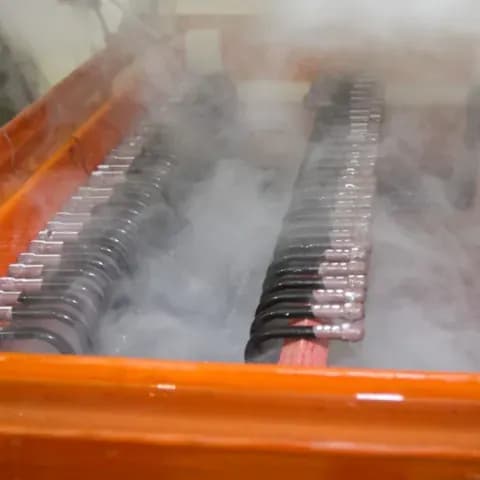
Salt spray test
Corrosion resistance; worth it in humid Ahmedabad.
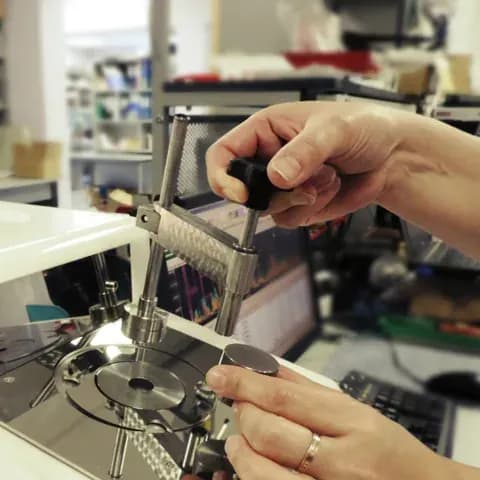
Chemical analysis
Spectrometer check of the steel composition.
| Part | Warranty |
|---|---|
| GI structure | 15 years |
| Polyfilm | 2.5 years |
| Shade and insect nets | 3 years |
Supply and construction for Ahmedabad
Material is supplied from the Polyhouse Constructions factory at Degaon, Pune–Bangalore Highway, Tal. Wai, Satara, Maharashtra, around 750 km from Ahmedabad. The stated delivery time is 3 days after dispatch. There is no Ahmedabad office; this is factory supply, with construction and erection done by Kryzen Biotech’s construction team.
For a new project, ask for a system-wise material list first: the structure type, cover or net, cooling requirement, ventilation, rain components, doors and fittings. For an existing house, order only the failed or worn component where appropriate. This keeps a repair focused instead of replacing sound material unnecessarily.
Need only a few items?
Every fan, pad, net and fitting is sold on its own at the weekly rate, for repairs and extensions.
Buy from India's biggest CEA manufacturing company
Choose your structure and size and get the complete material list, priced this week.
FAQs
Which protected-cultivation system is suitable for Ahmedabad heat?
For the 43.5°C May average high, a fan-and-pad polyhouse provides active cooling and pads can reduce about 44°C conditions to around 33°C inside. An NVPH uses natural ventilation, curtains, insect net and optional circulation fans; the best choice depends on crop timing and the required level of control.
What are the current prices of fan-and-pad equipment?
An Exhaust Fan is ₹22,700 per piece + GST and a Cellulose Pad (600X150X1800) is ₹2,616 per piece + GST. An Aluminium Pad Frame (150 mm) is ₹815 per metre + GST; rates follow weekly GI and plastic rates and are updated every Friday.
How should I prepare the polyhouse for Ahmedabad monsoon?
Before July, clear gutters and funnels, check film tension, and re-seat the side skirting apron. July averages about 267 mm of rain, followed by humid August and September, so also inspect insect net and keep ventilation equipment functional.
What warranty and test documents come with the material?
The GI structure has a 15-year manufacturing warranty, polyfilm has 2.5 years and shade and insect nets have 3 years. Every dispatch includes a lab test certificate, and product technical data sheets are available; testing includes tensile, salt-spray and chemical analysis.
Can I buy only replacement nets, fans or fittings in Ahmedabad?
Yes. Fans, pads, nets and fittings are sold individually for repairs and extensions at the weekly rate, rather than only in complete kits. Material is dispatched from the Satara factory, with delivery stated as 3 days after dispatch for Ahmedabad.
Equipment supply near Ahmedabad
Nearby towns on the same route, and whether pad cooling works there.
| Town | From Ahmedabad | Pad cooling | Humid months | Hottest month |
|---|---|---|---|---|
| Equipment supplier in Adalaj | ~20 km | Works (~33°C) | 2 | May, 44°C |
| Equipment supplier in Gandhinagar | ~30 km | Works (~33°C) | 2 | May, 44°C |
| Equipment supplier in Sanand | ~30 km | Works (~33°C) | 2 | May, 44°C |
| Equipment supplier in Mahemdabad | ~40 km | Works (~33°C) | 2 | May, 44°C |
| Equipment supplier in Kadi | ~50 km | Works (~32°C) | 2 | May, 43°C |
| Equipment supplier in Kapadvanj | ~60 km | Works (~32°C) | 3 | May, 43°C |