
Subsidy guide · Sindhudurg district, Maharashtra
NHB Subsidy Eligible Protected Cultivation Project in Sawantwadi
By Editorial Team, Kryzen Biotech · Updated 12 November 2026
Polyhouses and nethouses in Sawantwadi can get 50% government assistance, but which scheme applies depends on the size of your project, and the amount depends on the government cost norm, not your bill. This page walks through both routes for a project in Sawantwadi (Sindhudurg district), with a worked example for the structure that suits Sawantwadi's climate.
- NHB route
- Projects above 2,500 m²
- MIDH / NHM route
- Up to 4,000 m² per farmer
- Cost norms here
- General area
- Structure for this climate
- NVPH / nethouse
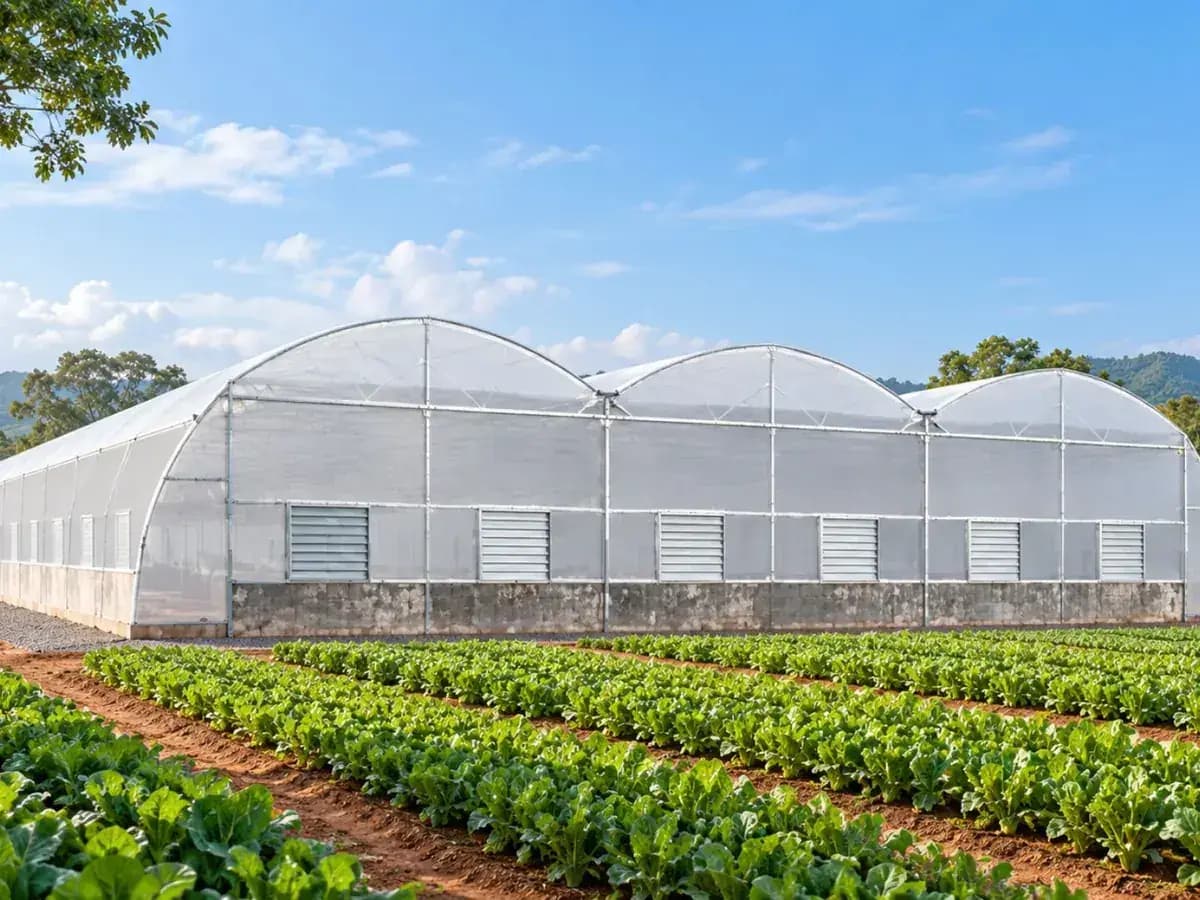
Two subsidy routes for Sawantwadi growers
Both schemes pay 50%; the difference is size and paperwork. Small and medium projects usually go through MIDH (run in Maharashtra by the state horticulture mission), and larger commercial projects through the National Horticulture Board.
| MIDH / NHM (state mission) | NHB commercial project | |
|---|---|---|
| Who it is for | Individual farmers, groups, FPOs | Commercial projects: farmers, companies, FPOs, entrepreneurs |
| Project size | Up to 4,000 m² per beneficiary | Above 2,500 m² (1,000 m² in the North-East) |
| Assistance | 50% of cost, up to the cost norm | 50% of project cost at admissible norms, credit-linked and back-ended |
| Ceiling | Area limit per beneficiary | ₹56 lakh per project in the NHB scheme guidelines; check the current limit |
| Bank loan | Not always needed | Needed: subsidy is credited to the term loan |
| Apply at | the Sindhudurg district horticulture office | NHB online portal (In-Principle Approval) and your bank |
Worked example: a 3,952 m² project in Sawantwadi
Take a naturally ventilated polyhouse of 3,952 m² in Sawantwadi, growing high-value vegetables. At that size it can go to NHB as a commercial project, or to MIDH since it is under 4,000 m². The most it can receive at NHB's general norms:
| Item | Amount |
|---|---|
| Structure | Naturally ventilated polyhouse |
| Area | 3,952 m² (about one acre) |
| Structure cost norm | ₹844 per m² |
| Eligible structure cost | ₹33,35,488 |
| Planting material norm (high-value vegetables) | ₹140 per m² → ₹5,53,280 |
| Eligible project cost | ₹38,88,768 |
| Maximum subsidy at 50% of the norm | ₹19,44,384 (₹19.44 lakh) |
| Our material price this week (incl. GST) | ₹28,99,897 (₹734/m²) |
Assistance is usually 50% of your actual eligible cost or of the cost norm, whichever is lower, so put every eligible cost in the project report: material, freight, erection, drip and planting material. Our material alone comes to ₹734 per m² this week against a structure norm of ₹844; freight and erection come on top.
Local market prices for polyhouse crops near Sawantwadi
Across 12 mandis in nearby districts (North Goa, Belagavi, Belgaum, Solapur), 8 polyhouse and nethouse crops trade regularly. Green chilli has the most arrivals; Coriander (leaves) has the widest price swing (199%), peaking in October.
| Crop | Markets | Average | Highest month | Lowest month | Swing |
|---|---|---|---|---|---|
| Green chilli | 19 | ₹3,713/q | Mar · ₹5,172 | Sep · ₹2,876 | 80% |
| Brinjal | 20 | ₹2,371/q | Nov · ₹3,019 | Apr · ₹1,793 | 68% |
| Tomato | 19 | ₹1,434/q | Jun · ₹2,171 | Feb · ₹985 | 120% |
| Cabbage | 16 | ₹1,040/q | Nov · ₹1,539 | Apr · ₹609 | 153% |
| Cauliflower | 17 | ₹1,306/q | Nov · ₹1,763 | Jan · ₹871 | 102% |
| Bitter gourd | 13 | ₹2,653/q | Jun · ₹4,035 | Sep · ₹1,982 | 104% |
| Ridge gourd | 10 | ₹2,977/q | Jun · ₹3,561 | Apr · ₹2,510 | 42% |
| Coriander (leaves) | 9 | ₹2,641/q | Oct · ₹4,374 | Jan · ₹1,464 | 199% |
When to plant in Sawantwadi for the best prices
Working back from the month each crop sells highest locally, with typical days from transplanting to first harvest under cover. For example, green chilli peaks in March; at about 75 days to first harvest, transplant in December.
| Crop | Sells best | Days to first harvest | Transplant / sow in | Avoid harvesting in |
|---|---|---|---|---|
| Green chilli | Feb, Mar | ~75 | December | Sep |
| Brinjal | Jun, Nov | ~60 | September | Apr |
| Tomato | May, Jun, Dec | ~75 | March | Feb |
| Cabbage | Nov | ~75 | August | Apr |
| Cauliflower | Jun, Jul, Nov | ~75 | August | Jan |
| Bitter gourd | Jun | ~55 | April | Sep |
| Ridge gourd | Feb, May, Jun | ~50 | April | Apr |
| Coriander (leaves) | Oct | ~35 | August | Jan |
Sawantwadi month by month
April is the hottest month, with afternoons around 36°C; January nights drop to about 18.6°C. July is the wettest (712 mm of 2,419 mm a year), and humidity stays at 75% or more for 5 months. The mildest growing months, with afternoons of 20–32°C and little rain, are Nov, Dec.
| Month | Afternoon high | Night low | Humidity | Rain | Sun (kWh/m²/day) | Wind (m/s) |
|---|---|---|---|---|---|---|
| Jan | 32.2°C | 18.6°C | 56% | 1 mm | 5.3 | 2.3 |
| Feb | 34°C | 19.8°C | 54% | 1 mm | 6 | 2.4 |
| Mar | 35.3°C | 21.7°C | 57% | 7 mm | 6.5 | 2.4 |
| Apr | 36°C | 23.8°C | 60% | 13 mm | 6.8 | 2.4 |
| May | 34°C | 25.2°C | 68% | 78 mm | 6.4 | 3 |
| Jun | 29°C | 25.1°C | 85% | 613 mm | 4.3 | 4 |
| Jul | 27.2°C | 24.5°C | 91% | 712 mm | 4 | 4.4 |
| Aug | 27°C | 23.9°C | 91% | 526 mm | 4.5 | 4 |
| Sep | 27.7°C | 23.4°C | 89% | 305 mm | 5 | 2.8 |
| Oct | 29.4°C | 22.5°C | 82% | 138 mm | 5.1 | 2.1 |
| Nov | 30.3°C | 20.5°C | 73% | 22 mm | 5.1 | 2.3 |
| Dec | 31.3°C | 18.9°C | 62% | 3 mm | 4.9 | 2.4 |
Which subsidised structure to build in Sawantwadi
All four structures we supply are covered by the schemes. What matters for the project's success is the fit with Sawantwadi's weather.
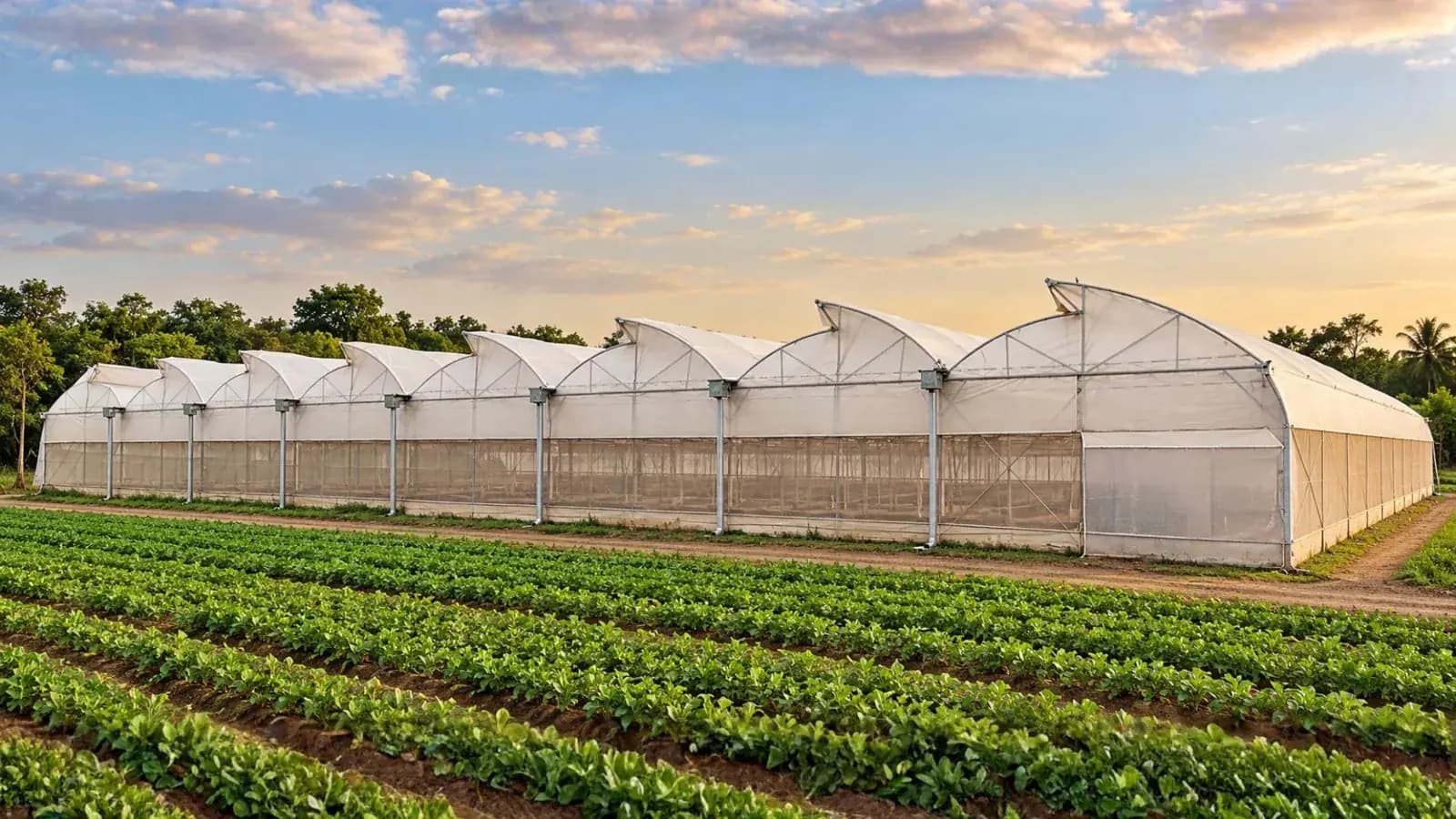
Naturally ventilated polyhouse
Best fitFilm roof keeps June–October rain off the crop; roof vents and roll-up curtains move air without power. The usual first choice in Sawantwadi.
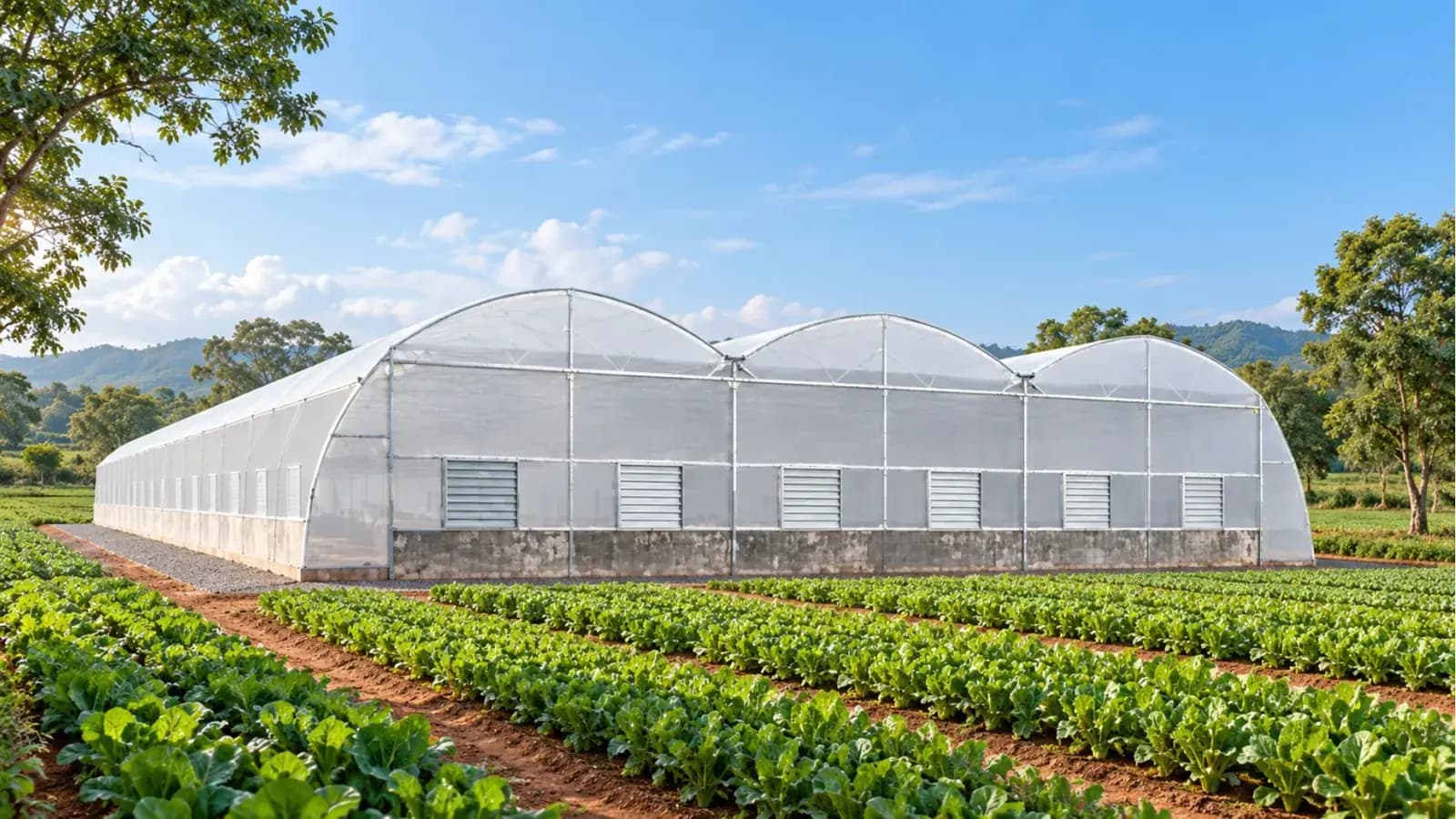
Fan & pad polyhouse
LimitedPads cool by evaporation, which works poorly at 60% humidity in April. Consider it only for crops that need tight control.
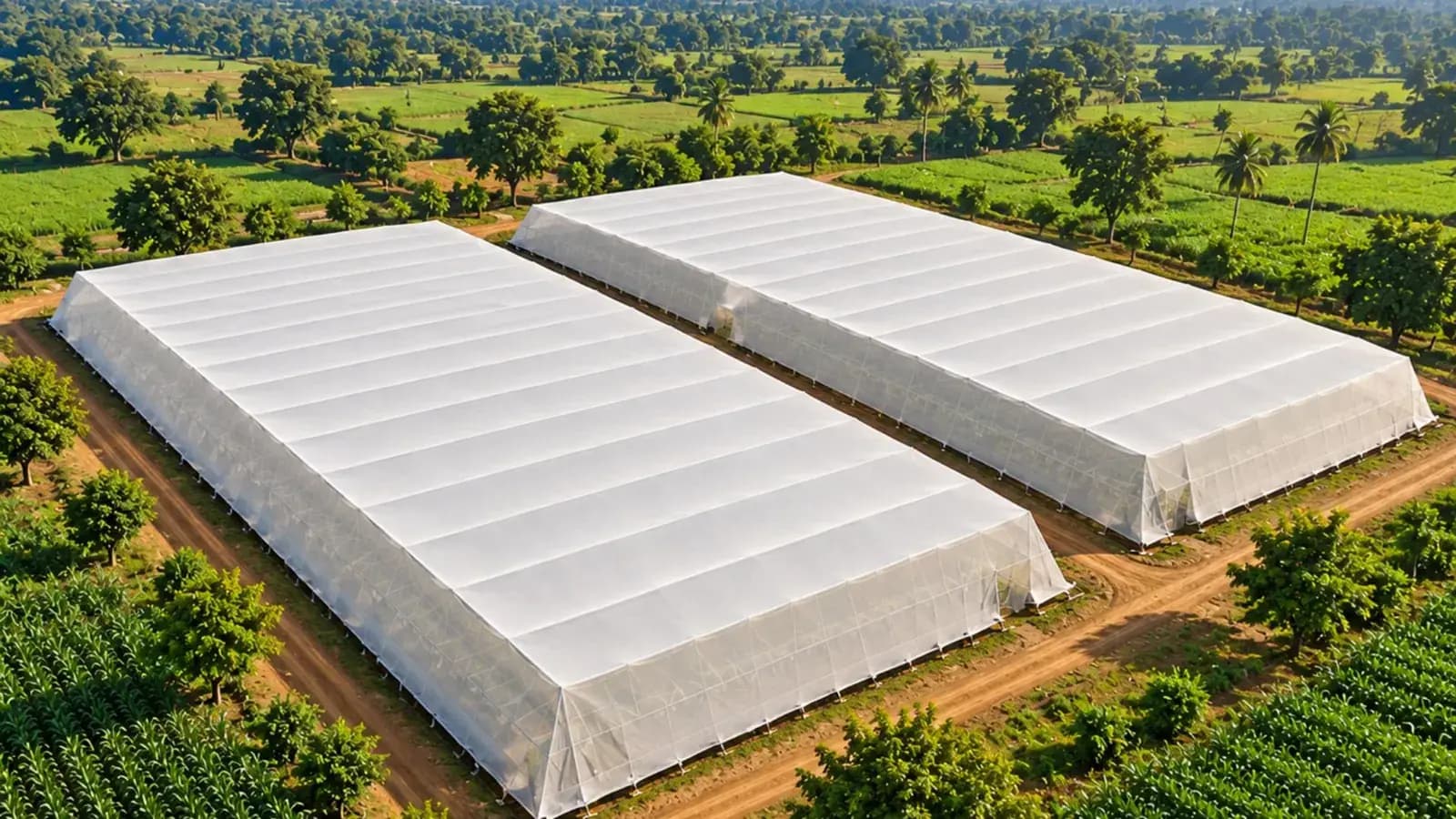
Square nethouse
SeasonalFlat-roof 4 × 4 m grid with shade and insect net, the NHB nursery design. Best from November to February, when rain is low.
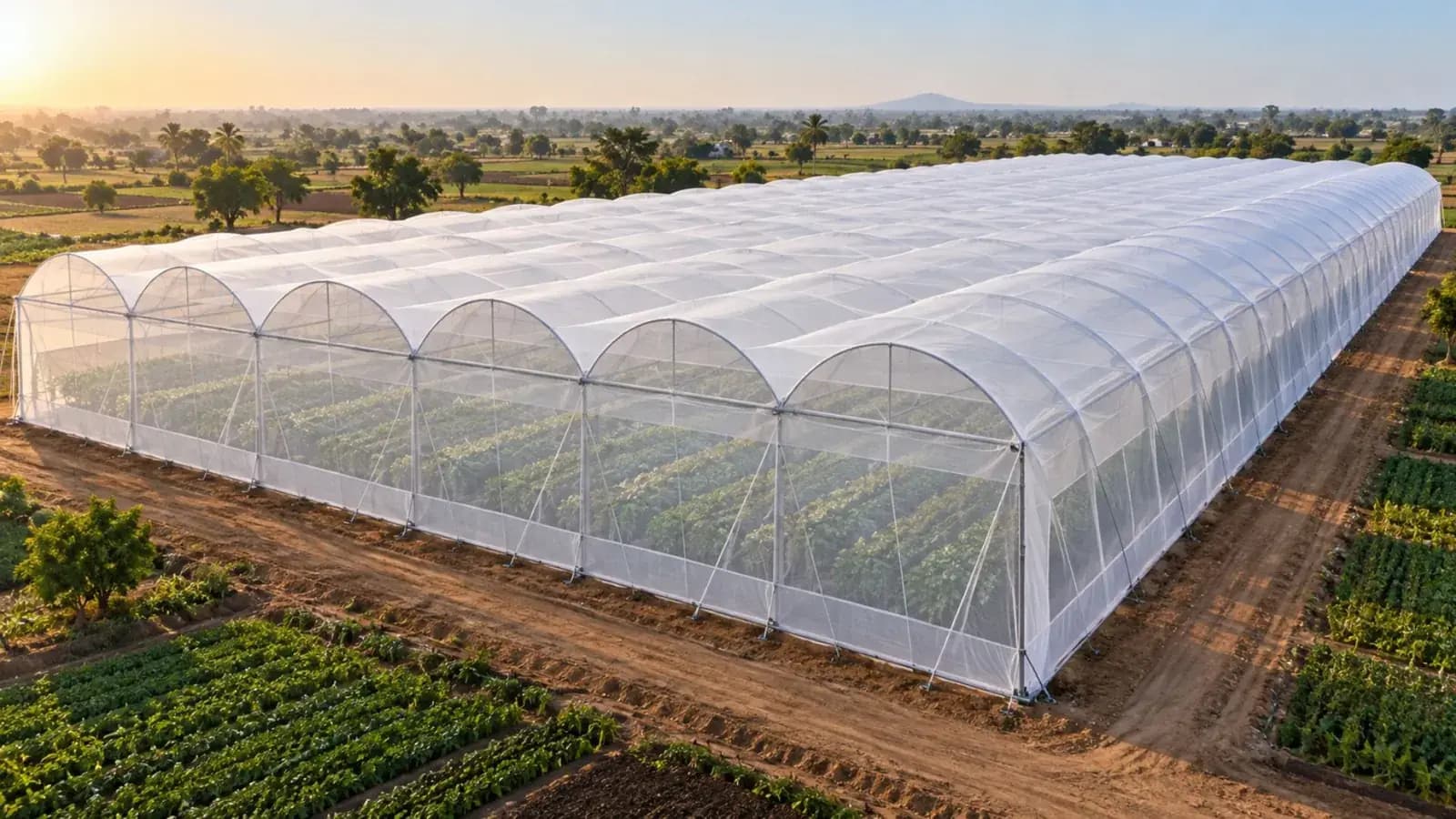
Curved nethouse
SeasonalArched GI frame covered in shade net: taller crops, more air and a lower cost than a polyhouse. Shading pays off when sunlight peaks in April.
Planting material norms and crops that suit
NHB also counts planting material and cultivation in the project cost, at these norms. The right column shows which groups suit this climate.
| Crop group | NHB norm | Suits Sawantwadi? |
|---|---|---|
| High-value vegetables | ₹140 per m² | Yes: Coloured capsicum, Cucumber (parthenocarpic), Tomato |
| Orchid and anthurium | ₹700 per m² | Less suited |
| Carnation and gerbera | ₹610 per m² | Yes: Gerbera and rose |
| Rose and lilium | ₹426 per m² | Yes: Gerbera and rose |
Steps to apply
- 1
Pick the structure and size
Match it to Sawantwadi's climate (see above) and your market. Keep under 4,000 m² for MIDH, or above 2,500 m² for an NHB project.
- 2
Get a quotation and project report
A supplier quotation listing every item with its HSN code, and for an NHB project a DPR covering cost, the high-value vegetables crop plan and repayment.
- 3
Apply before you build
MIDH: apply at the Sindhudurg district horticulture office. NHB: file for In-Principle Approval on the NHB portal; NHB has required IPA before work starts since 2017.
- 4
Bank loan (NHB)
Get the term loan sanctioned. The subsidy is back-ended: it is paid into the loan account after the project is complete.
- 5
Build to standard
Use materials that meet BIS standards and keep the test certificates; the inspection checks structure and specification.
- 6
Inspection and release
After a joint inspection, the subsidy is released to your bank (NHB) or to you (MIDH, as per the state process).
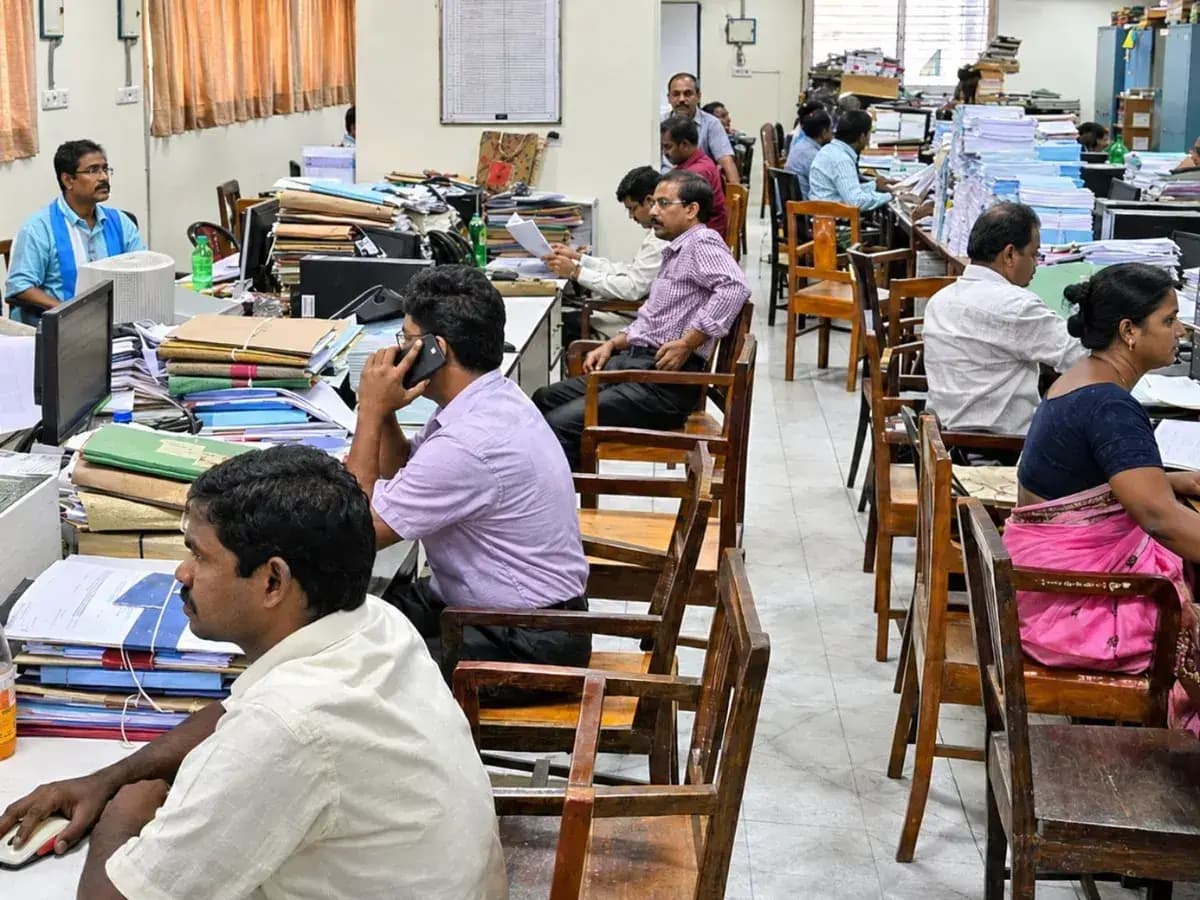
Documents you will usually need
- Land records in your name (in Maharashtra: 7/12 extract (Satbara) and 8A), or a registered lease, with a site map
- Aadhaar, PAN and bank details; for companies and FPOs, registration papers
- Soil and water test report
- Supplier quotation with HSN codes and specifications
- Detailed project report and bank sanction letter (NHB)
- Test certificates and invoices for the material, after purchase
What we provide for your file:
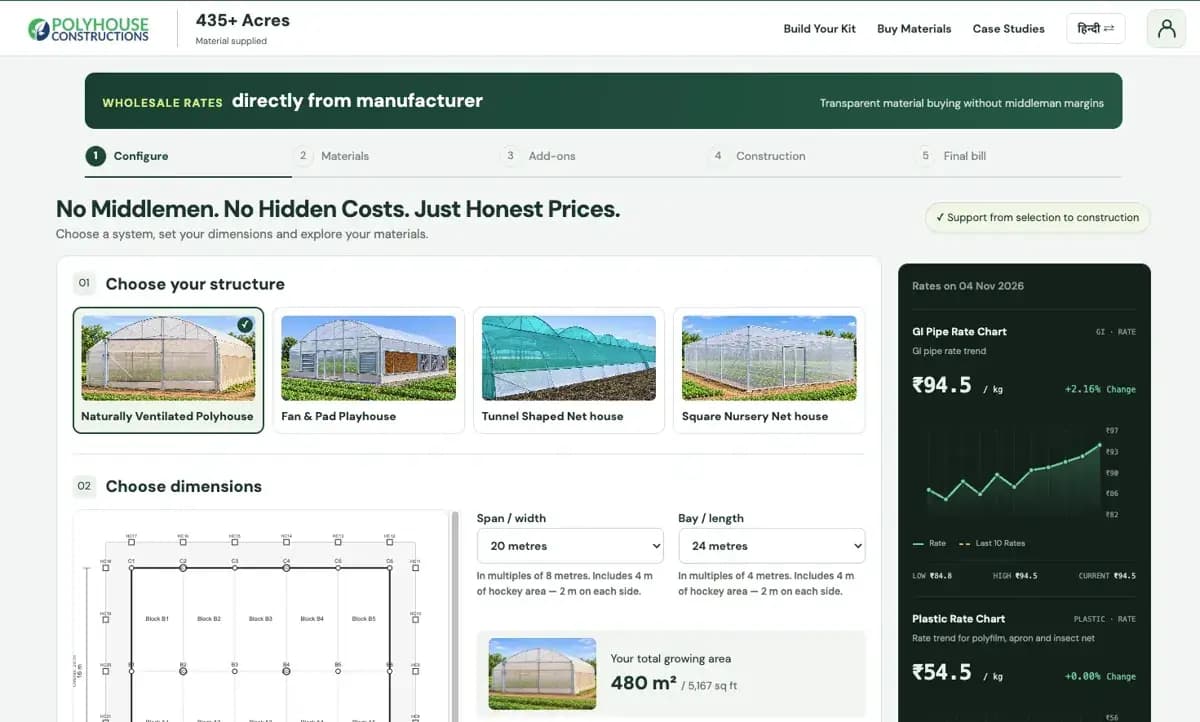
Itemised quotation
Every item with size, quantity, HSN code and GST, ready to attach to the application.

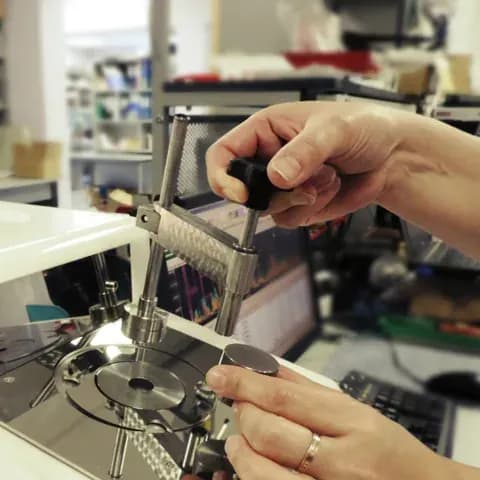
Lab test certificates
Tensile, chemical, salt spray and other tests on the steel, by third-party labs.
ISI-marked GI
GI pipes from Tata, Jindal or JSW steel, with a 15-year warranty.
Material for your Sawantwadi project
We supply the complete material for subsidy projects in Maharashtra from our Satara factory, about 300 km from Sawantwadi. See the kit and live price for your structure:
Sawantwadi within Maharashtra
Sawantwadi is one of the cooler towns in Maharashtra (126th hottest of 130), and among the wettest (14th for rain). These are the larger towns we supply elsewhere in Maharashtra.
- Subsidy project in Mumbai
- Subsidy project in Pune
- Subsidy project in Navi Mumbai
- Subsidy project in Nagpur
- Subsidy project in Thane
- Subsidy project in Pimpri-Chinchwad
- Subsidy project in Nashik
- Subsidy project in Kalyan-Dombivli
- Subsidy project in Vasai-Virar
- Subsidy project in Chhatrapati Sambhajinagar
- Subsidy project in Solapur
- Subsidy project in Bhiwandi
Buy from India's biggest CEA manufacturing company
Choose your structure and size and get the complete material list, priced this week.
FAQs
Is a polyhouse in Sawantwadi eligible for NHB subsidy?
Yes, if the project is above 2,500 m² and set up as a commercial project with a bank loan. NHB gives a credit-linked, back-ended subsidy of 50% of project cost at its norms. Smaller projects can apply under MIDH through the Sindhudurg district horticulture office.
How much subsidy can I get on 1 acre in Sawantwadi?
For a 3,952 m² naturally ventilated polyhouse with high-value vegetables, up to about ₹19.44 lakh at NHB's general norms (50% of ₹38,88,768). The sanctioned figure depends on the approved project.
Can I build first and apply later?
No. NHB requires In-Principle Approval before work starts, and MIDH applications are approved before the structure is built. Apply first.
Are hilly-area norms used in Maharashtra?
Not generally; Maharashtra uses general-area norms.
Does the material need to be ISI-marked?
The schemes expect structures that conform to technical standards. Our GI pipes carry the ISI mark and every order ships with lab test certificates.
Do you help with the subsidy file?
We provide the itemised quotation, specifications and test certificates the file needs. The application itself is made by you to the department or NHB.
Subsidy projects near Sawantwadi
The same guide for nearby towns, with the structure that suits each.
| Town | From Sawantwadi | District | Cost norms | Suits |
|---|---|---|---|---|
| Subsidy project in Mapusa | ~50 km | North Goa | General | NVPH / nethouse |
| Subsidy project in Panaji | ~60 km | North Goa | General | NVPH / nethouse |
| Subsidy project in Marmagao | ~70 km | — | General | NVPH / nethouse |
| Subsidy project in Margao | ~90 km | — | General | NVPH / nethouse |
| Subsidy project in Belagavi | ~100 km | Belagavi | General | NVPH or fan & pad |
| Subsidy project in Sankeshwara | ~100 km | Belagavi | General | NVPH or fan & pad |