
Equipment · Kolkata district, West Bengal
Protected cultivation equipment for Kolkata farms
By Editorial Team, Kryzen Biotech · Updated 13 November 2026
Kolkata needs protected-cultivation equipment that deals first with heat and strong sun in April, then persistent humidity and heavy rain from June to November. Polyhouse Constructions supplies complete material kits and individual replacement items from its Satara factory; erection is carried out by Kryzen Biotech’s construction team.
- Pad cooling
- Limited here
- Humid months
- 6
- Shading need
- High
- Delivery
- ~7 days
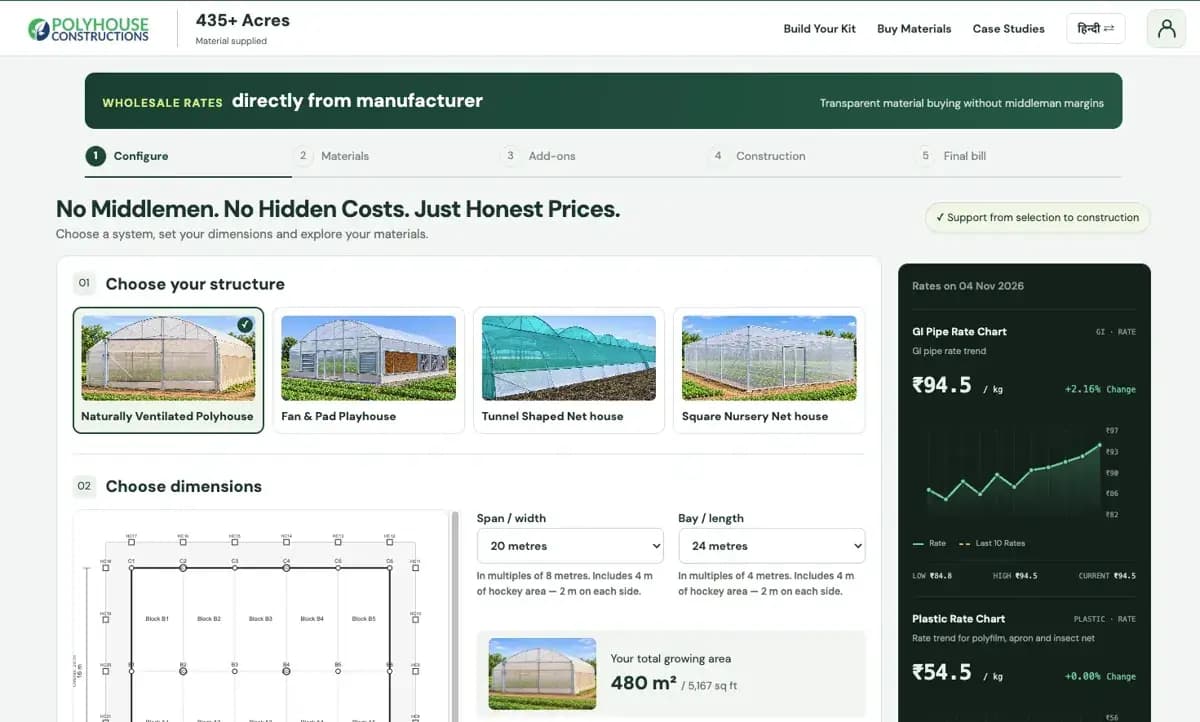
Match the structure to Kolkata’s weather, not a standard kit
The equipment choice in Kolkata should be led by moisture management. April is the hottest and brightest month, with an average afternoon high of 38.1°C and sun of 5.9 kWh/m²/day. May remains hot at 36.9°C, but rain rises to 144 mm. From June through November, humidity stays high, starting at 80% in June and reaching 89% in August and September.
The wet period also demands serious rain handling. July is the wettest month at 333 mm, followed by August at 308 mm and September at 259 mm. Openable side curtains, side insect net, circulation fans, sound film fixing, gutters and drainage components matter more here than simply closing the house. January can fall to a 10.2°C average night low, but there is no stated need for additional night equipment for this climate.
- Use shade net and open curtains for heat relief rather than relying on evaporative cooling.
- Keep air moving through the humid June–November period.
- Plan gutter, funnel and skirting-apron work before the July rain peak.
- A nethouse is most suited to Kolkata’s November–February season.
| Month | Afternoon high | Night low | Humidity | Rain | Sun (kWh/m²/day) | Wind (m/s) |
|---|---|---|---|---|---|---|
| Jan | 24.4°C | 10.2°C | 65% | 13 mm | 3.8 | 1.7 |
| Feb | 29.6°C | 14.5°C | 57% | 20 mm | 4.7 | 1.7 |
| Mar | 34.9°C | 19.8°C | 55% | 31 mm | 5.4 | 2 |
| Apr | 38.1°C | 24.3°C | 60% | 50 mm | 5.9 | 2.9 |
| May | 36.9°C | 26.2°C | 67% | 144 mm | 5.8 | 3 |
| Jun | 33.1°C | 26.7°C | 80% | 231 mm | 4.6 | 3.1 |
| Jul | 31.2°C | 26.1°C | 87% | 333 mm | 4.2 | 3.1 |
| Aug | 30.7°C | 25.8°C | 89% | 308 mm | 4.2 | 2.5 |
| Sep | 30.2°C | 25.2°C | 89% | 259 mm | 4.4 | 2 |
| Oct | 29.7°C | 22.4°C | 84% | 146 mm | 4.4 | 1.5 |
| Nov | 27.2°C | 16.6°C | 78% | 23 mm | 4.1 | 1.4 |
| Dec | 24.1°C | 11.4°C | 74% | 9 mm | 3.6 | 1.6 |
Equipment priorities for a naturally ventilated polyhouse
For an NVPH, start with a 250-micron white diffused, UV-stabilised polyfilm roof, side insect net and manual roll-up curtains. The roof film protects the crop while the curtains allow the grower to open the sides as weather changes. A White Shade Net 50% is ₹27 per metre + GST; an aluminium shade net is a reflective optional upgrade at ₹315 per metre + GST. The aluminium option is worth considering where April sun load is the main concern.
The ventilation parts should be chosen as a working set rather than as isolated materials. A Manual Gear Roll Up Curtain Unit is ₹1,050 per piece + GST, Curtain Pipe (27X2.0X6000) is ₹758 per piece + GST, Side Insect Net (5.2 m) is ₹221 per metre + GST, and a Curtain Clamp 0.75 inch is ₹11 per piece + GST. These allow the side to be opened for ventilation while retaining insect-net protection.
For the roof and side covering itself, the Polyfilm White Diffused 250 Micron (4.5 m) is ₹254 per metre + GST. Select quantities only after the structure drawing is finalised, since component counts follow the designed system and size.
- NVPH: polyfilm, side insect net, manual curtain gear and rain hardware are core items.
- Square nethouse: side insect net and shade net are standard kit materials.
- Curved nethouse: shade net is available as an optional material choice.
- Air circulation fans are an optional upgrade in an NVPH.
| Equipment | NVPH | Fan & pad | Square NH | Curved NH |
|---|---|---|---|---|
| Exhaust Fan | — | ✓ | — | — |
| Cellulose Pad (600X150X1800) | — | ✓ | — | — |
| Manual Gear Roll Up Curtain Unit | ✓ | — | — | — |
| Side Insect Net (5.2 m) | ✓ | — | ✓ | — |
| White Shade Net 50% | ✓ | ✓ | ✓ | Optional |
| Polyfilm White Diffused 250 Micron (4.5 m) | ✓ | ✓ | — | — |
| GI Gutter Sheet | ✓ | ✓ | — | — |
| Air Circulation Fan | Optional | Optional | — | — |
Why fan-and-pad cooling does not pay here
Fan-and-pad cooling is not recommended for Kolkata because the climate has about 60% humidity even in April and much higher humidity through the monsoon. Evaporative pads depend on drier incoming air; with humidity at 80% in June, 87% in July, and 89% in August and September, the useful cooling effect is limited. This is why the local priority is shade net plus open curtains, not a fan-and-pad design.
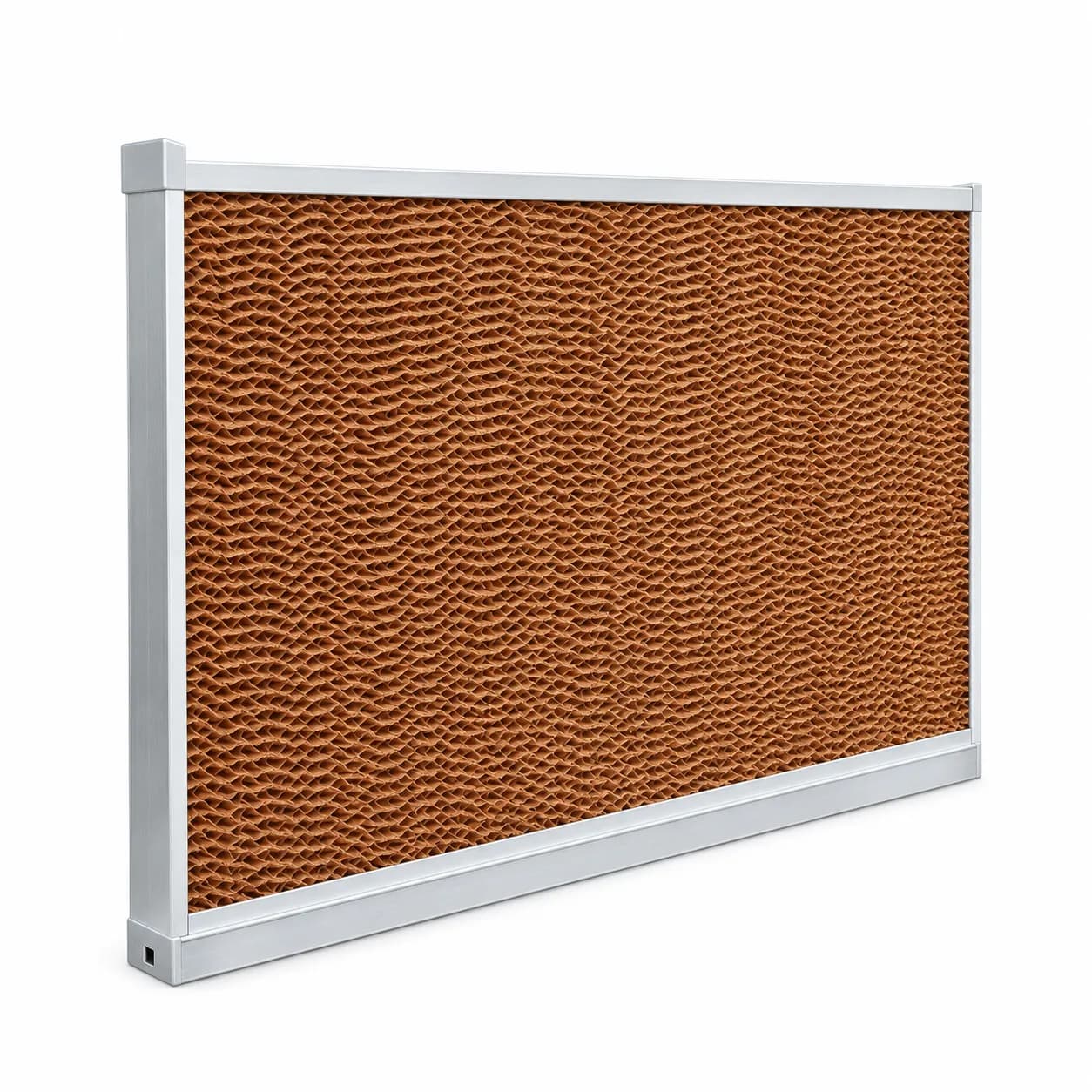
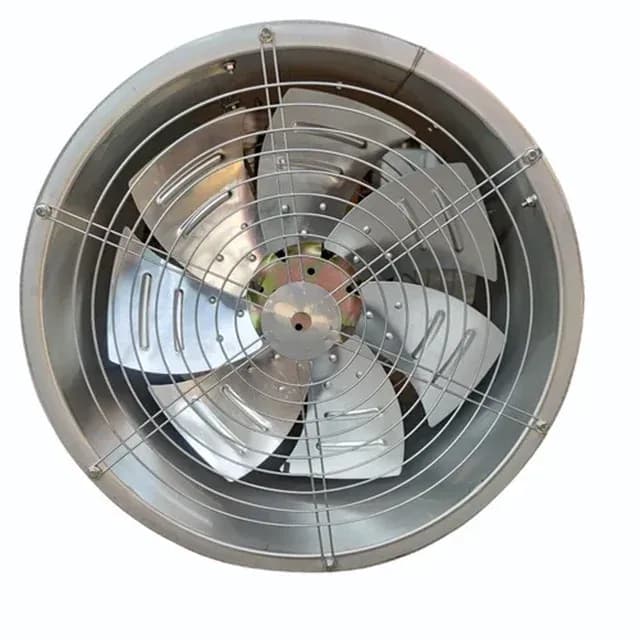
That does not mean air movement is unnecessary. An Air Circulation Fan is ₹8,999 per piece + GST and can be used as an optional upgrade in an NVPH or fan-and-pad house. It is useful for circulating air during the humid months, especially in the morning as part of routine crop-house management. If a fan-and-pad specification is still required for a particular project, an Exhaust Fan is ₹22,700 per piece + GST, a Cellulose Pad (600X150X1800) is ₹2,616 per piece + GST, and an Aluminium Pad Frame (150 mm) is ₹815 per metre + GST. These are individual equipment prices, not a cooling-system quotation.
- Choose shading and operable ventilation as the first heat-control measures.
- Use circulation fans for air movement in humid weather.
- Do not assume that an exhaust fan and pads will give the same return in Kolkata as in a dry climate.
Build rain control into the material order
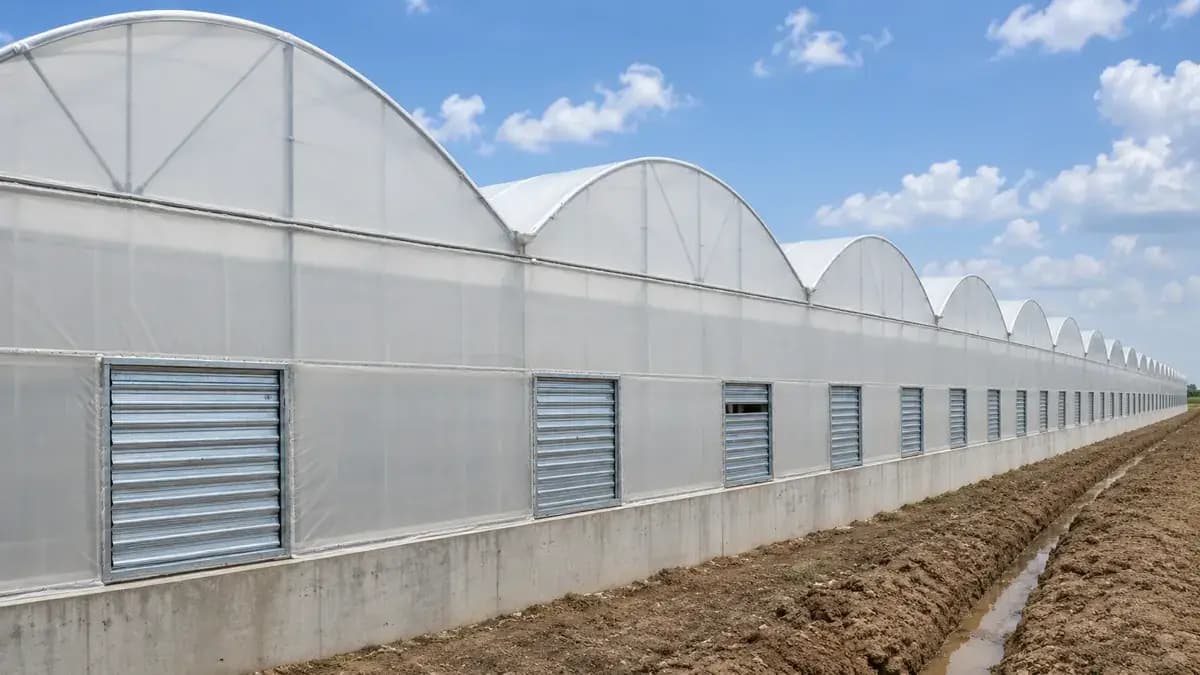
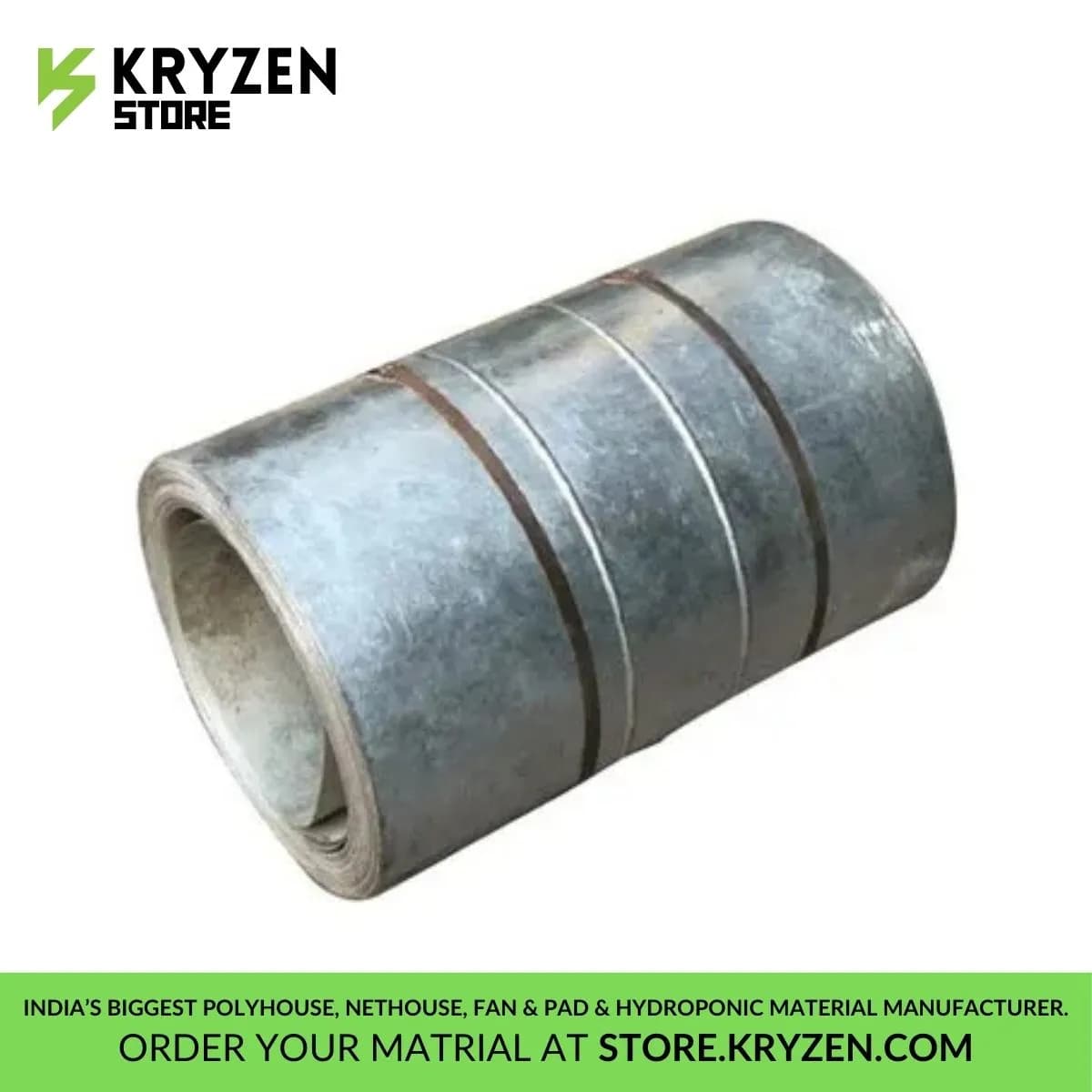
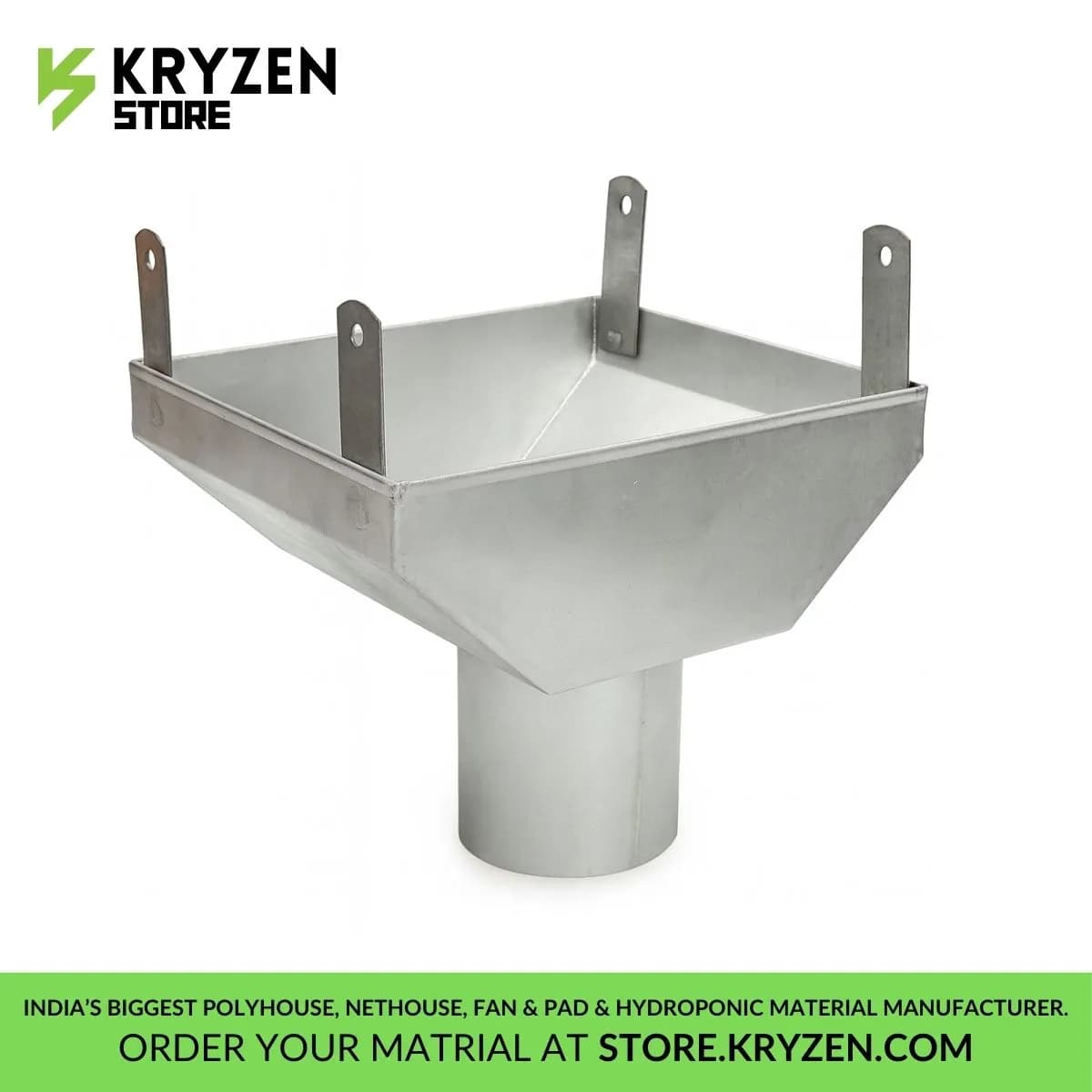
A roof that sheds water is not enough when July alone averages about 333 mm of rain. Include GI gutters to collect runoff, funnels to take water onward, and a side skirting apron to finish the lower edge. Check the site’s water exit arrangement before ordering so collected roof water is not released immediately beside the structure.
The GI Gutter Sheet is ₹335 per metre + GST and the Gutter Funnel is ₹1,350 per piece + GST. A Side Skirting Apron (1.5 m) is ₹64 per metre + GST. Gutters are used in NVPH and fan-and-pad systems; the apron can be used in NVPH, fan-and-pad, square nethouse and curved nethouse systems. These components are particularly relevant before the June-to-September rain sequence, not as after-rain repairs.
- Inspect gutter joints and funnels before the monsoon.
- Re-seat the lower apron and maintain film tension before July.
- Keep roof runoff directed away from the protected structure.

Plan crops around Sealdah Koley market seasons
Protected cultivation equipment should support a crop and marketing plan, not just create a covered area. Kolkata district has Sealdah Koley Market APMC and Sealdah Koley Market in the available market data. Tomato averaged ₹3,159 per quintal, with its recorded high of ₹4,507 in December and low of ₹1,324 in March. Cucumber averaged ₹4,629 per quintal and had its recorded high in January at ₹5,993.
Capsicum averaged ₹5,957 per quintal, with a recorded July high of ₹8,525 and February low of ₹3,077. Green chilli averaged ₹5,253 per quintal and recorded a July high of ₹6,667. These figures are historical modal-price observations, not a promise of a future rate. They can help a farmer decide whether to use a cooler nethouse season, a ventilated polyhouse, or a crop cycle that avoids the weakest observed market period.
- Tomato: highest recorded month December; lowest March.
- Cucumber: highest recorded month January; lowest May at ₹3,684/q.
- Brinjal: highest recorded month July at ₹6,725/q; lowest February.
- Check current market conditions before planting or harvesting decisions.
| Crop | Markets | Average modal price | Highest month | Lowest month |
|---|---|---|---|---|
| Tomato | 2 | ₹3,159/q | Dec (₹4,507) | Mar (₹1,324) |
| Capsicum | 2 | ₹5,957/q | Jul (₹8,525) | Feb (₹3,077) |
| Cucumber | 2 | ₹4,629/q | Jan (₹5,993) | May (₹3,684) |
| Bitter gourd | 2 | ₹4,304/q | Feb (₹5,593) | Apr (₹3,663) |
| Brinjal | 2 | ₹4,902/q | Jul (₹6,725) | Feb (₹2,256) |
| Cabbage | 2 | ₹2,495/q | Nov (₹3,555) | Feb (₹1,248) |
| Green chilli | 2 | ₹5,253/q | Jul (₹6,667) | Apr (₹3,981) |
| Okra (bhindi) | 2 | ₹4,386/q | Feb (₹8,333) | Jun (₹1,917) |
| Ridge gourd | 2 | ₹4,614/q | Jan (₹5,298) | Jun (₹3,521) |
| Cauliflower | 1 | ₹2,081/q | Jul (₹2,746) | Feb (₹1,422) |
Quality checks, steel and written warranty
Polyhouse Constructions is a venture of Kryzen Biotech Pvt Ltd and manufactures protected-cultivation structures and material in India. Its GI pipes are ISI-marked branded steel from Tata, Jindal and JSW. Every dispatch has a lab test certificate and technical data sheet, and parts go through a 32-point QA checklist. This gives the buyer a documented basis to check what has been supplied before installation.
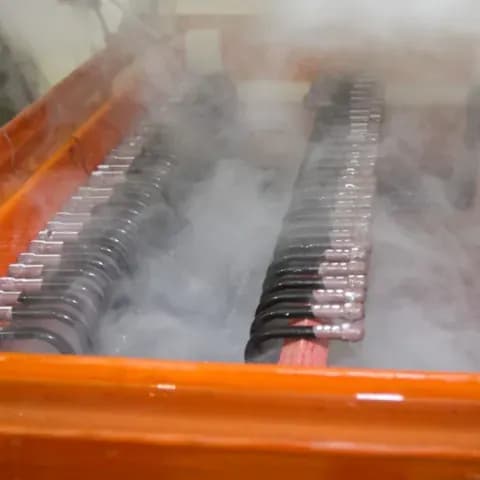
For Kolkata’s humid conditions, ask to see the corrosion-related documentation along with the material list. The listed testing includes a third-party tensile test for GI-pipe steel strength, salt-spray testing for corrosion resistance, and chemical analysis of steel composition by spectrometer. The manufacturing warranty is 15 years on the GI structure, 2.5 years on polyfilm and 3 years on shade and insect nets.
- Confirm every item and quantity against the design before erection.
- Retain the lab certificate, technical sheet and warranty details with the purchase records.
- Use the warranty periods by part; they are not one blanket warranty for every material.

Tensile test
Strength of the GI pipe steel, by a third-party lab.
Salt spray test
Corrosion resistance; worth it in humid Kolkata.
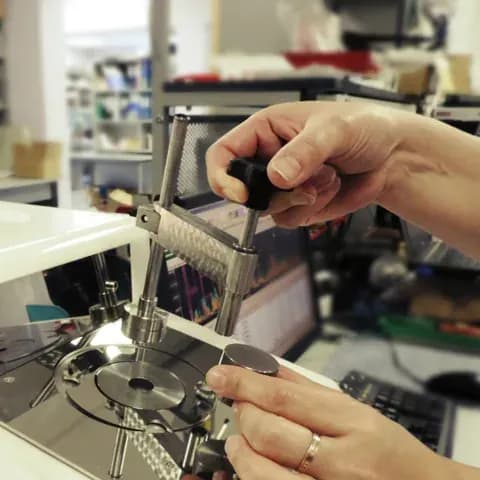
Chemical analysis
Spectrometer check of the steel composition.
| Part | Warranty |
|---|---|
| GI structure | 15 years |
| Polyfilm | 2.5 years |
| Shade and insect nets | 3 years |
A care calendar suited to Kolkata
Before July, clear gutters and funnels, re-seat the side skirting apron and inspect film tension. This timing matters because the heaviest average rain arrives in July. It is also the right time to look for damage around roof-water collection points rather than waiting for continuous rain.
From June to November, run air circulation fans in the mornings where they are installed, grease curtain gear units, and inspect side insect net for tears. The air is humid throughout this period, so a curtain that cannot open smoothly or a damaged net should be addressed promptly. From November to February, tighten clamps and bolts, inspect GI springs in aluminium profiles, and arrange replacement film or net ahead of the next season.
- Before July: rain hardware, lower apron and film tension.
- June–November: fan routine, curtain-gear lubrication and net inspection.
- November–February: clamps, bolts, springs, replacement-cover planning.
- 1
Before July
Clear gutters and funnels, re-seat the side skirting apron and check film tension; July brings about 333 mm.
- 2
June to November
Run air circulation fans in the mornings, keep curtain gear units greased and check insect net for tears; humid air brings fungal disease and pests.
- 3
November to February
Tighten clamps and bolts, check GI springs in the aluminium profiles, and order replacement film or net before the next season.
Ordering kits, spares and construction support
A farmer can build a complete kit online at polyhouseconstructions.com and see every item, quantity and that week’s rate. Kits are available for naturally ventilated polyhouses, fan-and-pad polyhouses, square nethouses and curved nethouses, covering GI structure, polyfilm, nets and fittings. Individual fans, pads, nets and fittings are also sold for repairs or extensions at the weekly rate.
Prices follow weekly GI and plastic rates updated every Friday. A 5% bulk discount applies on 10 or more units of an item. Booking is with 5% advance and 95% before dispatch. Material is manufactured at Degaon on the Pune–Bangalore Highway, Tal. Wai, Satara, Maharashtra, and delivery to Kolkata is stated as 7 days after dispatch. Polyhouse Constructions does not have a Kolkata office; construction and erection are done by Kryzen Biotech’s construction team.
- Order an individual fitting, net, fan or pad when repairing an existing system.
- Check the Friday-updated rate before finalising the order.
- For a complete build, match the material kit to the structure drawing and construction plan.
Need only a few items?
Every fan, pad, net and fitting is sold on its own at the weekly rate, for repairs and extensions.
Buy from India's biggest CEA manufacturing company
Choose your structure and size and get the complete material list, priced this week.
FAQs
Is fan-and-pad cooling suitable for a polyhouse in Kolkata?
It is not recommended as the main cooling choice because Kolkata’s humidity is about 60% even in April and rises from 80% in June to 89% in August and September. Shade net, open curtains and air circulation are the stated priorities for this climate.
Which equipment is most important before Kolkata’s monsoon?
Check GI gutters, gutter funnels, side skirting apron and film tension before July, when average rain is about 333 mm. For ventilated houses, also make sure side curtains operate freely and insect net has no tears.
What are the listed prices for common ventilation equipment?
The Manual Gear Roll Up Curtain Unit is ₹1,050 per piece + GST, Curtain Pipe is ₹758 per piece + GST, Side Insect Net is ₹221 per metre + GST, and an Air Circulation Fan is ₹8,999 per piece + GST. Rates for material follow weekly GI and plastic updates every Friday.
What warranty comes with polyhouse materials?
The GI structure has a 15-year manufacturing warranty, polyfilm has a 2.5-year warranty, and shade and insect nets have a 3-year warranty. Lab test certificates and technical data sheets are supplied with dispatch.
Can I buy only spares instead of a complete Kolkata polyhouse kit?
Yes. Individual fans, pads, nets and fittings are sold for repairs and extensions at the weekly rate, while complete kits are also available. Material is supplied from the Satara factory, with Kolkata delivery stated as 7 days after dispatch.
Equipment supply near Kolkata
Nearby towns on the same route, and whether pad cooling works there.
| Town | From Kolkata | Pad cooling | Humid months | Hottest month |
|---|---|---|---|---|
| Equipment supplier in Bally | ~10 km | Limited | 6 | Apr, 38°C |
| Equipment supplier in Baranagar | ~10 km | Limited | 6 | Apr, 38°C |
| Equipment supplier in Howrah | ~10 km | Limited | 6 | Apr, 38°C |
| Equipment supplier in Kamarhati | ~20 km | Limited | 6 | Apr, 38°C |
| Equipment supplier in Madhyamgram | ~20 km | Limited | 6 | Apr, 38°C |
| Equipment supplier in Maheshtala | ~20 km | Limited | 6 | Apr, 38°C |