
Equipment · Bhopal district, Madhya Pradesh
Protected cultivation equipment for Bhopal farms
By Editorial Team, Kryzen Biotech · Updated 13 November 2026
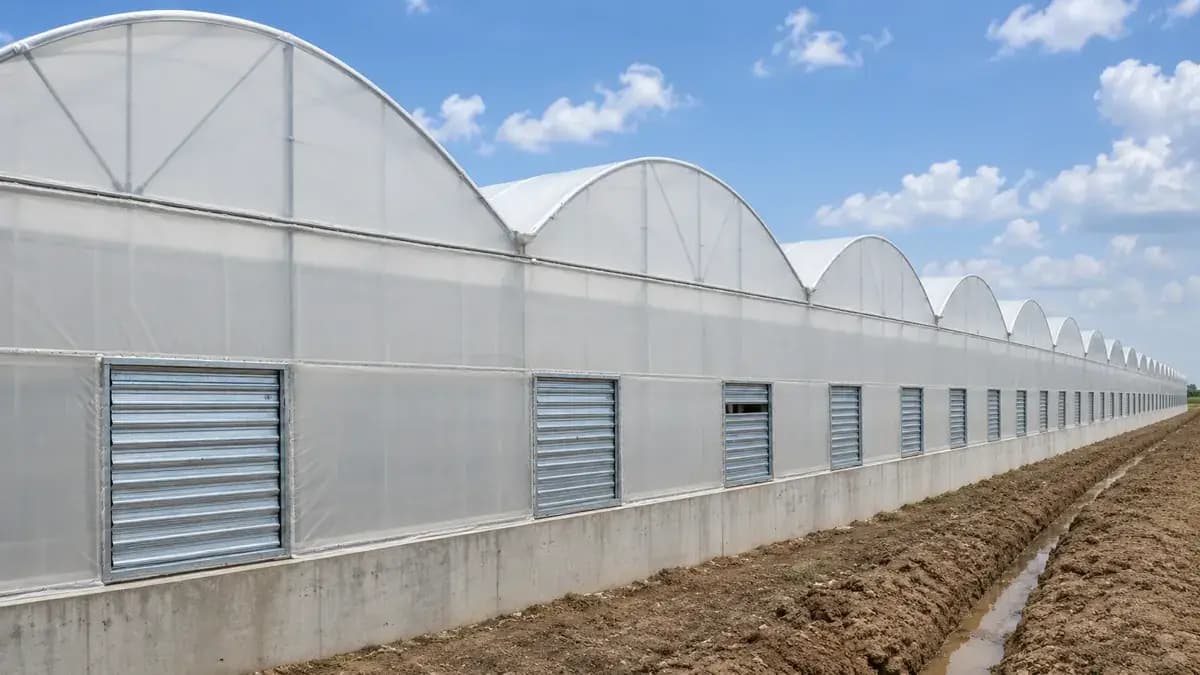
Bhopal growers need equipment that handles a dry, high-sun April–May, heavy July–August rain and humid air through September. Polyhouse Constructions supplies complete polyhouse and nethouse material kits, as well as individual fans, pads, film, nets, gutters and fittings, from its Satara factory; erection is handled by Kryzen Biotech’s construction team.
- Pad cooling
- Works: ~30°C inside
- Humid months
- 3
- Shading need
- High
- Delivery
- ~4 days
Material supply and construction for Bhopal
Polyhouse Constructions is a manufacturer of protected-cultivation structures and material, and a venture of Kryzen Biotech Pvt Ltd. Material is manufactured at Degaon on the Pune–Bangalore Highway, Tal. Wai, Satara, Maharashtra—not from a Bhopal office. Bhopal is 890 km from the factory, and delivery is expected in 4 days after dispatch.
Farmers can order a full kit for a naturally ventilated polyhouse (NVPH), fan & pad polyhouse, square nethouse or curved nethouse. The online kit shows each item, its quantity and that week’s rate. If construction is required, the Kryzen Biotech construction team carries out the erection.
Prices follow weekly GI steel and plastic rates and are updated every Friday. A 5% bulk discount applies on 10 or more units of an item. Booking is with 5% advance and the remaining 95% before dispatch.
- Complete kits include GI structure, polyfilm, nets and fittings.
- Individual equipment can also be purchased for repairs, replacement or extension.
- The factory uses ISI-marked, branded steel from Tata, Jindal and JSW.
What Bhopal weather asks of a protected structure
The main heat decision comes before and during May. Bhopal’s average afternoon high reaches 40°C in April and 42.3°C in May, while sun reaches 7.1 and 7.2 kWh/m²/day respectively. The equipment plan should therefore combine shading with a way to remove hot air rather than rely on a closed house alone.
Rain management becomes equally important with the monsoon. July averages 418 mm rain and August 381 mm; humidity is 81% in July, 88% in August and 83% in September. Side ventilation, insect-net condition, drainage and a sound gutter path matter in this period. January nights can average 8.7°C, but the local equipment priority is not additional night heating.
The month-by-month table below is useful when deciding when to fit shade, service cooling equipment and inspect rainwater components.
- May: 42.3°C average high, 7.2 kWh/m²/day sun and 24% humidity.
- July: 418 mm rain, 81% humidity and 30.7°C average high.
- January: 8.7°C average night low.
| Month | Afternoon high | Night low | Humidity | Rain | Sun (kWh/m²/day) | Wind (m/s) |
|---|---|---|---|---|---|---|
| Jan | 25.6°C | 8.7°C | 42% | 11 mm | 4.3 | 1.8 |
| Feb | 29.7°C | 11.9°C | 35% | 11 mm | 5.3 | 1.9 |
| Mar | 34.8°C | 17.1°C | 27% | 12 mm | 6.3 | 2.1 |
| Apr | 40°C | 22.9°C | 20% | 6 mm | 7.1 | 2.5 |
| May | 42.3°C | 27.5°C | 24% | 13 mm | 7.2 | 3.5 |
| Jun | 37.4°C | 26.6°C | 53% | 167 mm | 5.8 | 3.6 |
| Jul | 30.7°C | 23.7°C | 81% | 418 mm | 4.1 | 3.3 |
| Aug | 28.8°C | 22.9°C | 88% | 381 mm | 3.8 | 2.8 |
| Sep | 29.5°C | 21.6°C | 83% | 155 mm | 4.9 | 2 |
| Oct | 29.5°C | 18°C | 69% | 25 mm | 5.3 | 1.5 |
| Nov | 28°C | 13.5°C | 58% | 11 mm | 4.5 | 1.4 |
| Dec | 26.1°C | 9.8°C | 49% | 6 mm | 4.2 | 1.6 |
Choose cooling, shading and ventilation for the crop plan
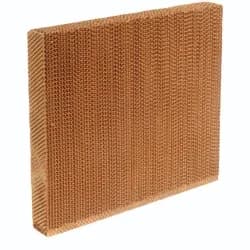
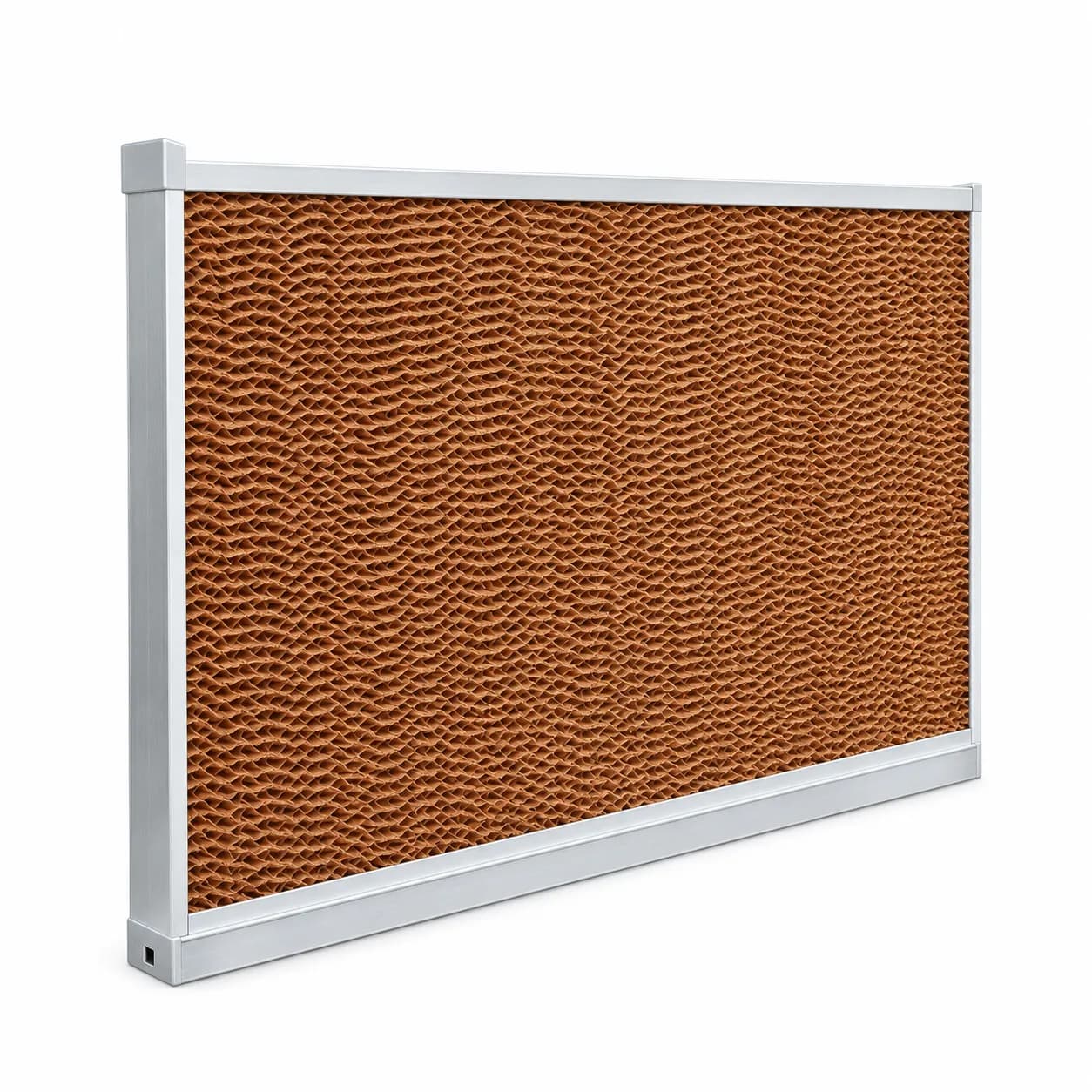
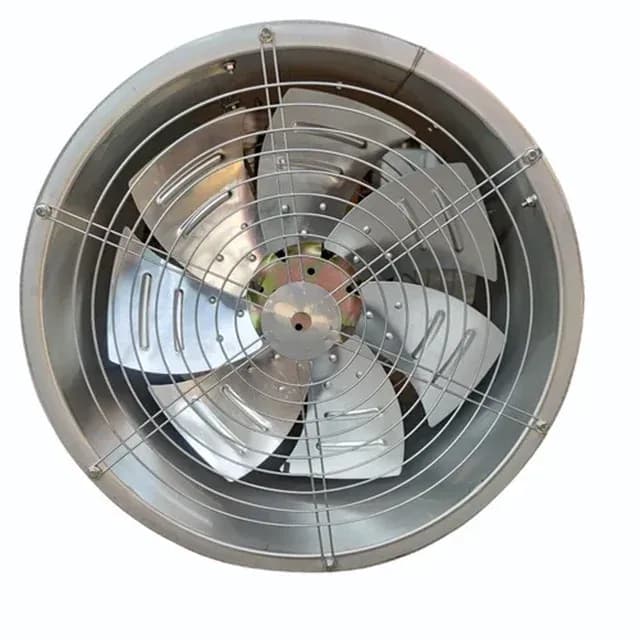
For a Bhopal fan & pad house, exhaust fans and cellulose pads are the direct response to May heat. The available climate assessment indicates pads can bring 42°C conditions to about 30°C. That makes fan & pad cooling technically suited to the hottest period; whether it pays for a particular farm still depends on the crop, selling period, scale and the farmer’s operating plan.
For an NVPH, roof ventilation and roll-up curtains are important for changing air, particularly from July to September. Air circulation fans are an optional upgrade in NVPH and fan & pad houses. They can assist air movement when humid conditions make still air undesirable.
For shading, aluminium shade net or double-layer net is the relevant option under Bhopal’s May sun. A 250-micron white diffused polyfilm is used in NVPH and fan & pad systems, while 50% shade nets suit the applicable polyhouse or nethouse system. Select the system first, then match the equipment; a fan and pad set is not used in a square or curved nethouse.
- Fan & pad: cooling for the April–May heat period.
- Roof vent and curtains: air exchange in an NVPH.
- Aluminium or double-layer shade net: response to May’s high solar load.
- No extra night equipment is identified as a local priority.
| Need | For Bhopal | Why |
|---|---|---|
| Cooling | Exhaust fans + cellulose pads | Pads bring 42°C to ~30°C in May |
| Air movement | Roof vent + curtains | Humid from July to September |
| Shading | Aluminium or double-layer net | Sun peaks at 7.2 kWh/m² in May |
| Rain | Wide gutters, funnels, skirting apron | July: ~418 mm |
| Nights | No extra need | — |
Equipment and this week’s listed item prices
For a fan & pad setup, an Exhaust Fan is listed at ₹22,700 per piece + GST. A Cellulose Pad (600X150X1800) is ₹2,616 per piece + GST, and an Aluminium Pad Frame (150 mm) is ₹815 per metre + GST. An Air Circulation Fan, suitable as an optional upgrade in NVPH or fan & pad systems, is ₹8,999 per piece + GST.
For covering and shade, Polyfilm White Diffused 250 Micron (4.5 m) is ₹254 per metre + GST. White Shade Net 50% and Green Shade Net 50% are each ₹27 per metre + GST; Aluminium Shade Net (4 m) is ₹315 per metre + GST. The polyfilm is UV stabilised.
For side ventilation, a Manual Gear Roll Up Curtain Unit is ₹1,050 per piece + GST, Curtain Pipe (27X2.0X6000) is ₹758 per piece + GST, Side Insect Net (5.2 m) is ₹221 per metre + GST, and a Curtain Clamp 0.75-inch is ₹11 per piece + GST. These are item prices, not a whole-project quote, and change with the Friday weekly rate update.
- A representative 52 × 76 m fan & pad house is 3,952 m² and uses 12 exhaust fans and 82 cellulose pads.
- The material figure for that stated configuration, including GST, is ₹32,48,775.
- Obtain the item-wise kit quantity for the selected structure instead of applying this example to every farm.
Keep monsoon water away from the crop area
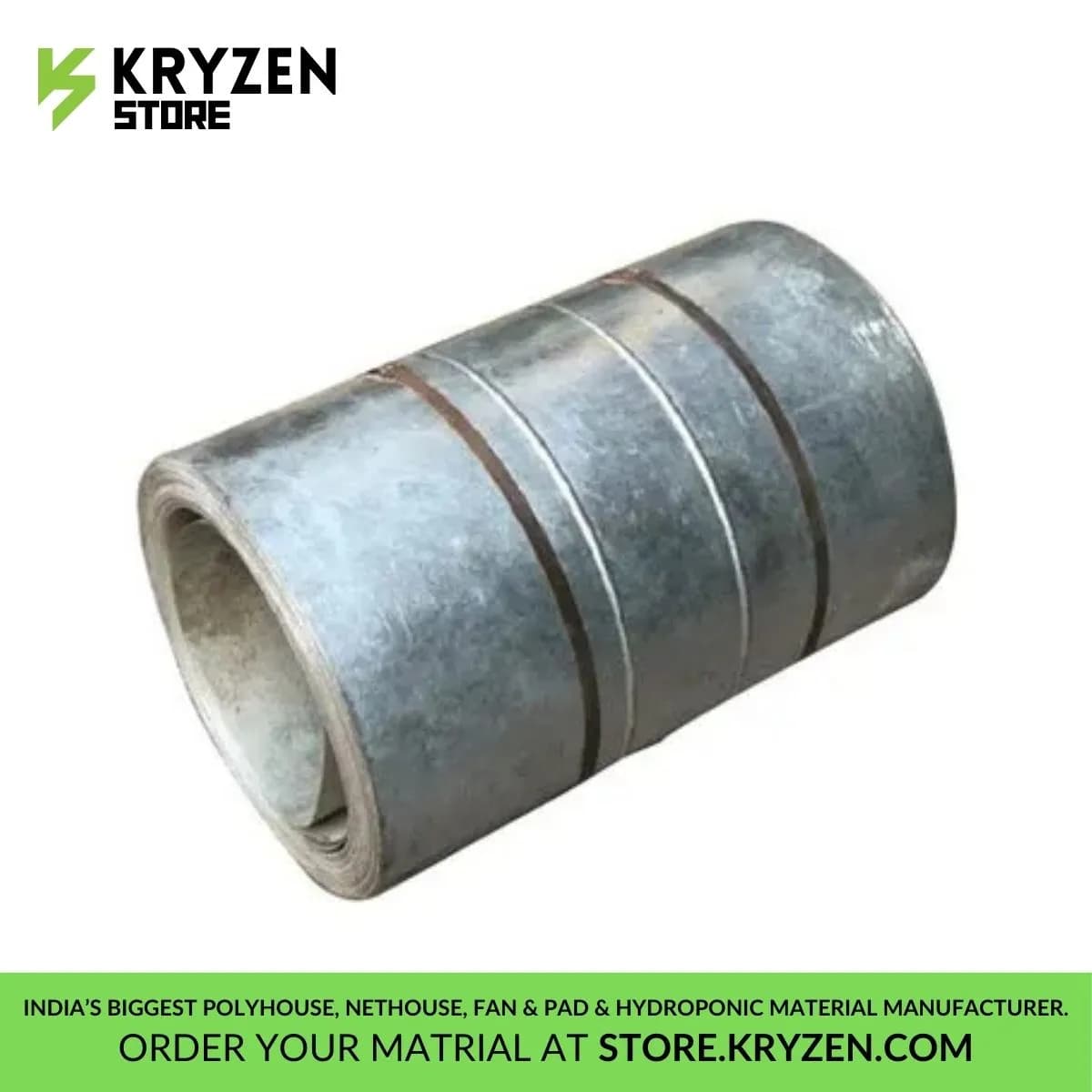
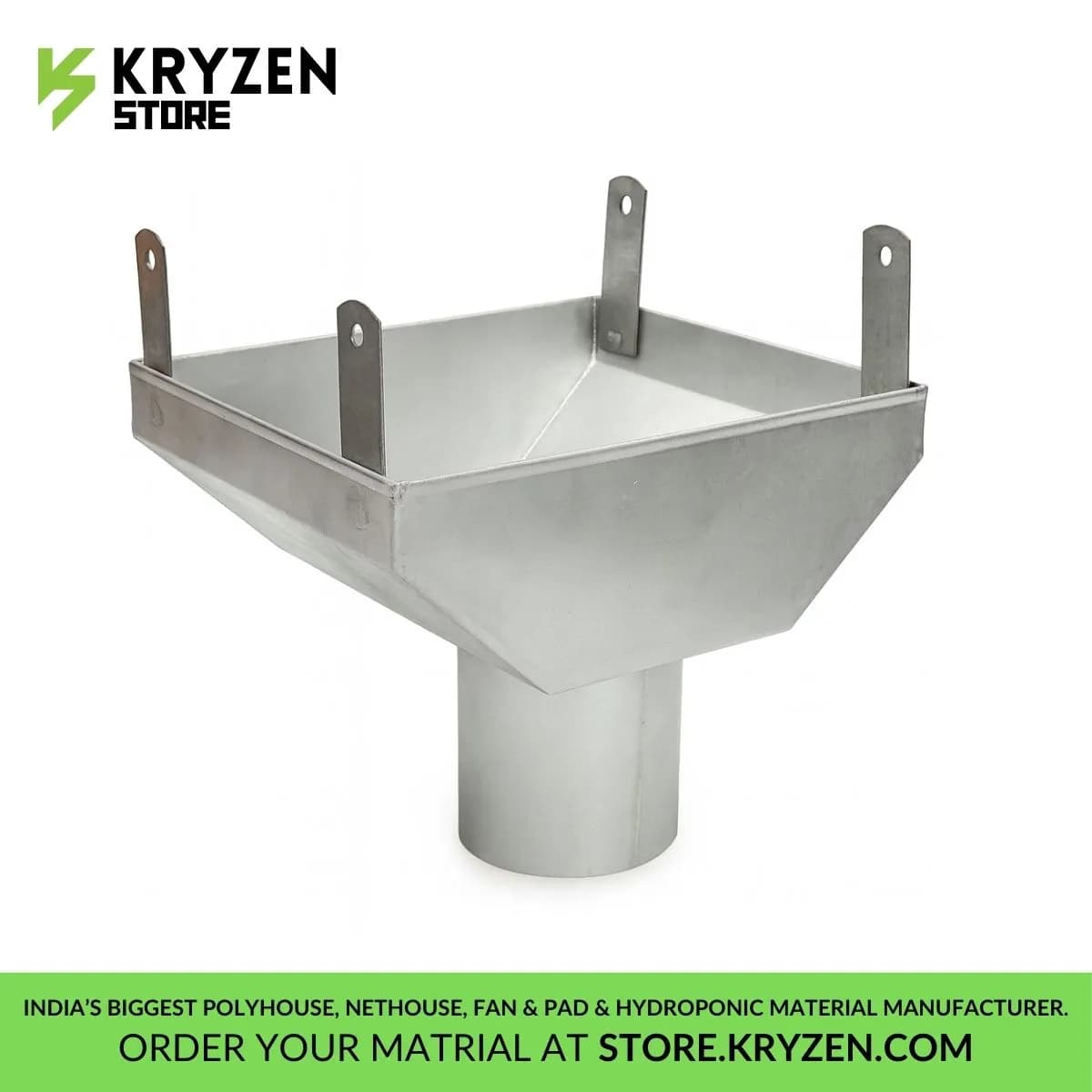
July and August are not months to postpone rainwater checks. For polyhouses, a GI Gutter Sheet is listed at ₹335 per metre + GST and a Gutter Funnel at ₹1,350 per piece + GST. These components are used in NVPH and fan & pad houses to direct roof runoff.
A Side Skirting Apron (1.5 m) is ₹64 per metre + GST and can be used in NVPH, fan & pad, square nethouse and curved nethouse systems. Before the July rain peak, inspect that the skirting is seated, gutters are clear and funnels have no blockage. This is especially relevant when July alone averages about 418 mm of rain.
- Use gutters and funnels in NVPH and fan & pad houses.
- Check runoff components before July.
- Re-seat the side skirting apron before persistent monsoon rain.

Match crops and harvest timing to Bhopal markets
Protected cultivation equipment should be considered alongside the likely marketing period, not only climate. In Bhopal district, the listed markets include Bhopal(F&V) APMC, Bhopal(F&V), Bhopal APMC and Bhopal. The table below gives modal-price seasons from the last two years of daily Agmarknet data; these are market observations, not promised future prices.
Capsicum has an average modal price of ₹2,326/q across two markets, with the recorded high of ₹3,200/q in July and low of ₹1,600/q in April. Tomato averages ₹1,559/q, with August recorded at ₹2,181/q and April at ₹933/q. Green chilli averages ₹2,264/q and recorded ₹3,365/q in July.
Coriander leaves recorded the highest month in October at ₹4,306/q, against a May low of ₹1,262/q. Cucumber’s recorded high was ₹1,188/q in September and low ₹888/q in July. Use such timing only as one input for crop and cooling decisions, alongside your own crop cycle and sale route.
- All figures in the table are ₹ per quintal.
- Capsicum and green chilli have higher listed average modal prices than tomato in this district data.
- Seasonal price records do not guarantee future mandi returns.
| Crop | Markets | Average modal price | Highest month | Lowest month |
|---|---|---|---|---|
| Tomato | 2 | ₹1,559/q | Aug (₹2,181) | Apr (₹933) |
| Cucumber | 2 | ₹1,054/q | Sep (₹1,188) | Jul (₹888) |
| Green chilli | 2 | ₹2,264/q | Jul (₹3,365) | Jun (₹1,636) |
| Cauliflower | 2 | ₹1,572/q | Sep (₹1,924) | Apr (₹1,000) |
| Coriander (leaves) | 4 | ₹2,103/q | Oct (₹4,306) | May (₹1,262) |
| Brinjal | 2 | ₹956/q | Nov (₹1,167) | Jun (₹836) |
| Cabbage | 2 | ₹889/q | Aug (₹1,035) | Nov (₹713) |
| Capsicum | 2 | ₹2,326/q | Jul (₹3,200) | Apr (₹1,600) |
| Okra (bhindi) | 2 | ₹1,924/q | Oct (₹2,130) | Aug (₹1,712) |
| Bottle gourd | 2 | ₹2,074/q | Oct (₹2,458) | May (₹1,622) |
A Bhopal care calendar for the equipment
Before May, wash or replace cellulose pads, clean the pad gutter and filter, and inspect each exhaust fan belt and shutter. This work should be completed before the 42.3°C average May high rather than after cooling demand begins.
Before July, clear gutters and funnels, check film tension and re-seat the side skirting apron. During July to September, run air circulation fans in the mornings where installed, grease curtain gear units and look for tears in insect net. This is the humid season, when air movement and exclusion of pests need regular attention.
In the drier months, tighten clamps and bolts and check GI springs inside aluminium profiles. Order replacement film or net before the next season, rather than wait for a torn cover or failed fitting during heat or rain.
- Before May: pads, fan belts and shutters.
- Before July: gutters, funnels, apron and film tension.
- July–September: circulation, curtain gear and insect-net inspection.
- Dry season: clamps, bolts, GI springs, film and net replacements.
- 1
Before May
Wash or replace cellulose pads, clean the pad gutter and filter, and check every exhaust fan belt and shutter before the 42°C peak.
- 2
Before July
Clear gutters and funnels, re-seat the side skirting apron and check film tension; July brings about 418 mm.
- 3
July to September
Run air circulation fans in the mornings, keep curtain gear units greased and check insect net for tears; humid air brings fungal disease and pests.
- 4
Dry season
Tighten clamps and bolts, check GI springs in the aluminium profiles, and order replacement film or net before the next season.
Quality records, warranty and replacement parts
Every dispatch is backed by a 32-point QA checklist, a lab test certificate and a technical data sheet for each product. The quality checks include third-party tensile testing of GI pipe steel strength, salt-spray testing for corrosion resistance and chemical analysis of steel composition. Salt-spray performance is useful to consider in Bhopal’s July–September humidity.
The stated warranty is 15 years on the GI structure, 2.5 years on polyfilm and 3 years on shade and insect nets. This is separate from routine maintenance: gutter cleaning, film tension checks and damaged-net replacement remain important farm tasks.
A farmer does not need to wait for a full structure purchase to replace a worn part. Fans, pads, nets and fittings are sold individually at the weekly rate for repairs and extensions. Common structural items include Clamps 60 mm Full at ₹17 per piece + GST, Aluminium Profile at ₹27 per metre + GST and GI Spring at ₹6 per metre + GST.
- Ask for the product technical data sheet and lab test certificate with dispatch.
- Confirm the Friday rate before placing an order for replacement material.
- Use individual-item supply for a repair or extension rather than buying an unnecessary full kit.

Tensile test
Strength of the GI pipe steel, by a third-party lab.
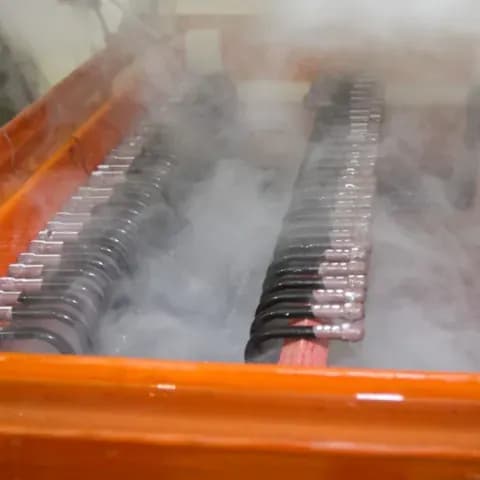
Salt spray test
Corrosion resistance; worth it in humid Bhopal.
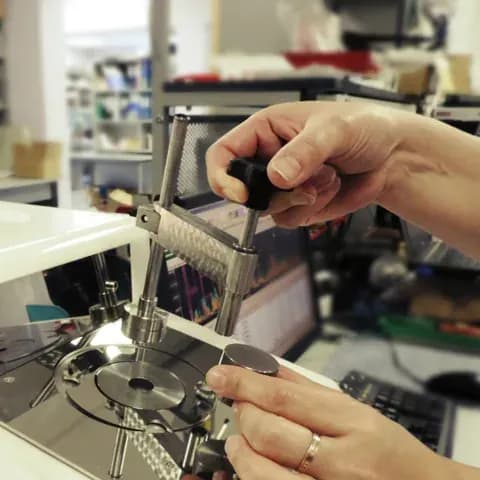
Chemical analysis
Spectrometer check of the steel composition.
| Part | Warranty |
|---|---|
| GI structure | 15 years |
| Polyfilm | 2.5 years |
| Shade and insect nets | 3 years |
Ordering the right kit without over-specifying it
Start with the crop, chosen structure and expected production months. A grower targeting peak summer conditions may evaluate fan & pad equipment; a grower selecting an NVPH should account for roll-up curtains, side insect net, film, shade and rain management. Square and curved nethouses use their own material combinations, rather than polyfilm-and-pad equipment by default.
Share the required system and area so that every part can be counted to the design. Polyhouse Constructions manufactures the material in-house; the kit can be built online with visible item quantities and weekly rates. Construction, where required, is undertaken by Kryzen Biotech’s team.
For subsidy planning, MIDH/NHM states 50% of the cost norm up to 4,000 m² per beneficiary. NHB commercial projects above 2,500 m² require In-Principle Approval before starting; norms can change, so confirm the current position with the Madhya Pradesh horticulture department before committing to the project.
- Use individual-item ordering for a fan, pad, net or fitting replacement.
- Use a complete kit when structure, covering and fittings are all being planned together.
- Do not begin an NHB project before the required In-Principle Approval.
Need only a few items?
Every fan, pad, net and fitting is sold on its own at the weekly rate, for repairs and extensions.
Buy from India's biggest CEA manufacturing company
Choose your structure and size and get the complete material list, priced this week.
FAQs
Does fan and pad cooling work in Bhopal?
Yes, the climate assessment indicates cellulose pads and exhaust fans can bring May conditions of about 42°C down to around 30°C inside a fan & pad house. Whether the investment pays for an individual farm depends on the chosen crop, scale, selling period and operating plan.
Which months need the most equipment attention in Bhopal?
Service pads, fan belts and shutters before May, when the average high reaches 42.3°C. Clear gutters and check film tension before July, because July averages 418 mm rain; inspect insect net and ventilation through the humid July–September period.
What are the prices of fan and pad components?
The listed Exhaust Fan price is ₹22,700 per piece + GST, and a Cellulose Pad (600X150X1800) is ₹2,616 per piece + GST. An Aluminium Pad Frame (150 mm) is ₹815 per metre + GST; prices follow weekly rates updated every Friday.
How long will material take to reach Bhopal?
Bhopal is 890 km from the Satara factory, and the stated delivery time is 4 days after dispatch. Polyhouse Constructions supplies the material from Satara, while construction is done by Kryzen Biotech’s construction team.
Can I buy only replacement nets, fittings or fans?
Yes. Fans, pads, nets and fittings are available as individual items at the weekly rate for repairs and extensions, rather than only as complete kits. A 5% bulk discount applies when buying 10 or more units of an item.
Equipment supply near Bhopal
Nearby towns on the same route, and whether pad cooling works there.
| Town | From Bhopal | Pad cooling | Humid months | Hottest month |
|---|---|---|---|---|
| Equipment supplier in Mandideep | ~30 km | Works (~31°C) | 3 | May, 43°C |
| Equipment supplier in Sehore | ~40 km | Works (~31°C) | 3 | May, 43°C |
| Equipment supplier in Sihora | ~40 km | Works (~31°C) | 3 | May, 43°C |
| Equipment supplier in Raisen | ~50 km | Works (~30°C) | 3 | May, 42°C |
| Equipment supplier in Vidisha | ~70 km | Works (~30°C) | 3 | May, 42°C |
| Equipment supplier in Narsinghgarh | ~80 km | Works (~31°C) | 3 | May, 43°C |