
Nethouse material · Mumbai City district, Maharashtra
Nethouse material wholesale rate in Mumbai
By Editorial Team, Kryzen Biotech · Updated 13 November 2026
For Mumbai, this week’s ex-factory GI rate is ₹94.50/kg. White, green and black 50% shade net are ₹6.75 per m² before GST, while side insect net is ₹42.50 per m²; buying 10 or more units of an item gives 5% off. The right material decision here must also account for April heat of 38.4°C and very heavy monsoon rain, especially July’s 834 mm average.
- Nethouse season
- November–February
- Strongest sun
- April, 7.1 kWh/m²
- Net we suggest
- Aluminium or 50% white
- Square nethouse, 1 acre
- ₹291/m²
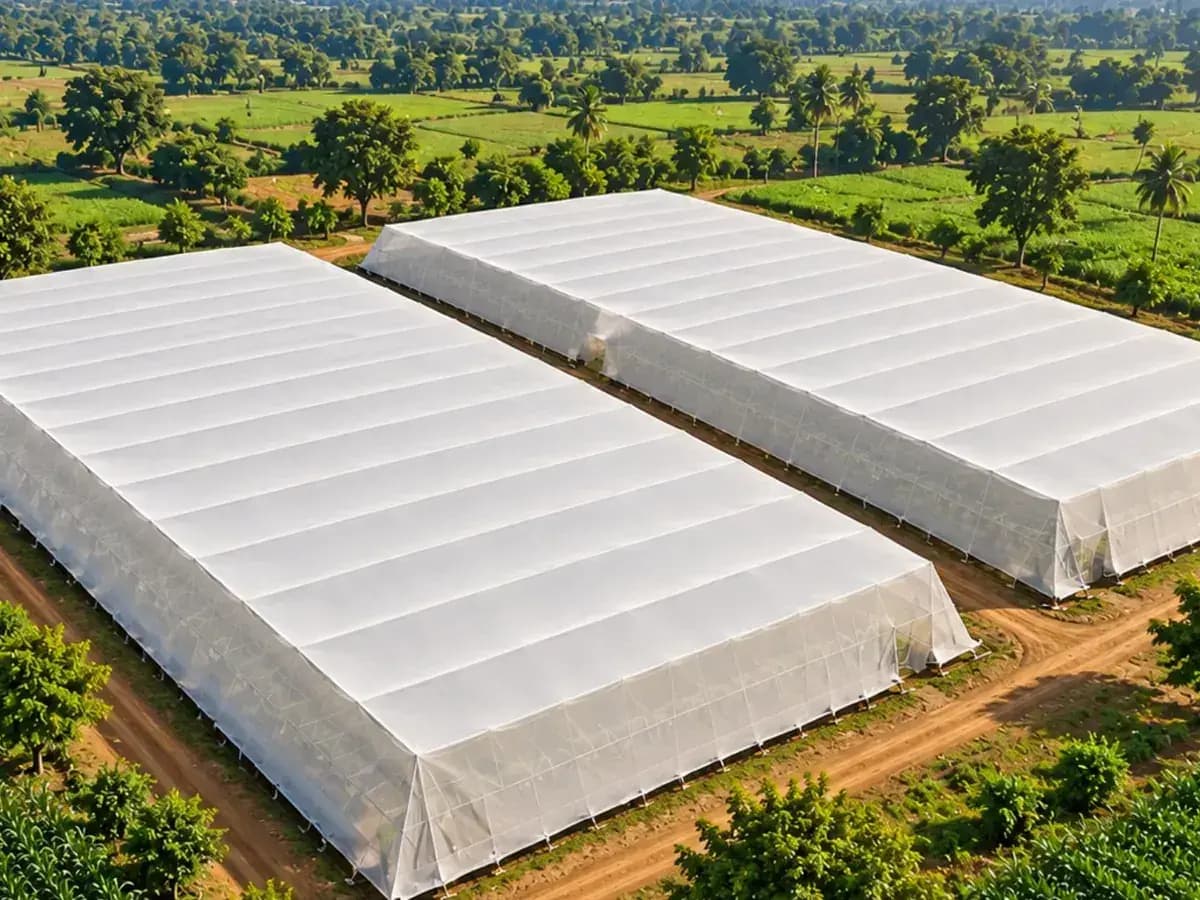
This week’s wholesale rates for net and GI
The rate to compare is the factory material rate, not a bundled local quote where pipe grade, net type and fittings may not be separately visible. Polyhouse Constructions manufactures protected-cultivation material at its Degaon, Satara factory and supplies Mumbai from there. Mumbai is about 220 km from the factory; delivery is 1 day after dispatch.
The table below gives this week’s ex-factory rates, excluding GST. White, green and black 50% shade net cost ₹27.00 per running metre in 4 m width, or ₹6.75 per m². Their 8 m versions are ₹54.00 per running metre and retain the same ₹6.75 per m² rate. Aluminium shade net in 4 m width is ₹315.00 per running metre, or ₹78.75 per m². Side insect net is ₹191.25 per running metre in 4.5 m width and ₹221.00 in 5.2 m width, both ₹42.50 per m².
The GI rate this week is ₹94.50/kg. Net and film prices follow plastic rates, while the frame follows GI rates, so rates change every Friday. Check the current weekly rate when finalising the material list rather than relying on an old quotation.
- 50% shade net, 4 m width: ₹6.75/m² before GST
- Side insect net: ₹42.50/m² before GST
- Aluminium shade net: ₹78.75/m² before GST
- GI this week: ₹94.50/kg
| Net | Roll width | Per running metre | Per m² | 10+ units (5% off) |
|---|---|---|---|---|
| Aluminium Shade Net (4 m) | 4 m | ₹315.00 | ₹78.75 | ₹299.25 |
| Black Shade Net 50% | 4 m | ₹27.00 | ₹6.75 | ₹25.65 |
| Black Shade Net 50% (8 m) | 8 m | ₹54.00 | ₹6.75 | ₹51.30 |
| Green Shade Net 50% | 4 m | ₹27.00 | ₹6.75 | ₹25.65 |
| Green Shade Net 50% (8 m) | 8 m | ₹54.00 | ₹6.75 | ₹51.30 |
| Side Insect Net (4.5 m) | 4.5 m | ₹191.25 | ₹42.50 | ₹181.69 |
| Side Insect Net (5.2 m) | 5.2 m | ₹221.00 | ₹42.50 | ₹209.95 |
| White Shade Net 50% | 4 m | ₹27.00 | ₹6.75 | ₹25.65 |
| White Shade Net 50% (8 m) | 8 m | ₹54.00 | ₹6.75 | ₹51.30 |
- GI rate this week
- ₹94.50/kg
- Bulk discount
- 5% on 10+ units
- Distance to Mumbai
- ~220 km
How wholesale pricing works without a dealer margin
Wholesale does not require ordering a full acre. The same weekly factory rate applies whether you purchase one roll or material for a complete nethouse. A 5% discount is applied automatically when you buy 10 or more units of any one item: for example, the 4 m white shade net becomes ₹25.65 per running metre, and 4.5 m side insect net becomes ₹181.69 per running metre.
A farmer can buy roof net, insect net, wire, rings and other fittings as individual items, or build a complete kit online and see each item, quantity and that week’s rate. A GST invoice with HSN codes is provided for accounts and subsidy files. Booking is with 5% advance and the remaining 95% is due before dispatch.
- One weekly factory rate at any order size
- 5% off on 10+ units of an item
- Weekly updates every Friday
- GST invoice with HSN codes
- 1
One rate, any quantity
Weekly factory rate whether you buy one roll or a whole acre. No dealer margin in between.
- 2
5% bulk discount
Buy 10 or more of any item and the discount is applied automatically in the cart.
- 3
Rates every Friday
Nets and film follow the plastic rate, the frame follows the GI rate; both are updated weekly and shown on every page.
- 4
Quotation and invoice
GST invoice with HSN codes, ready for subsidy files and accounts.
Buy nets and fittings on their own
Every net, wire, ring and pulley is in the individual items shop at the weekly rate.
Choose the frame for Mumbai’s heat and rain
For a lower-cost, extendable nursery or seasonal growing area, a square nethouse uses the NHB 4 × 4 m grid with a flat net roof on GI wire. Rain passes through the roof, so this design needs crop planning around July and the wider monsoon. It suits the November–February nethouse season particularly well.
For taller crops and the hotter part of the year, choose a curved nethouse. Its arched GI frame provides more height and air movement, making it the better fit for capsicum and tomato and for Mumbai’s 38°C April highs. A curved frame is not a substitute for planning around high humidity from June to October, but its extra ventilation is relevant in this climate.
At this week’s material-only rates, the 32 × 32 m square kit of 1,024 m² is ₹3,30,900 including GST. A 64 × 64 m square kit of 4,096 m² is ₹11,91,523 including GST, while the 52 × 76 m curved kit of 3,952 m² is ₹16,81,233 including GST. These are material kit prices, not construction charges.
- Square: lower cost per m² and easy to extend
- Curved: more height and air movement for tall summer crops
- Flat roofs allow rain through; account for the monsoon
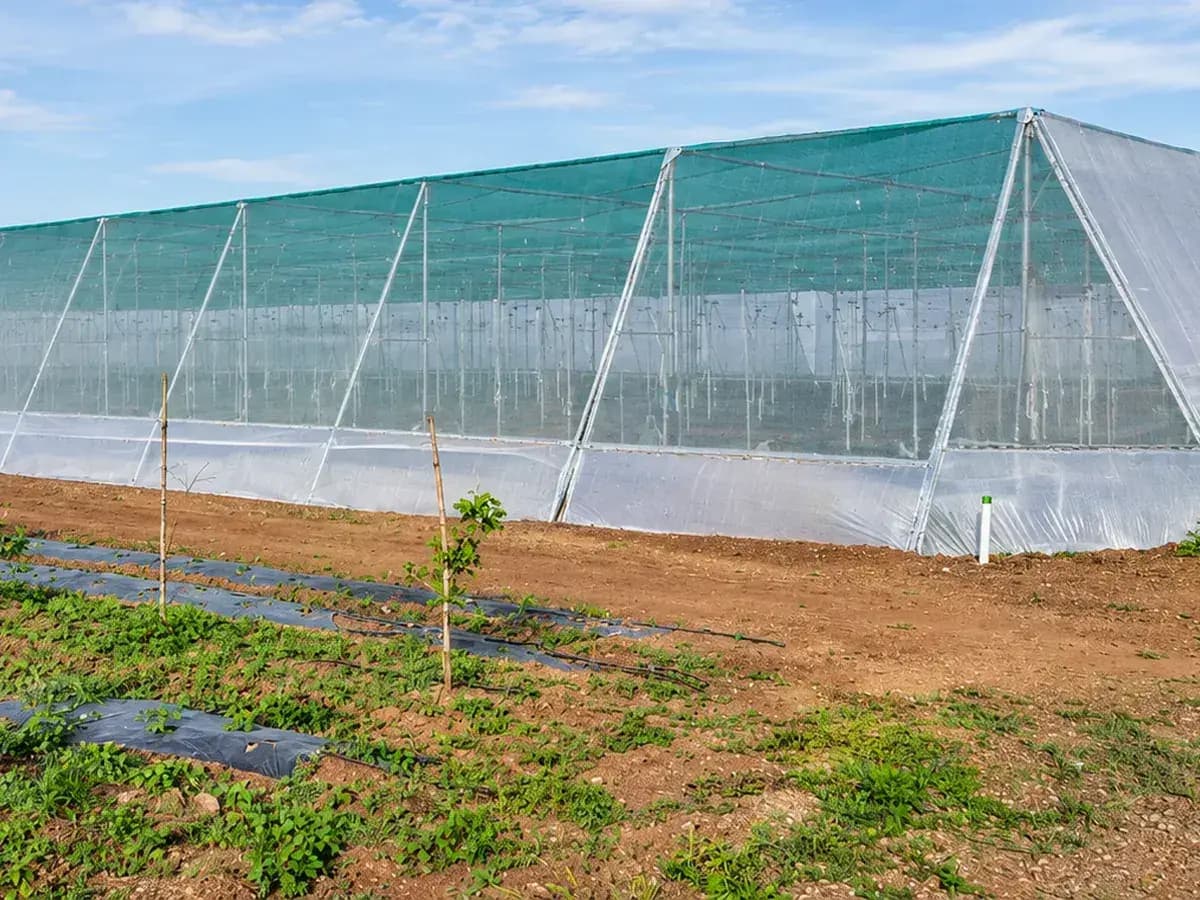
Square (flat-roof) nethouse
SeasonalThe NHB 4 × 4 m grid with a flat net roof on GI wire. Lowest cost per m² and easy to extend; rain passes through, so plan crops around July.
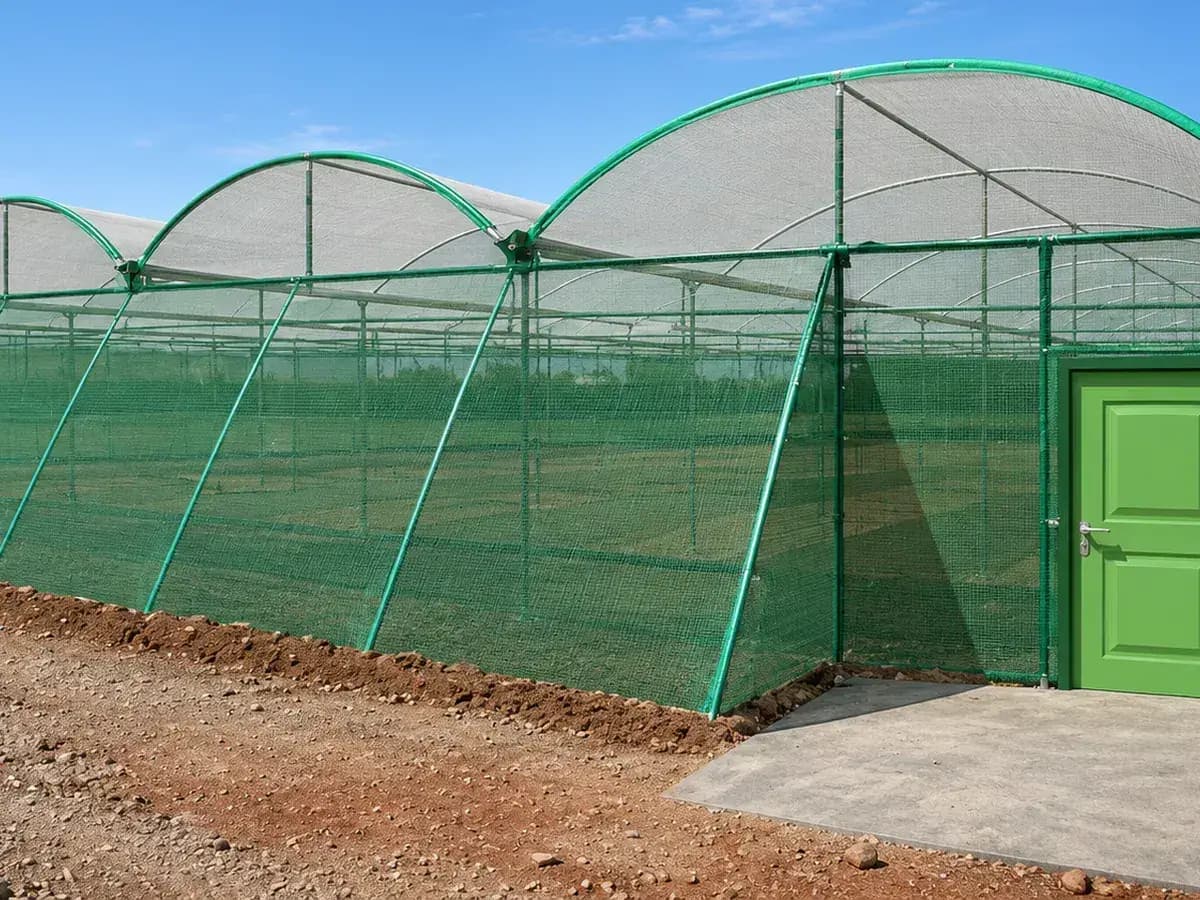
Curved (dome) nethouse
Best for heatArched GI frame covered in net: more height and air movement, better for tall crops like capsicum and tomato, and for 38°C summers.
| Kit | Span × bay | Area | Material incl. GST | Per m² |
|---|---|---|---|---|
| Square nethouse, medium | 32 × 32 m | 1,024 m² | ₹3,30,900 | ₹323 |
| Square nethouse, ~1 acre | 64 × 64 m | 4,096 m² | ₹11,91,523 | ₹291 |
| Curved nethouse, ~1 acre | 52 × 76 m | 3,952 m² | ₹16,81,233 | ₹425 |
Roof and side net selection for Mumbai sun
April is Mumbai’s strongest-sun month, at 7.1 kWh/m²/day, and its average afternoon high is 38.4°C. A 50% white shade net is the standard roof choice here because it diffuses light and cuts April glare without dimming the crop. Green 50% shade net is suitable for nurseries and leafy greens. Black 50% shade net gives the same shade but is best kept for places with milder summers.
Aluminium shade net is the heat-focused option: its reflective surface sends heat back upward and is worth considering for these 38°C highs and 7.1 kWh/m²/day sunshine. For vegetable houses, use side insect net on the walls to keep whitefly and thrips off crops. Select the roof net and side net separately; they perform different jobs.
- White 50%: the standard roof net for Mumbai
- Green 50%: nurseries and leafy greens
- Aluminium: reflective option for peak heat
- Side insect net: wall protection for vegetables
| Net | What it does | In Mumbai |
|---|---|---|
| White shade net 50% | Diffuses light; the standard roof net | Our pick for Mumbai: cuts the April glare without dimming the crop |
| Green shade net 50% | Same shade, green colour | Nurseries and leafy greens; a cooler look in the field |
| Black shade net 50% | Same shade, black colour | Fine where summers are mild |
| Aluminium shade net | Reflective; sends heat back up | Worth it here: 38°C highs and 7.1 kWh/m² |
| Side insect net | Fine mesh for the walls | Keeps whitefly and thrips off vegetables |
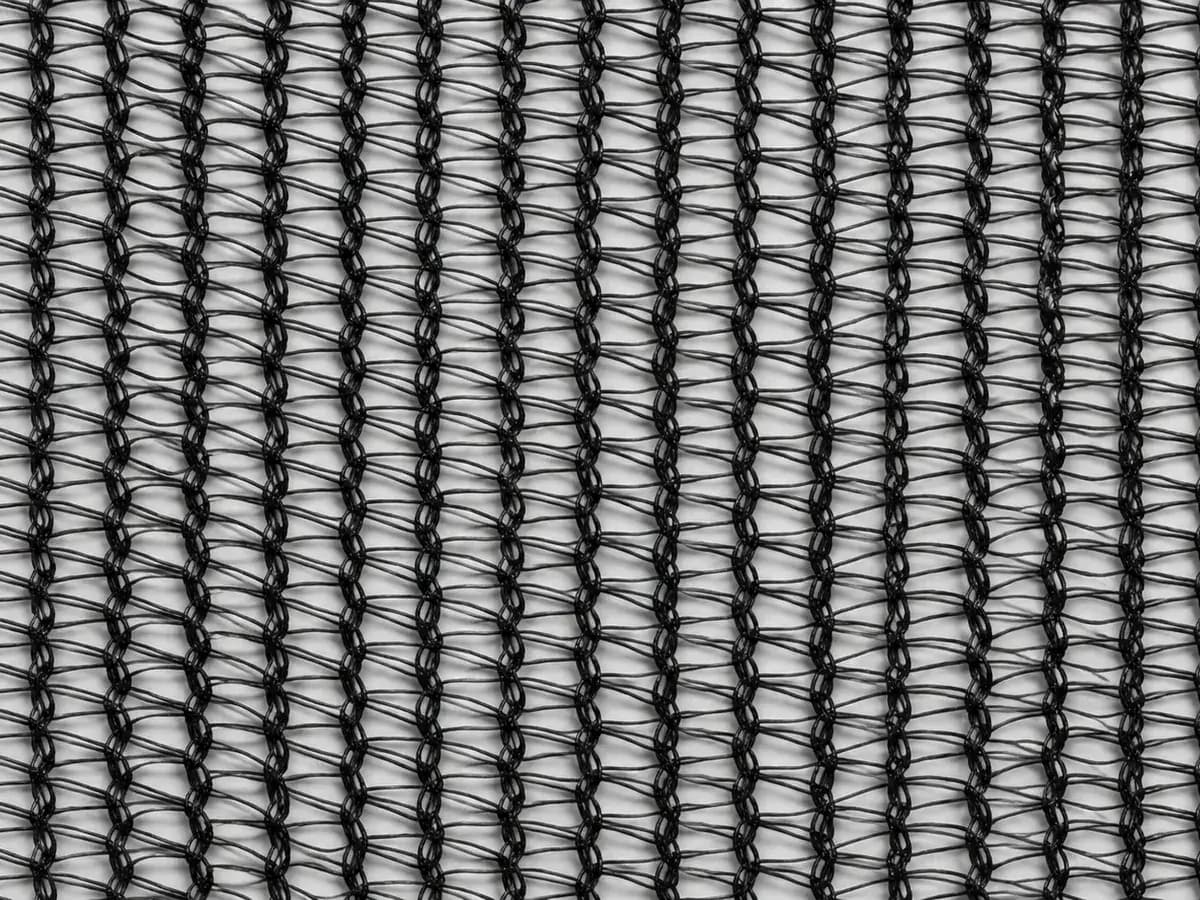
Work with the Mumbai nethouse calendar
November to February is the practical nethouse season in Mumbai. It begins after the main monsoon, when November averages 17 mm rain, and covers the comparatively drier months of December, January and February, with 5 mm, 0 mm and 2 mm respectively. January nights average 15.4°C, so this window is useful for raising vegetable seedlings for the local planting season.
Do not treat the structure as a dry-season-only decision. Humidity is 80% in June and reaches 90% in July and August; it remains 89% in September and 78% in October. July is the wettest month at 834 mm, against a 2,509 mm annual average. Crop scheduling, ventilation and the choice between a seasonal flat-roof house and a taller curved house should therefore be decided before purchase.
- Main nethouse season: November–February
- Peak heat and strongest sun: April
- Humid period: June–October
- Wettest month: July, 834 mm
| Month | Jan | Feb | Mar | Apr | May | Jun | Jul | Aug | Sep | Oct | Nov | Dec | Detail |
|---|---|---|---|---|---|---|---|---|---|---|---|---|---|
| Peak heat | ~38°C highs | ||||||||||||
| Strongest sun | 7.1 kWh/m²/day | ||||||||||||
| Wettest month | ~834 mm | ||||||||||||
| Humid (75%+) | June–October | ||||||||||||
| Nethouse season | November–February |
Crops and Mumbai APMC selling months
A square nethouse is a practical setting for vegetable seedlings from November to February and for leafy greens such as spinach, coriander and lettuce under 50% shade. Curved nethouses are better suited to chilli and capsicum in summer, where shade through April protects fruit from sunscald. These are crop-and-structure matches; selling should still be planned using actual market seasonality rather than only the crop calendar.
Mumbai district market data covers three markets for most listed vegetables, including APMC Mumbai and Mumbai Fruit Market listings. Green chilli had its highest observed modal price in January at ₹6,211 per quintal, compared with an average of ₹4,888. Bhindi peaked in December at ₹5,685 per quintal, tomato in December at ₹2,966, and brinjal in November at ₹3,415. For the wet period, cucumber’s highest observed price was ₹2,758 in June, beans ₹7,289 in June and bottle gourd ₹2,629 in June.
These figures are historical daily-price observations for the last two years, not a promised future price. Use them to stagger sowing and harvest discussions, then check current mandi demand before dispatching produce.
- Green chilli: highest observed price in January
- Bhindi and tomato: highest observed price in December
- Brinjal: highest observed price in November
- Cucumber, beans and bottle gourd: highest observed price in June
| Crop | Markets | Average modal price | Highest month | Lowest month |
|---|---|---|---|---|
| Green peas | 3 | ₹7,941/q | May (₹9,992) | Jan (₹5,150) |
| Beans | 3 | ₹4,301/q | Jun (₹7,289) | Feb (₹2,080) |
| Bottle gourd | 3 | ₹1,944/q | Jun (₹2,629) | Mar (₹1,403) |
| Okra (bhindi) | 3 | ₹4,406/q | Dec (₹5,685) | Apr (₹3,685) |
| Cucumber | 3 | ₹2,149/q | Jun (₹2,758) | Mar (₹1,530) |
| Green chilli | 3 | ₹4,888/q | Jan (₹6,211) | Sep (₹3,440) |
| Coriander (leaves) | 3 | ₹1,102/q | Oct (₹1,741) | Jan (₹701) |
| Papaya | 4 | ₹1,938/q | Sep (₹2,395) | Jul (₹1,647) |
| Tomato | 3 | ₹2,005/q | Dec (₹2,966) | Mar (₹1,382) |
| Brinjal | 3 | ₹2,446/q | Nov (₹3,415) | Mar (₹1,744) |
What is in a one-acre square nethouse material kit
The 64 × 64 m square kit covers 4,096 m², approximately one acre. Its largest listed GI components include 480 purlins, 256 columns, 256 foundation pipes, 64 side hockey pipes and 196 five-way pipe couplers. The full kit has 25 items and about 8.6 tonnes of steel and fittings.
The net package shown for this size includes 900 m of white shade net, 258 m of 5.2 m side insect net and 258 m of 1.5 m side skirting apron. It also includes 1,224 m each of aluminium profile and GI spring, 6,900 self-drilling screws, and two fibre doors. Exact quantities should be generated from the chosen dimensions rather than copied from an acre example.
GI structure supplied by Polyhouse Constructions uses ISI-marked branded steel from Tata, Jindal and JSW. The GI structure has a 15-year manufacturing warranty; nets have a 3-year warranty. Each dispatch includes lab test certificates and technical data sheets, and the material is subject to a 32-point QA process. If erection is required, it is done by Kryzen Biotech’s construction team, not by a Mumbai office.
- Square acre reference size: 64 × 64 m, 4,096 m²
- White roof net: 900 m; side insect net: 258 m
- About 8.6 tonnes of steel and fittings across 25 items
- Construction, where required, is by Kryzen Biotech’s team
| Group | Item | Quantity | Weight |
|---|---|---|---|
| GI structure | Purlin - NH (42X2.0X4000) | 480 nos | 3,994 kg |
| GI structure | Column - NH (60X2.0X4000) | 256 nos | 2,918 kg |
| GI structure | Foundation Pipe (48X2.0X1200) | 256 nos | 707 kg |
| GI structure | Side Hockey - NH (33X2.0X4200) | 64 nos | 430 kg |
| GI structure | Five Way Pipe Coupler (48 OD) | 196 nos | 338 kg |
| Film & nets | Side Insect Net (5.2 m) | 258 mtr | — |
| Film & nets | White Shade Net 50% | 900 mtr | — |
| Film & nets | Side Skirting Apron (1.5 m) | 258 mtr | — |
| Fittings & accessories | Aluminium Profile | 1,224 mtr | — |
| Fittings & accessories | Self Drilling Screw | 6,900 nos | — |
| Fittings & accessories | GI Spring | 1,224 mtr | — |
| Fittings & accessories | Fibre Door Big | 1 nos | — |
| Fittings & accessories | Fibre Door | 1 nos | — |
Ordering material for Mumbai
Start with the crop, planned season, plot dimensions and whether you need only nets or a full frame-and-net kit. A precise kit list avoids guessing quantities of pipe, couplers, profile, spring and net. Polyhouse Constructions is a venture of Kryzen Biotech Pvt Ltd, with manufacturing at Degaon on the Pune–Bangalore Highway, Tal. Wai, Satara; it does not have an office in Mumbai.
For a complete structure, decide early whether the lower-cost square format meets your seasonal plan or whether the added height of a curved house is needed for tall crops and summer airflow. Mumbai buyers may also review subsidy eligibility with the state horticulture department before starting work. MIDH/NHM support is stated as 50% of the cost norm up to 4,000 m² per beneficiary; norms can change and should be confirmed before relying on them.
- Material is supplied from the Satara factory
- Mumbai delivery: 1 day after dispatch
- Build an itemised kit before placing the order
- Confirm current subsidy norms with the state horticulture department
Subsidy for a nethouse in Mumbai
Scheme, worked example and steps.
Buy from India's biggest CEA manufacturing company
Choose your structure and size and get the complete material list, priced this week.
FAQs
What is the wholesale rate of 50% shade net in Mumbai this week?
White, green and black 50% shade net are ₹6.75 per m² before GST, ex-factory. In 4 m width this is ₹27.00 per running metre; a 5% discount applies on 10 or more units of the same item.
What is the GI rate for a Mumbai nethouse this week?
The listed GI rate this week is ₹94.50/kg. Frame rates follow weekly GI prices and are updated every Friday, so request the current itemised kit rate when ordering.
Should I choose a square or curved nethouse in Mumbai?
A square flat-roof nethouse is the lower-cost, extendable seasonal option, especially for November–February. A curved nethouse gives more height and air movement, making it better for tall crops and Mumbai’s April highs of 38.4°C.
Which net is suitable for Mumbai’s April heat?
White 50% shade net is the standard recommendation because it diffuses light and cuts April glare. Aluminium shade net is the reflective heat-oriented option for April’s 38.4°C highs and 7.1 kWh/m²/day sun; use side insect net for vegetable-house walls.
When can I expect material delivery in Mumbai, and who erects it?
Mumbai is about 220 km from the Satara factory, with delivery stated as 1 day after dispatch. Polyhouse Constructions supplies the material; erection and construction are carried out by Kryzen Biotech’s construction team.
Nethouse material near Mumbai
Nearby towns on the same route, with their nethouse season and sunlight.
| Town | From Mumbai | Nethouse season | Strongest sun | Rain a year |
|---|---|---|---|---|
| Nethouse material in Navi Mumbai | ~20 km | Nov–Feb | 7.2 kWh/m² | 2,509 mm |
| Nethouse material in Thane | ~20 km | Nov–Feb | 7.1 kWh/m² | 2,509 mm |
| Nethouse material in Kalyan-Dombivli | ~30 km | Nov–Feb | 7.2 kWh/m² | 2,509 mm |
| Nethouse material in Mira-Bhayandar | ~30 km | Oct–Jan | 7.1 kWh/m² | 2,490 mm |
| Nethouse material in Panvel | ~30 km | Nov–Feb | 7.1 kWh/m² | 2,509 mm |
| Nethouse material in Uran | ~30 km | Nov–Feb | 7 kWh/m² | 2,509 mm |