
Subsidy guide · Surat district, Gujarat
Planning an NHB subsidy polyhouse project in Surat
By Editorial Team, Kryzen Biotech · Updated 13 November 2026
For a commercial protected-cultivation project in Surat, begin with the scheme route before ordering material or starting civil work. NHB is the credit-linked route for projects above 2,500 m², while MIDH/NHM supports up to 4,000 m² per beneficiary; the right choice also depends on your bank loan, crop plan and approved project cost.
- NHB route
- Projects above 2,500 m²
- MIDH / NHM route
- Up to 4,000 m² per farmer
- Cost norms here
- General area
- Structure for this climate
- NVPH or fan & pad
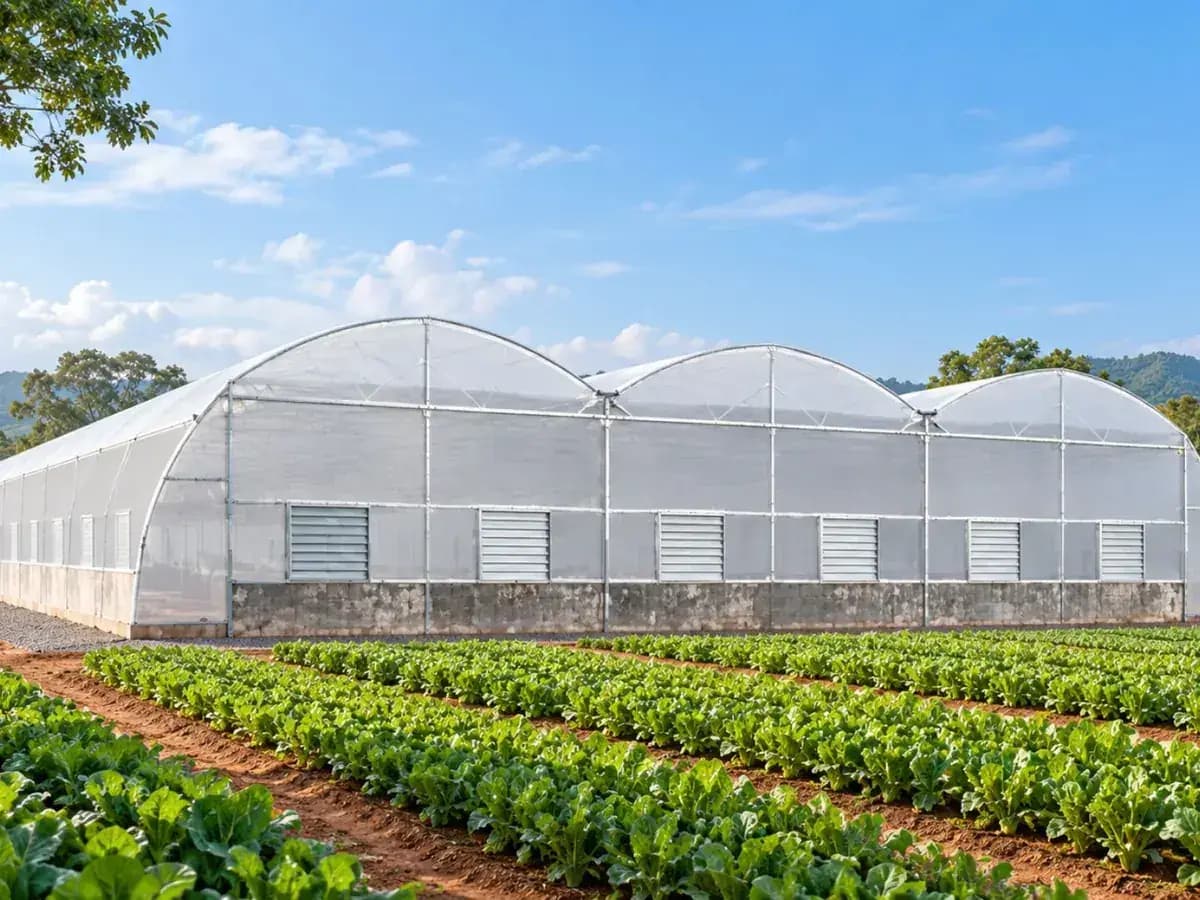
Choose MIDH or NHB before fixing the project size
A farmer planning a smaller protected-cultivation unit can consider MIDH/NHM through the Surat district horticulture office. It provides assistance of 50% of cost, up to the applicable cost norm, for up to 4,000 m² per beneficiary. Individual farmers, groups and FPOs can use this route.
NHB is for commercial projects above 2,500 m². Its assistance is 50% of project cost at admissible norms, is credit-linked and back-ended, and is credited to the term loan after completion and inspection. A bank loan is therefore needed for NHB. The NHB scheme guidelines show a ceiling of ₹56 lakh per project; norms and limits can change, so confirm the current position with the state horticulture department before applying.
There is an area overlap between 2,500 m² and 4,000 m². Do not assume that one route will automatically be better: decide after discussing the proposed area, loan requirement and project plan with the Surat district horticulture office and your bank.
- MIDH/NHM: up to 4,000 m² per beneficiary; apply at the Surat district horticulture office.
- NHB: above 2,500 m²; apply online for In-Principle Approval and arrange a term loan.
- Do not begin construction before the applicable approval process is complete.
| MIDH / NHM (state mission) | NHB commercial project | |
|---|---|---|
| Who it is for | Individual farmers, groups, FPOs | Commercial projects: farmers, companies, FPOs, entrepreneurs |
| Project size | Up to 4,000 m² per beneficiary | Above 2,500 m² (1,000 m² in the North-East) |
| Assistance | 50% of cost, up to the cost norm | 50% of project cost at admissible norms, credit-linked and back-ended |
| Ceiling | Area limit per beneficiary | ₹56 lakh per project in the NHB scheme guidelines; check the current limit |
| Bank loan | Not always needed | Needed: subsidy is credited to the term loan |
| Apply at | the Surat district horticulture office | NHB online portal (In-Principle Approval) and your bank |
A structure that can handle Surat’s heat and monsoon
Surat has a demanding wet period: July averages 572 mm rain, August 437 mm and September 270 mm, with humidity from 86% to 89% in these months. A naturally ventilated polyhouse is usually the first structure to assess here. Its film roof protects the crop from monsoon rain, while roof vents and roll-up curtains provide ventilation without power.
Heat management matters before the monsoon too. April has an average afternoon high of 39.8°C, and May has the strongest sunshine at 7.3 kWh/m²/day. A fan and pad polyhouse is a good fit where active cooling is justified by the crop and operating plan; in April, pad cooling can bring the inside temperature to about 33°C. This is useful for crops such as leafy greens that need a more controlled environment.
A square or curved nethouse is better treated as a seasonal option. October to February is the stated nethouse season, when rainfall is lower. It does not offer the same rain exclusion as a polyhouse through the humid monsoon months.
- Naturally ventilated polyhouse: usual first choice for rain protection and passive airflow.
- Fan and pad polyhouse: consider for active summer cooling and a crop plan that supports it.
- Nethouse: use its lower-cost, shaded growing environment mainly in the October–February season.
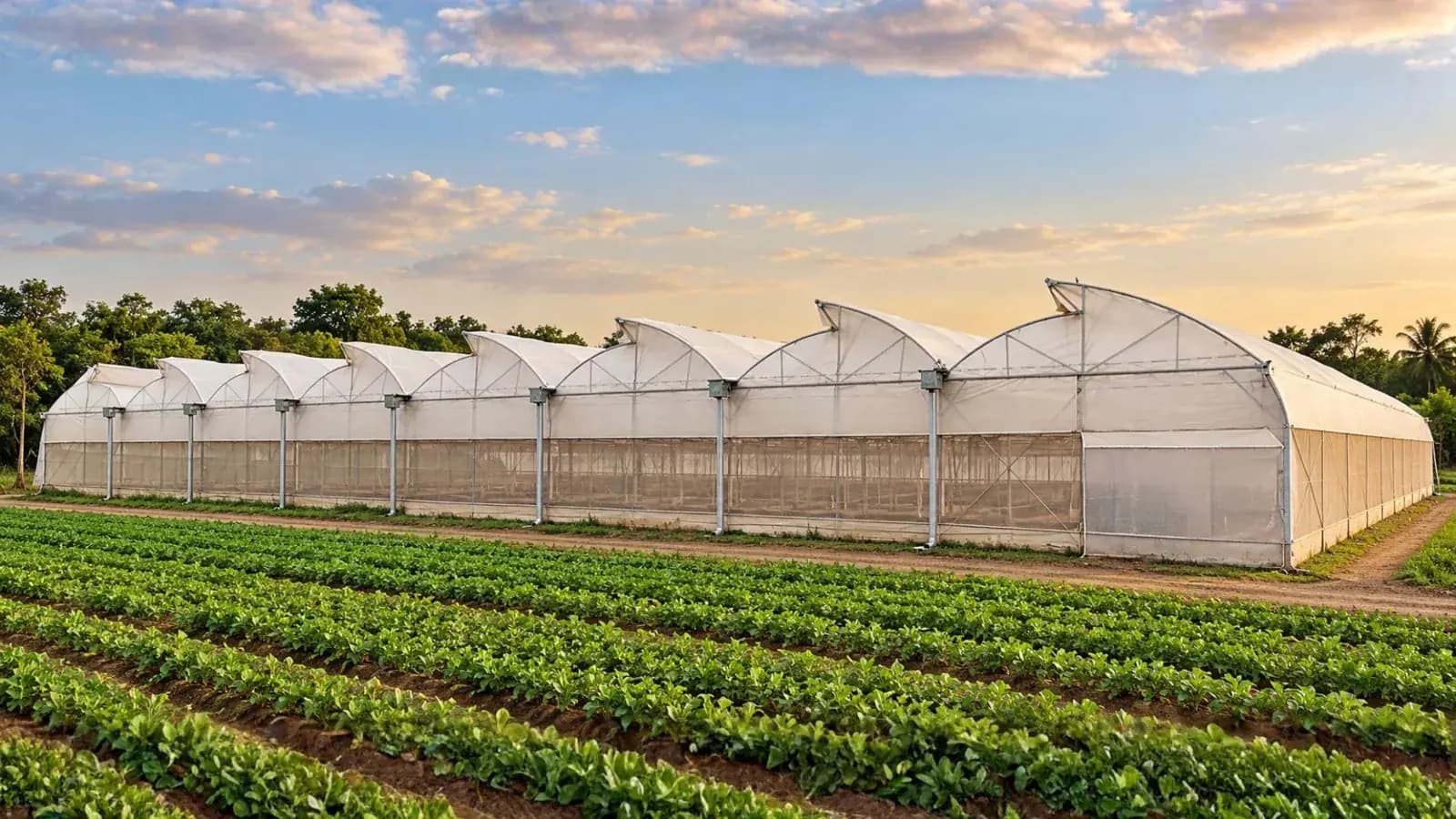
Naturally ventilated polyhouse
Best fitFilm roof keeps monsoon rain off the crop; roof vents and roll-up curtains move air without power. The usual first choice in Surat.
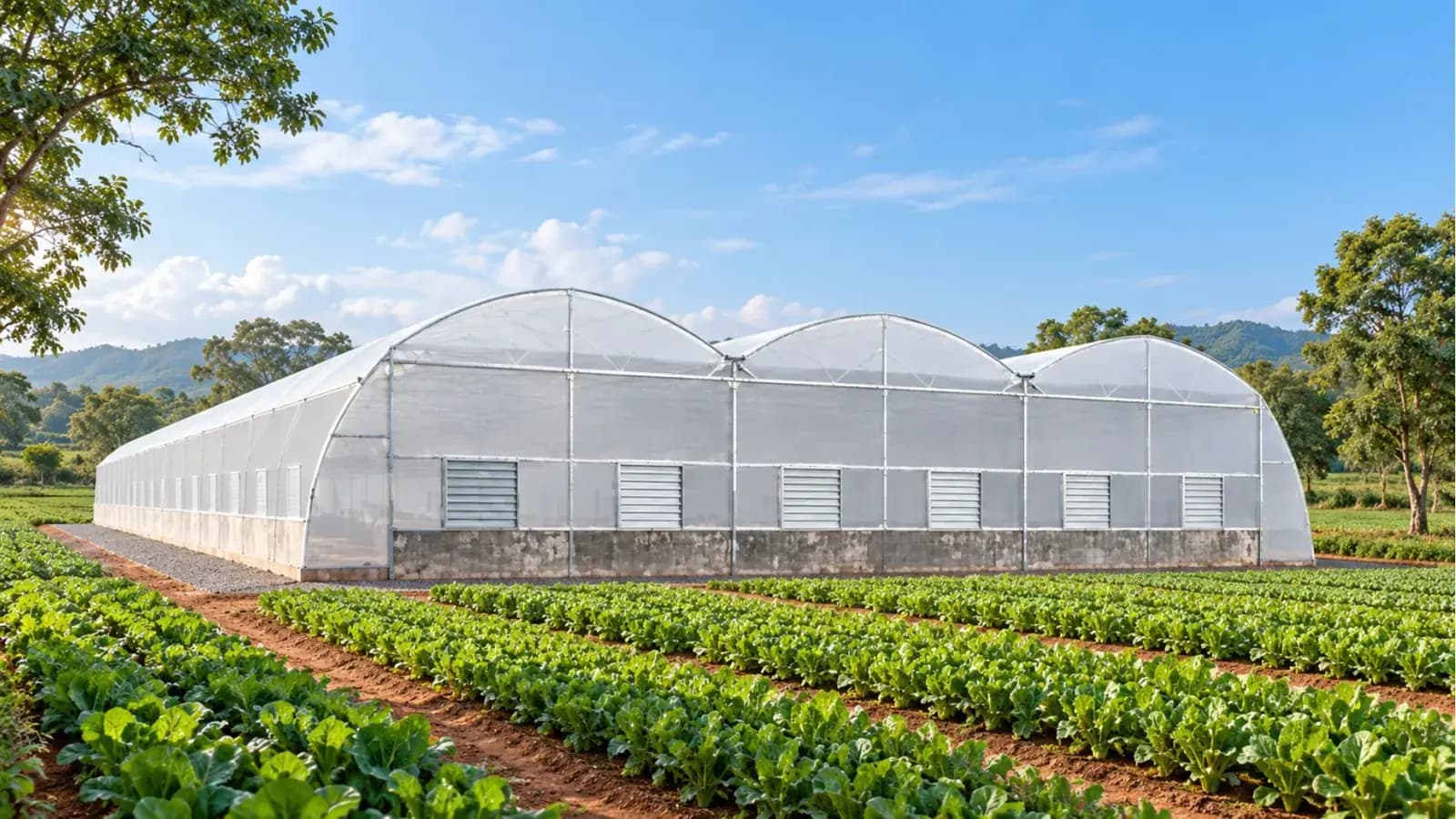
Fan & pad polyhouse
Good fitExhaust fans pull air through wet pads. In April that can take a 40°C afternoon down to about 33°C inside, cool enough for leafy greens.
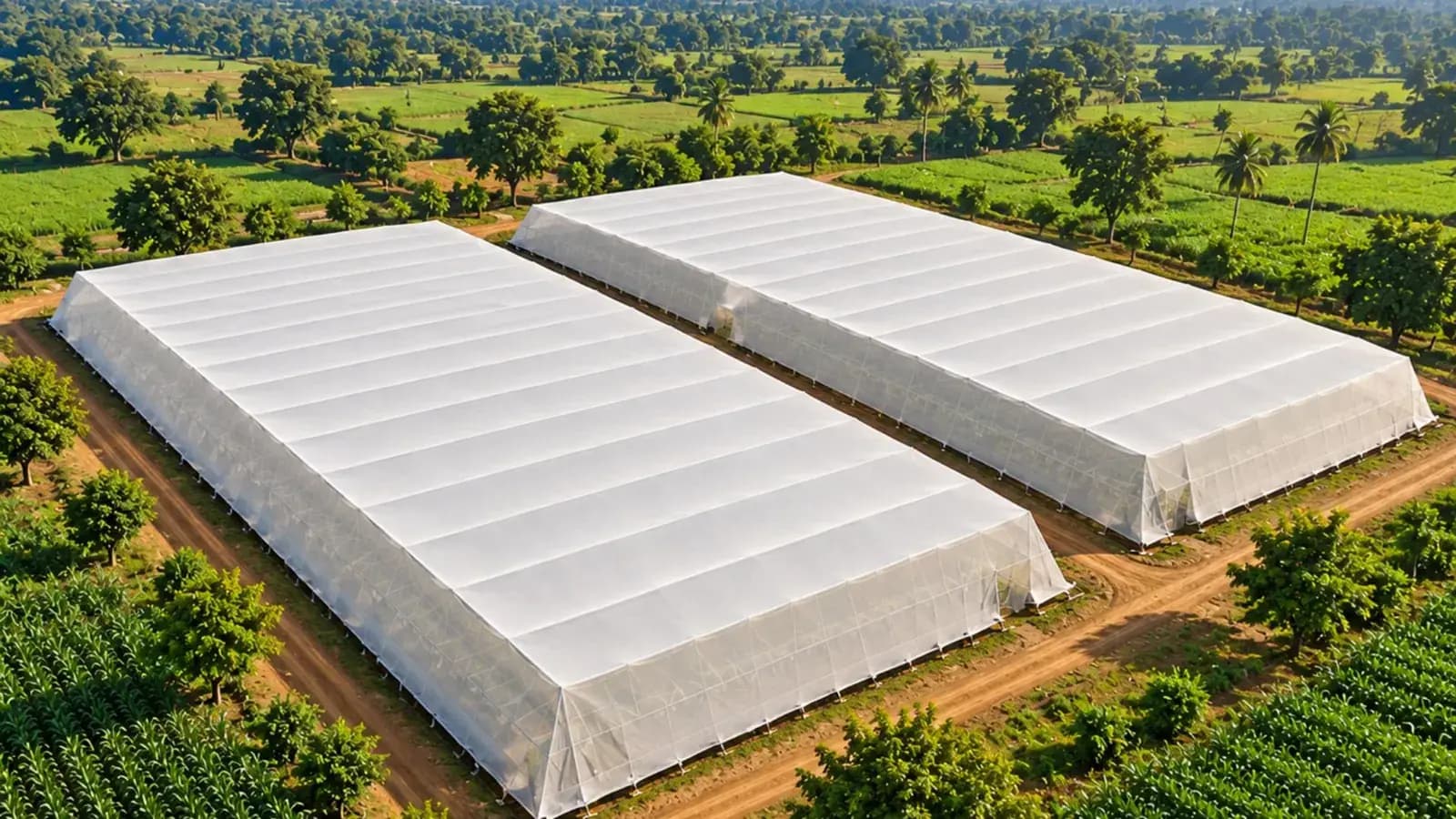
Square nethouse
SeasonalFlat-roof 4 × 4 m grid with shade and insect net, the NHB nursery design. Best from October to February, when rain is low.
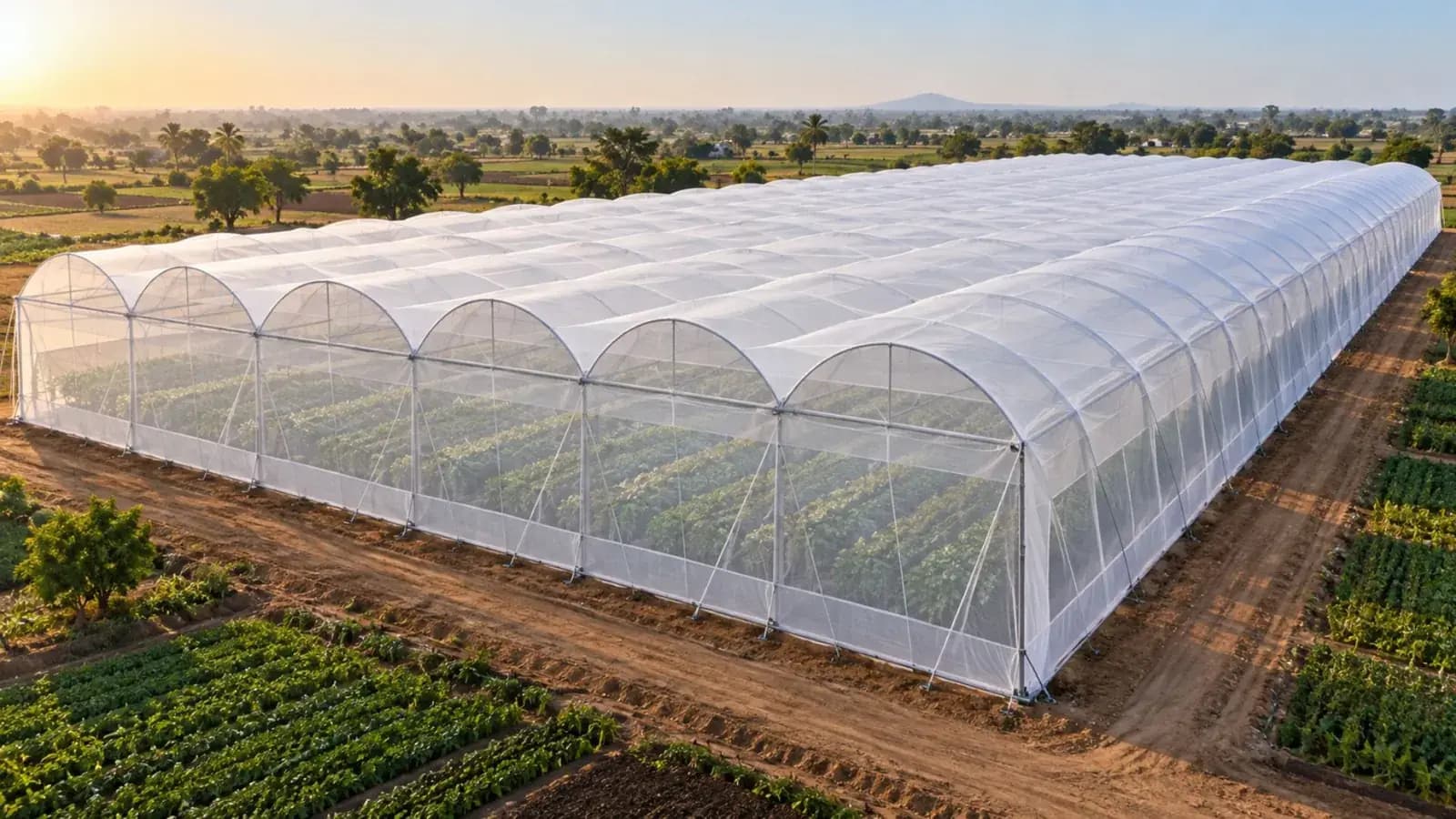
Curved nethouse
SeasonalArched GI frame covered in shade net: taller crops, more air and a lower cost than a polyhouse. Shading pays off when sunlight peaks in May.
What a one-acre fan-and-pad example looks like
The worked table below uses 3,952 m², about one acre, of fan and pad polyhouse. This is above the 2,500 m² threshold for an NHB commercial project. It is an illustration of admissible norms, not a sanction: the final amount depends on the approved project, current norms and inspection.
At the fan-and-pad structure norm of ₹1,400 per m², the eligible structure cost in this example is ₹55,32,800. For high-value vegetables, planting material is shown at ₹140 per m², or ₹5,53,280. The total eligible project cost is ₹60,86,080 and the maximum subsidy at 50% of the norm is ₹30,43,040 (₹30.43 lakh).
The table also shows our material price that week as ₹32,48,775 including GST, or ₹822/m². This is an ex-factory material figure without freight or erection, not the eligible project cost and not a subsidy quote. Material prices change with weekly GI and plastic rates.
- Structure in the example: fan and pad polyhouse.
- Area: 3,952 m².
- Maximum illustrated subsidy: ₹30,43,040 (₹30.43 lakh).
| Item | Amount |
|---|---|
| Structure | Fan and pad polyhouse |
| Area | 3,952 m² (about one acre) |
| Structure cost norm | ₹1,400 per m² |
| Eligible structure cost | ₹55,32,800 |
| Planting material norm (high-value vegetables) | ₹140 per m² → ₹5,53,280 |
| Eligible project cost | ₹60,86,080 |
| Maximum subsidy at 50% of the norm | ₹30,43,040 (₹30.43 lakh) |
| Our material price this week (incl. GST) | ₹32,48,775 (₹822/m²) |
Match the planting-material norm to a Surat crop plan
For high-value vegetables, the NHB planting-material norm shown is ₹140 per m². The crop group is suitable for Surat and includes coloured capsicum, parthenocarpic cucumber, lettuce and leafy greens. These are the practical crops to examine first for a protected structure, but select only after checking labour, water quality, buyer requirements and the marketing route.
Flower planting-material norms in the table are higher: ₹610 per m² for carnation and gerbera, and ₹426 per m² for rose and lilium. Gerbera and rose are indicated as suitable for Surat. Orchid and anthurium have a norm of ₹700 per m² but are marked less suited here.
Use the crop plan consistently in the DPR, quotation, loan proposal and NHB application. A change in structure or crop after applying can create avoidable questions during approval or inspection.
- High-value vegetables: ₹140 per m²; includes coloured capsicum, parthenocarpic cucumber, lettuce and leafy greens.
- Carnation and gerbera: ₹610 per m².
- Rose and lilium: ₹426 per m².
- Orchid and anthurium: ₹700 per m², but less suited in Surat.
| Crop group | NHB norm | Suits Surat? |
|---|---|---|
| High-value vegetables | ₹140 per m² | Yes: Coloured capsicum, Cucumber (parthenocarpic), Lettuce and leafy greens |
| Orchid and anthurium | ₹700 per m² | Less suited |
| Carnation and gerbera | ₹610 per m² | Yes: Gerbera and rose |
| Rose and lilium | ₹426 per m² | Yes: Gerbera and rose |
Plan harvests around Surat district market seasons
Protected cultivation helps manage crop quality and timing, but it does not remove price risk. Review the Surat district market pattern before choosing the crop and planting window. Capsicum has an average modal price of ₹3,250/q across two markets, with the highest listed month in July at ₹4,441 and the lowest in February at ₹2,099. Tomato averages ₹1,711/q, with July highest at ₹2,454 and March lowest at ₹916.
For other crop choices, green chilli is highest in July at ₹4,058/q and lowest in September at ₹2,561/q. Beans are highest in June at ₹6,321/q and lowest in April at ₹4,587/q. These figures are historical market observations, not a price promise; write a conservative sales assumption in the project report.
The district data covers markets including Surat APMC, Bardoli(Kadod) APMC, Bardoli APMC, Nizar, Songadh(Badarpada), Mahuva(Anaval) APMC and others. Keep harvest scheduling, grading, transport and buyer arrangements separate from the subsidy calculation.
- Brinjal: highest listed month November at ₹4,457/q; lowest March at ₹1,964/q.
- Okra: highest December at ₹5,067/q; lowest August at ₹2,928/q.
- Bitter gourd: highest January at ₹4,494/q; lowest October at ₹2,575/q.
| Crop | Markets | Average modal price | Highest month | Lowest month |
|---|---|---|---|---|
| Okra (bhindi) | 17 | ₹3,804/q | Dec (₹5,067) | Aug (₹2,928) |
| Brinjal | 9 | ₹2,847/q | Nov (₹4,457) | Mar (₹1,964) |
| Beans | 4 | ₹5,420/q | Jun (₹6,321) | Apr (₹4,587) |
| Green chilli | 5 | ₹3,417/q | Jul (₹4,058) | Sep (₹2,561) |
| Cauliflower | 4 | ₹2,422/q | Nov (₹3,447) | Sep (₹1,971) |
| Bottle gourd | 3 | ₹2,956/q | Jul (₹4,357) | Feb (₹2,060) |
| Bitter gourd | 3 | ₹3,672/q | Jan (₹4,494) | Oct (₹2,575) |
| Cabbage | 3 | ₹1,361/q | Nov (₹2,059) | Feb (₹1,033) |
| Capsicum | 2 | ₹3,250/q | Jul (₹4,441) | Feb (₹2,099) |
| Tomato | 2 | ₹1,711/q | Jul (₹2,454) | Mar (₹916) |
Use the correct approval sequence in Surat
For MIDH/NHM, take the proposal to the Surat district horticulture office before work starts. For an NHB project, file for In-Principle Approval (IPA) on the NHB portal first. NHB has required IPA before starting work since 2017, so ordering, erecting or completing the structure ahead of this step can put subsidy eligibility at risk.
After IPA, arrange term-loan sanction for the NHB route. Prepare a detailed project report that covers the proposed cost, high-value-vegetable crop plan and repayment. Build to the sanctioned specification, retain the required invoices and test certificates, and be ready for inspection. After joint inspection, NHB subsidy is released to the bank loan account; MIDH release follows the state process.
Polyhouse Constructions is a manufacturer, not a Surat office. We supply complete material kits from our factory at Degaon on the Pune–Bangalore Highway, Tal. Wai, Satara, and Kryzen Biotech’s construction team carries out erection. Material dispatch to Surat is stated at 3 days after dispatch.
- Choose structure and area.
- Obtain an itemised quotation and DPR.
- Obtain IPA before work for NHB.
- Get the NHB term loan sanctioned.
- Construct to standard, then complete inspection and subsidy release steps.
- 1
Pick the structure and size
Match it to Surat's climate (see above) and your market. Keep under 4,000 m² for MIDH, or above 2,500 m² for an NHB project.
- 2
Get a quotation and project report
A supplier quotation listing every item with its HSN code, and for an NHB project a DPR covering cost, the high-value vegetables crop plan and repayment.
- 3
Apply before you build
MIDH: apply at the Surat district horticulture office. NHB: file for In-Principle Approval on the NHB portal; NHB has required IPA before work starts since 2017.
- 4
Bank loan (NHB)
Get the term loan sanctioned. The subsidy is back-ended: it is paid into the loan account after the project is complete.
- 5
Build to standard
Use materials that meet BIS standards and keep the test certificates; the inspection checks structure and specification.
- 6
Inspection and release
After a joint inspection, the subsidy is released to your bank (NHB) or to you (MIDH, as per the state process).
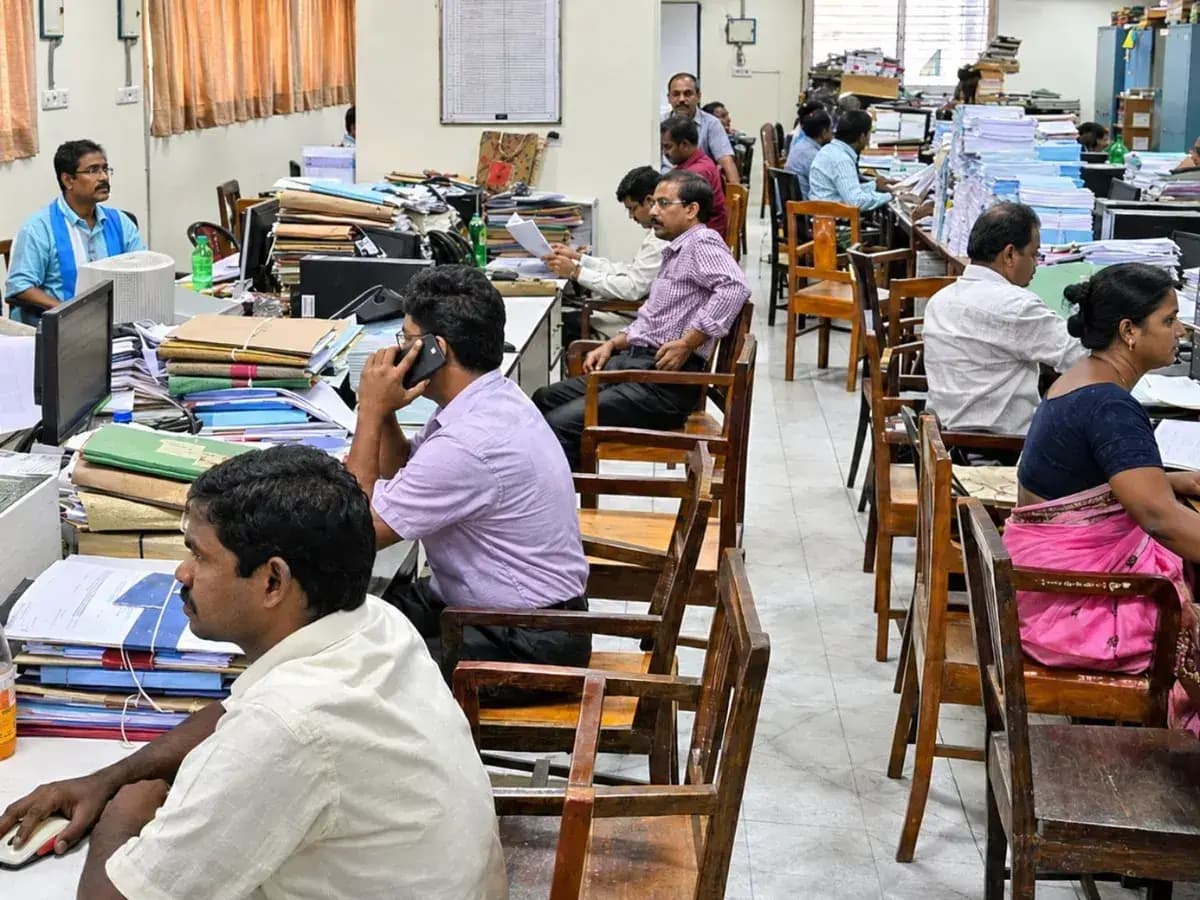
Keep the application file inspection-ready
Start collecting land and identity papers early rather than after a bank asks for them. In Gujarat, the land record checklist is the 7/12 and 8A extracts, or a registered lease, together with a site map. The file also needs Aadhaar, PAN and bank details; companies and FPOs need their registration papers.
A soil and water test report, supplier quotation with HSN codes and specifications, and a detailed project report are key technical records. For NHB, add the bank sanction letter. After buying material, preserve invoices and test certificates for the structure and components.
Ask for a quotation that lists every component by size and quantity. Our kits can be built online with each item, quantity and that week’s rate visible. We provide an itemised quotation, technical data sheets and lab test certificates with dispatch. GI pipes are ISI-marked branded steel from Tata, Jindal and JSW; the GI structure has a 15-year warranty, polyfilm 2.5 years and nets 3 years.
- Land record or registered lease and site map.
- Aadhaar, PAN and bank details.
- Soil and water report.
- Quotation with HSN codes, specifications and quantities.
- DPR and NHB bank sanction letter where applicable.
- Post-purchase invoices and material test certificates.
- Land records in your name (in Gujarat: 7/12 and 8A extracts), or a registered lease, with a site map
- Aadhaar, PAN and bank details; for companies and FPOs, registration papers
- Soil and water test report
- Supplier quotation with HSN codes and specifications
- Detailed project report and bank sanction letter (NHB)
- Test certificates and invoices for the material, after purchase
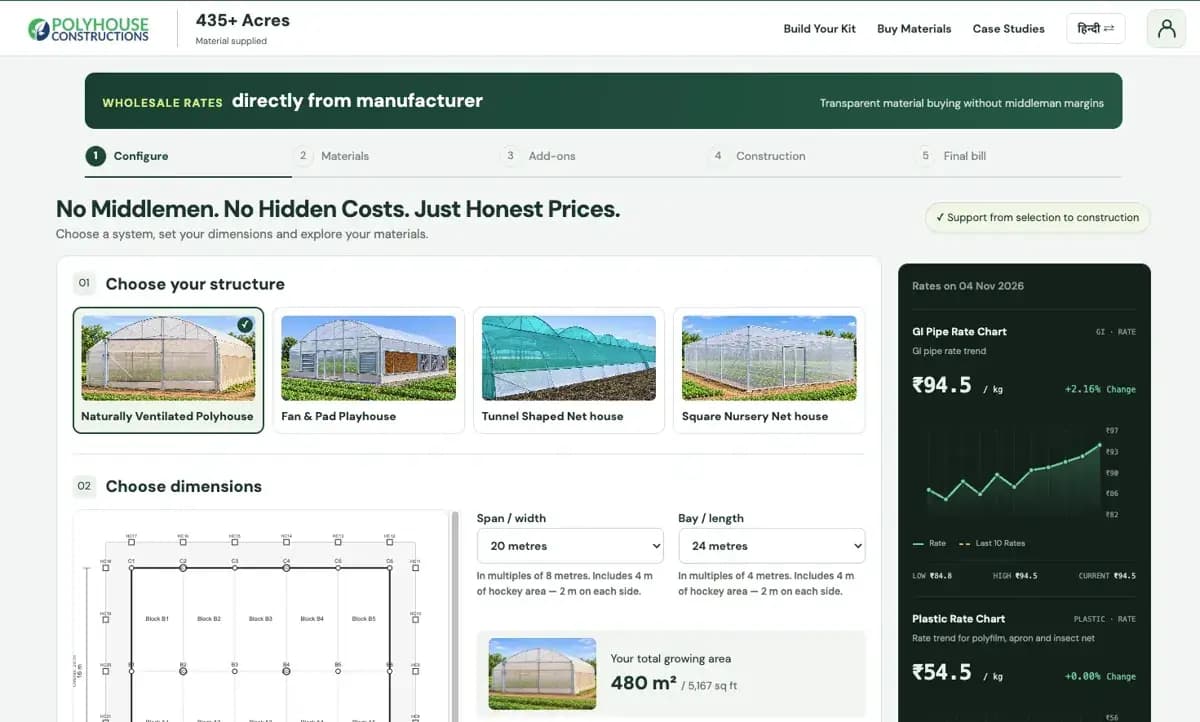
Itemised quotation
Every item with size, quantity, HSN code and GST, ready to attach to the application.

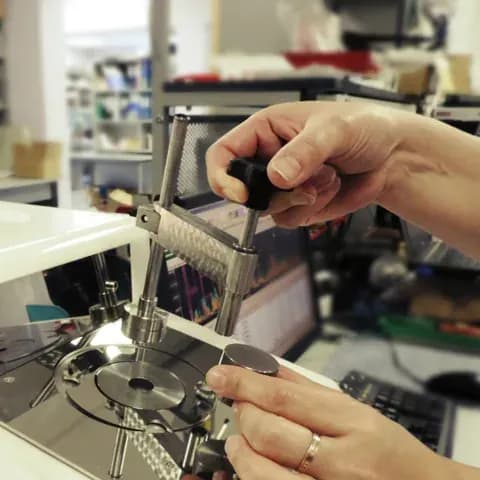
Lab test certificates
Tensile, chemical, salt spray and other tests on the steel, by third-party labs.
ISI-marked GI
GI pipes from Tata, Jindal or JSW steel, with a 15-year warranty.
Mistakes that can delay a subsidy-linked project
The most serious mistake is starting ground work or erection before NHB IPA. The next is treating the subsidy as immediate cash support: NHB assistance is back-ended against the term loan, so the financing plan must work before release.
Avoid choosing a nethouse purely for its initial cost when the crop must survive Surat’s July–September rain and humidity. Similarly, do not use historical mandi highs as the sole income assumption. Use the market seasons to plan, but retain a conservative crop and repayment plan.
Finally, do not submit a vague quotation or substitute materials without checking the approved specification. Inspection checks the structure and specification, so retain invoices, certificates and the item-by-item material record. Confirm current scheme norms with the state horticulture department because they are revised from time to time.
- No construction before NHB IPA.
- Do not confuse material price, project cost and admissible subsidy cost.
- Use a rain-suited structure for monsoon production.
- Keep quotations, invoices and certificates aligned with the approved project.
| Month | Afternoon high | Night low | Humidity | Rain | Sun (kWh/m²/day) | Wind (m/s) |
|---|---|---|---|---|---|---|
| Jan | 31.4°C | 14.5°C | 36% | 1 mm | 4.7 | 2 |
| Feb | 33.9°C | 16.5°C | 37% | 3 mm | 5.6 | 2 |
| Mar | 37.3°C | 19.9°C | 39% | 2 mm | 6.5 | 2.2 |
| Apr | 39.8°C | 23.2°C | 48% | 2 mm | 7.2 | 2.6 |
| May | 38.9°C | 25.7°C | 56% | 6 mm | 7.3 | 3.8 |
| Jun | 33.5°C | 26.4°C | 74% | 347 mm | 5.7 | 4.2 |
| Jul | 29.6°C | 25.2°C | 87% | 572 mm | 4.3 | 4.2 |
| Aug | 28.9°C | 24.4°C | 89% | 437 mm | 4.2 | 3.6 |
| Sep | 29.9°C | 23.8°C | 86% | 270 mm | 4.9 | 2.2 |
| Oct | 32.2°C | 21.3°C | 70% | 43 mm | 5.4 | 1.5 |
| Nov | 32.9°C | 18.1°C | 55% | 9 mm | 4.7 | 1.7 |
| Dec | 31.9°C | 15.6°C | 42% | 3 mm | 4.3 | 1.9 |
Buy from India's biggest CEA manufacturing company
Choose your structure and size and get the complete material list, priced this week.
FAQs
Can I apply for NHB subsidy for a 3,952 m² polyhouse in Surat?
A 3,952 m² project is above the NHB threshold of 2,500 m² for commercial projects. It must follow the NHB online IPA and term-loan route, and the sanctioned amount depends on the approved project, current norms and inspection.
How much subsidy does the one-acre fan-and-pad example show?
For 3,952 m², the example shows an eligible project cost of ₹60,86,080 and a maximum subsidy at 50% of the norm of ₹30,43,040 (₹30.43 lakh). It is indicative only and is not a sanctioned subsidy amount.
Should I choose a naturally ventilated or fan-and-pad polyhouse in Surat?
A naturally ventilated polyhouse is usually the first choice because the film roof helps protect crops during Surat’s heavy monsoon. A fan-and-pad design is worth considering where active cooling is needed, as it can bring an April afternoon to about 33°C inside.
Where do I apply for a MIDH polyhouse subsidy in Surat?
Apply through the Surat district horticulture office for MIDH/NHM. MIDH provides 50% of cost up to the applicable norm for up to 4,000 m² per beneficiary; confirm current requirements with the office before work starts.
Which documents are needed before applying?
Keep 7/12 and 8A extracts or a registered lease with site map, Aadhaar, PAN, bank details, soil and water report, and an itemised supplier quotation ready. An NHB proposal also needs a DPR and bank sanction letter, while invoices and test certificates are retained after purchase.
Subsidy projects near Surat
The same guide for nearby towns, with the structure that suits each.
| Town | From Surat | District | Cost norms | Suits |
|---|---|---|---|---|
| Subsidy project in Navsari | ~40 km | Navsari | General | NVPH or fan & pad |
| Subsidy project in Ankleshwar | ~70 km | Bharuch | General | NVPH or fan & pad |
| Subsidy project in Bharuch | ~70 km | Bharuch | General | NVPH or fan & pad |
| Subsidy project in Vyara | ~80 km | Tapi | General | NVPH or fan & pad |
| Subsidy project in Valsad | ~90 km | Valsad | General | NVPH or fan & pad |
| Subsidy project in Pardi | ~100 km | Valsad | General | NVPH or fan & pad |