
Equipment · Andhra Pradesh
Protected cultivation equipment for Visakhapatnam farms
By Editorial Team, Kryzen Biotech · Updated 13 November 2026
For Visakhapatnam, protected-cultivation equipment should prioritise open-side ventilation, air movement, shading and dependable rain handling—not expensive pad cooling. Polyhouse Constructions supplies complete kits and individual materials from its Satara factory, while Kryzen Biotech’s construction team handles erection.
- Pad cooling
- Limited here
- Humid months
- 6
- Shading need
- Medium
- Delivery
- ~5 days
Start with the coastal climate, not a standard kit
Visakhapatnam is warm through the year, but the equipment challenge changes sharply by season. April has the strongest sun at 6.4 kWh/m²/day, followed by May, when the average afternoon high reaches 33.7°C. A white 50% shade net and adjustable side opening are therefore more useful summer priorities than a heavy closed-house approach.
Humidity is the bigger operational issue. It stays high from June to November: 78% in June, 83% in July, 85% in August, 84% in September and 80% in October. Rain rises at the same time, with 170 mm in June, 201 mm in July, 211 mm in August and October, and about 224 mm in September. Equipment must let humid air leave while keeping rain out.
January’s average night low is 20.5°C, so this climate does not need extra night protection as a standard equipment priority. For a nethouse, the more favourable working season is November to May. The month-by-month table below is useful when deciding when to install, cover, ventilate and maintain the structure.
| Month | Afternoon high | Night low | Humidity | Rain | Sun (kWh/m²/day) | Wind (m/s) |
|---|---|---|---|---|---|---|
| Jan | 26.7°C | 20.5°C | 71% | 5 mm | 4.6 | 2.7 |
| Feb | 29°C | 22.1°C | 69% | 11 mm | 5.5 | 2.6 |
| Mar | 31.6°C | 24.5°C | 69% | 15 mm | 6 | 3.1 |
| Apr | 33.3°C | 26.5°C | 70% | 31 mm | 6.4 | 4 |
| May | 33.7°C | 28.1°C | 73% | 72 mm | 6 | 4.1 |
| Jun | 31.8°C | 27.7°C | 78% | 170 mm | 4.7 | 4.3 |
| Jul | 30.2°C | 26.8°C | 83% | 201 mm | 4.4 | 4.5 |
| Aug | 29.7°C | 26.5°C | 85% | 211 mm | 4.6 | 4.2 |
| Sep | 29.6°C | 26.6°C | 84% | 224 mm | 4.6 | 3.2 |
| Oct | 29.2°C | 25.8°C | 80% | 211 mm | 4.6 | 3 |
| Nov | 27.6°C | 23.2°C | 77% | 80 mm | 4.4 | 3.5 |
| Dec | 26.2°C | 21°C | 74% | 22 mm | 4.2 | 3.3 |
A practical equipment priority list for Visakhapatnam
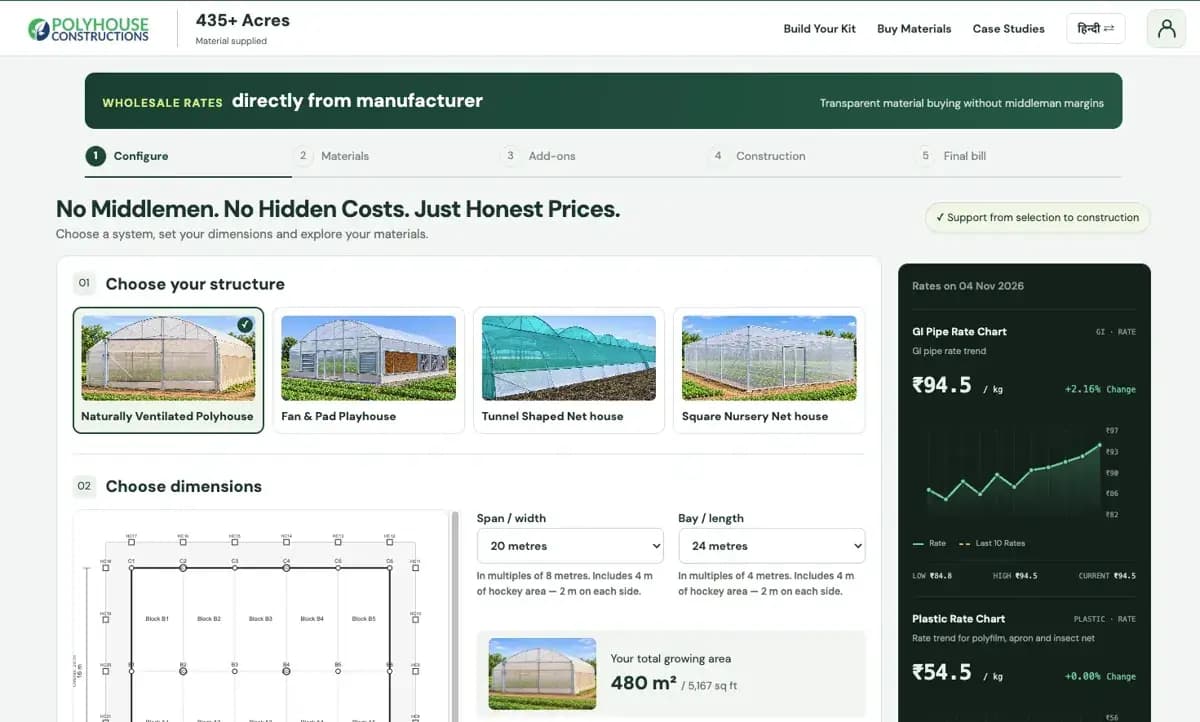
A naturally ventilated polyhouse (NVPH) is a sensible route where a farmer needs polyfilm protection along with controllable side ventilation. Use open curtains with side insect net, white 50% shade net for the April sun, standard gutters for the wet period, and air circulation fans where crop conditions require better internal air movement.
A square nethouse can use side insect net and white shade net, while a curved nethouse can use shade net as an optional covering choice. Polyfilm white diffused 250 micron is used in NVPH and fan-and-pad houses; it is UV stabilised. Select the system around the crop’s need for rain protection and insect exclusion rather than assuming one house type fits every season.
The priority table below summarises why shading, open curtains and air circulation matter here. It also confirms that there is no separate extra requirement for cold nights.
- Cooling: shade net plus open curtains.
- Air movement: air circulation fans during the humid period.
- Rain: gutters and correctly seated side skirting apron.
- Shading: white 50% net for the peak April sun.
| Need | For Visakhapatnam | Why |
|---|---|---|
| Cooling | Shade net + open curtains | 73% humidity limits pad cooling |
| Air movement | Air circulation fans | Humid from June to November |
| Shading | White 50% net | Sun peaks at 6.4 kWh/m² in April |
| Rain | Standard gutters | September: ~224 mm |
| Nights | No extra need | — |
Why fan-and-pad cooling is unlikely to pay here
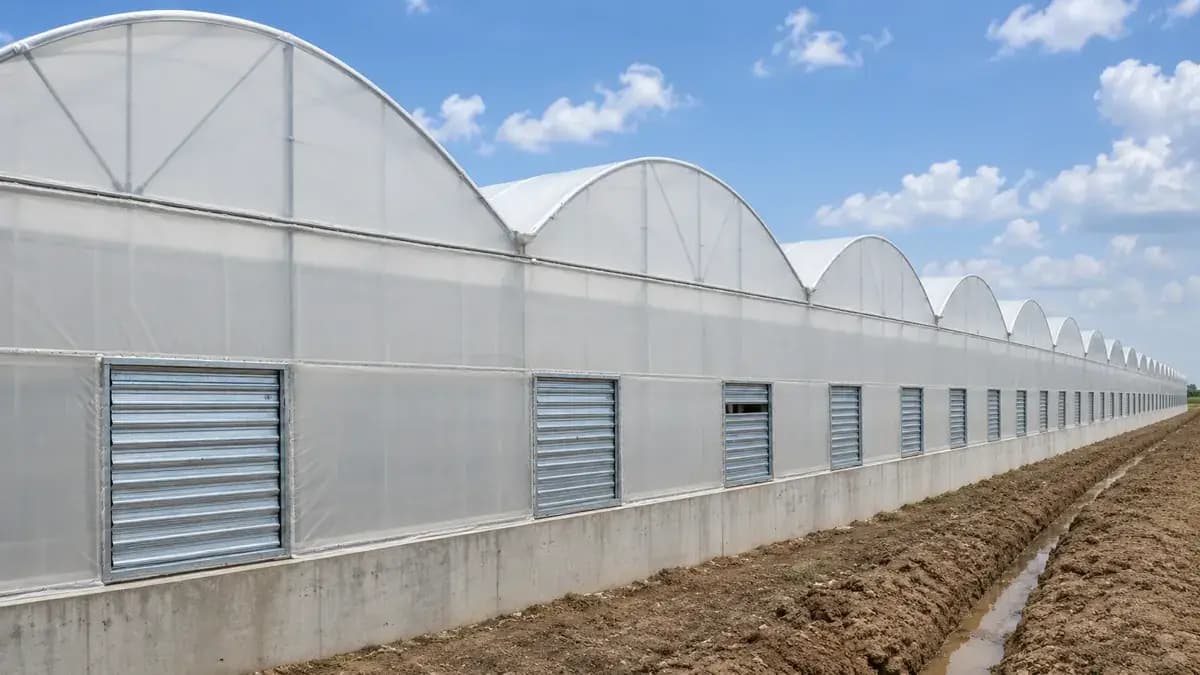
Fan-and-pad cooling is not recommended for Visakhapatnam because the air is already humid for six months, from June through November. Evaporative pads depend on taking heat from the air through water evaporation; at 73% humidity even in May, and 78% to 85% during June–November, the expected cooling benefit is limited. In this location, paying for a closed fan-and-pad arrangement should not be the default decision.
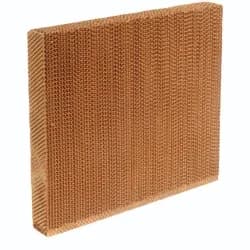
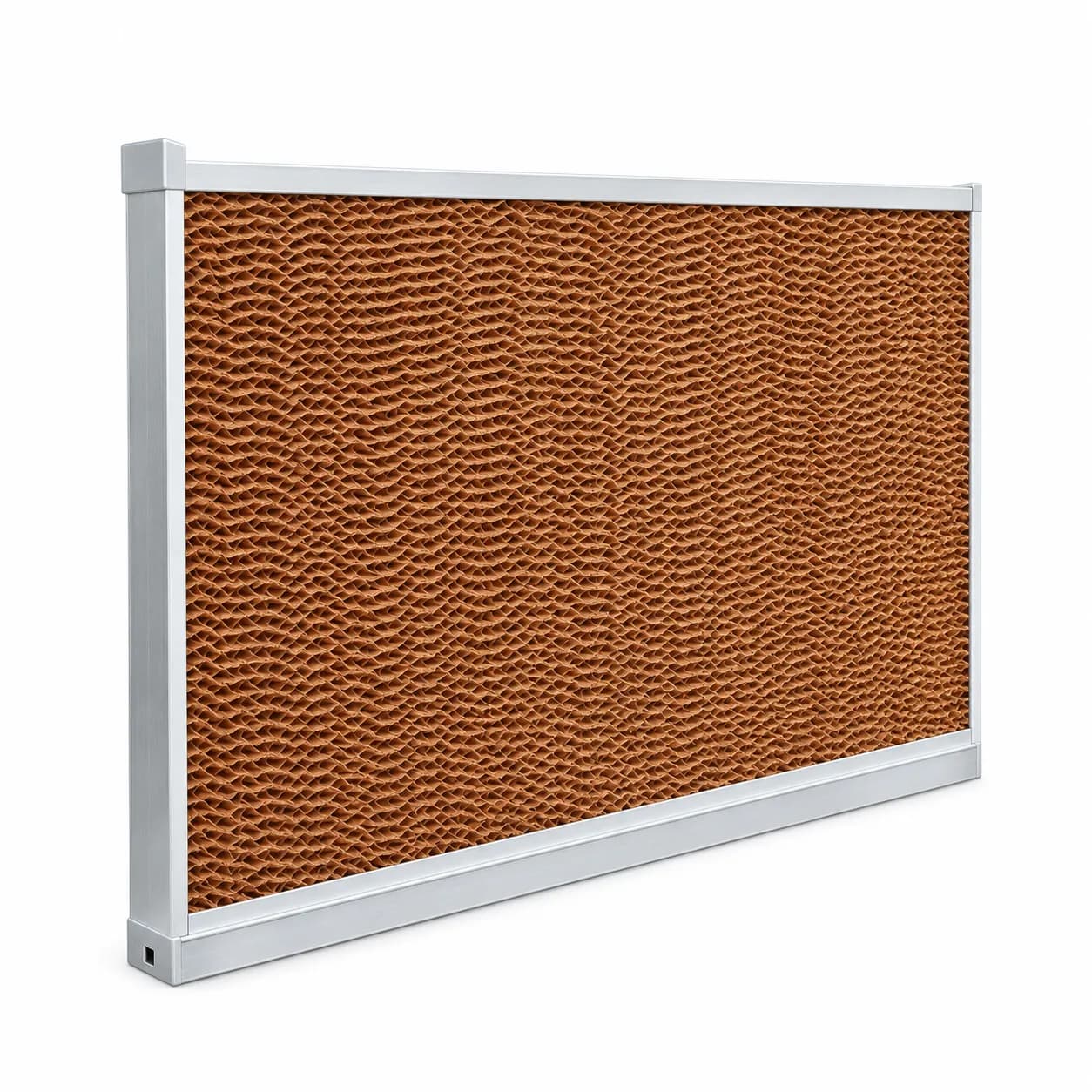
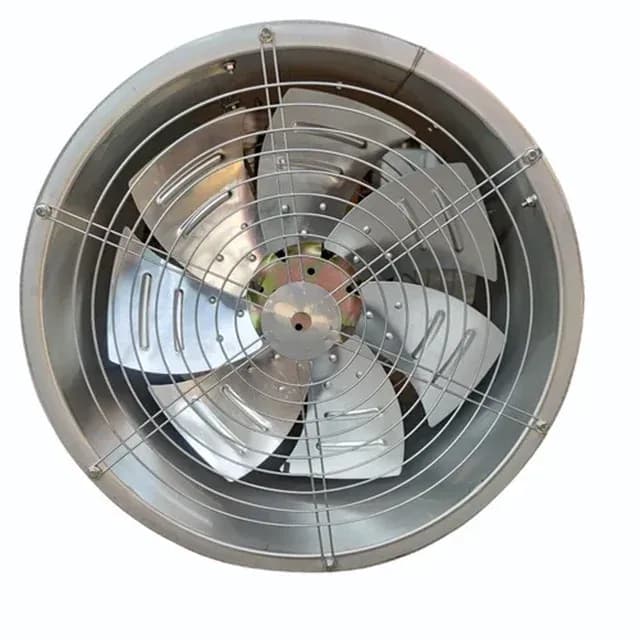
For comparison, the component rates shown below are ₹22,700 per exhaust fan + GST, ₹2,616 per cellulose pad measuring 600X150X1800 + GST, and ₹815 per metre + GST for a 150 mm aluminium pad frame. These are individual material rates, not a complete house quotation. An air circulation fan is ₹8,999 per piece + GST and is the more relevant upgrade for moving humid internal air in an NVPH.
Rates follow weekly GI and plastic prices and are updated every Friday. Build the kit online to see each item, quantity and that week’s rate before booking.
Keep side ventilation usable through the monsoon
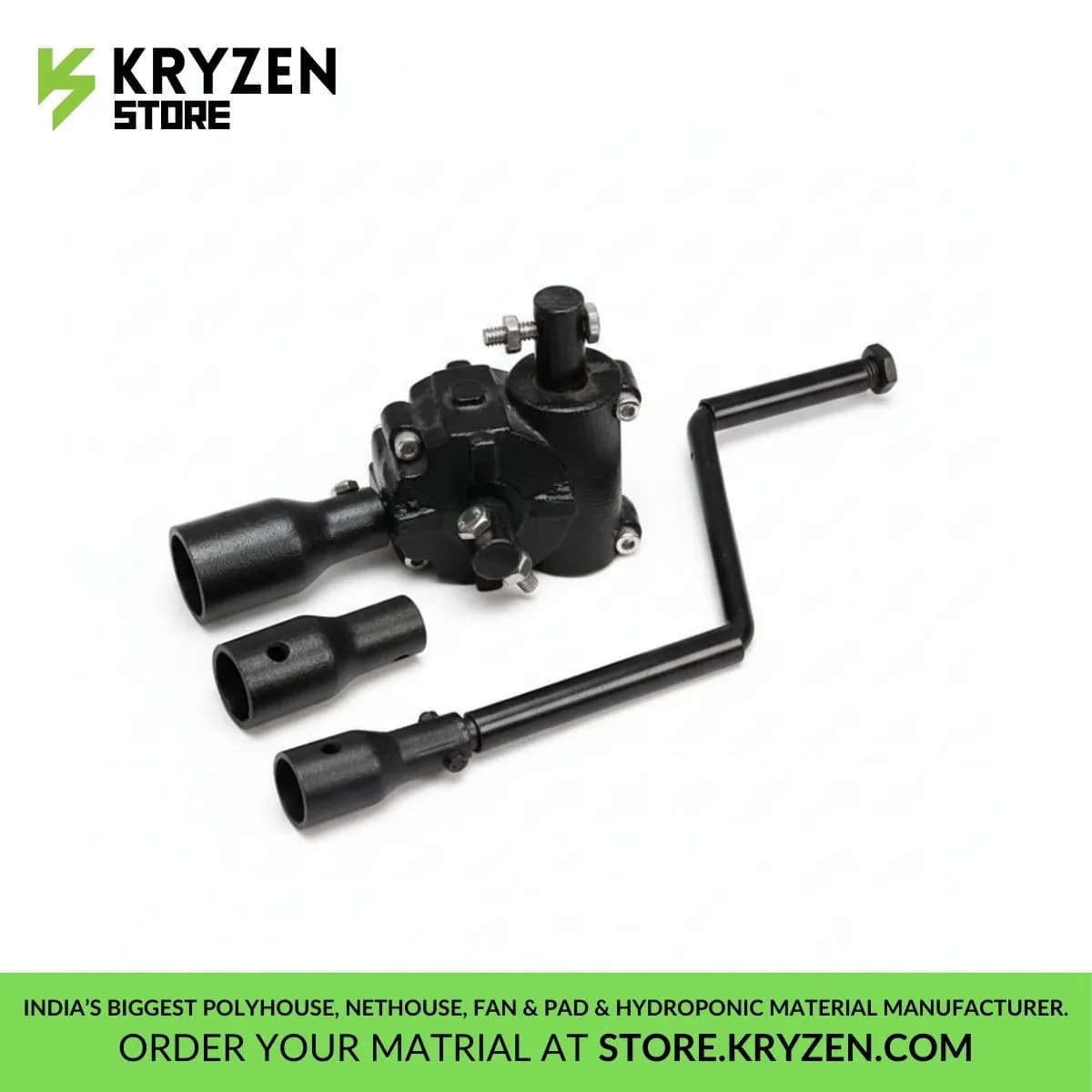
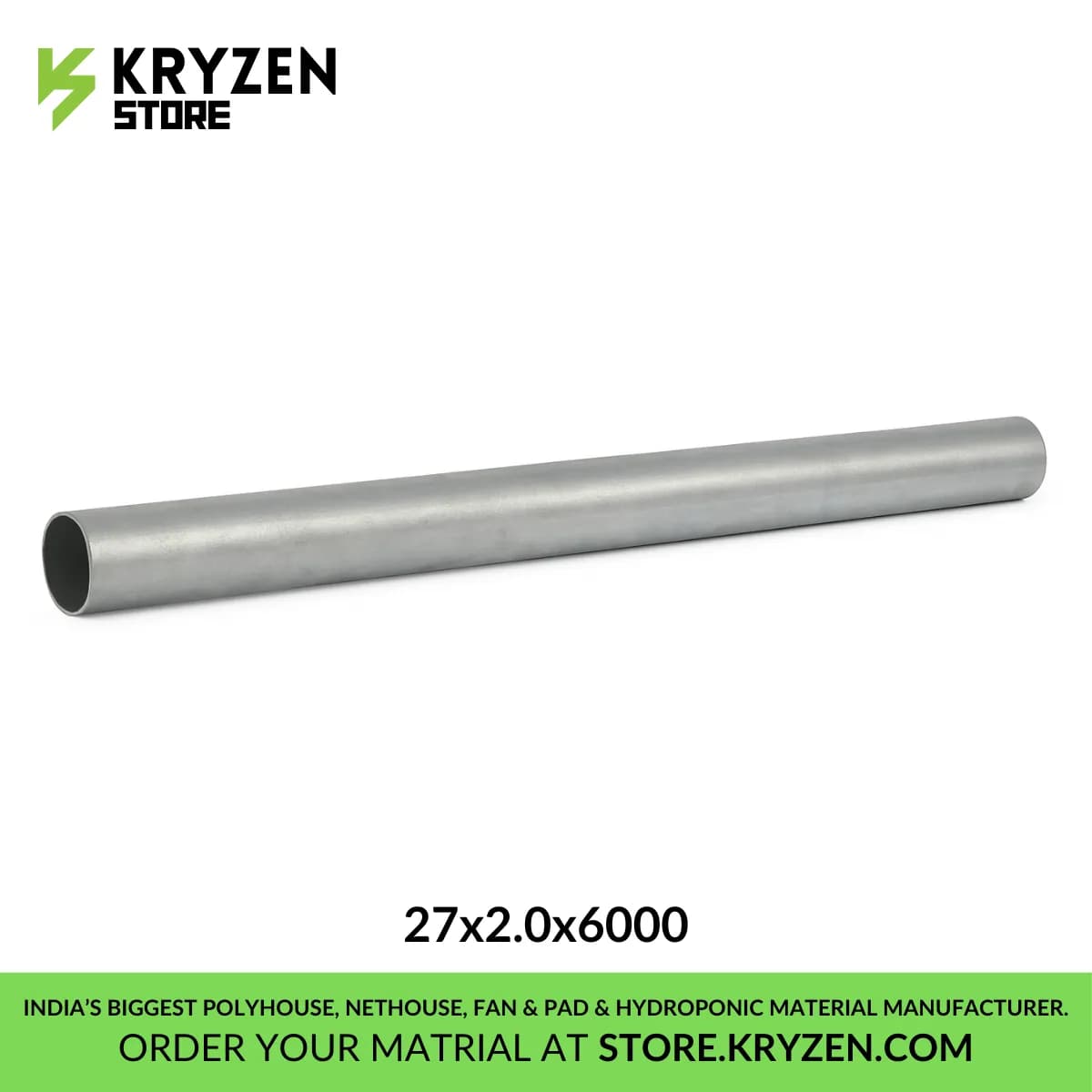
Ventilation needs to be adjustable, not permanently open. In an NVPH, a Manual Gear Roll Up Curtain Unit is ₹1,050 per piece + GST, and the Curtain Pipe (27X2.0X6000) is ₹758 per piece + GST. Together, they let the grower open the side when air is stagnant and close or manage it when rain enters.
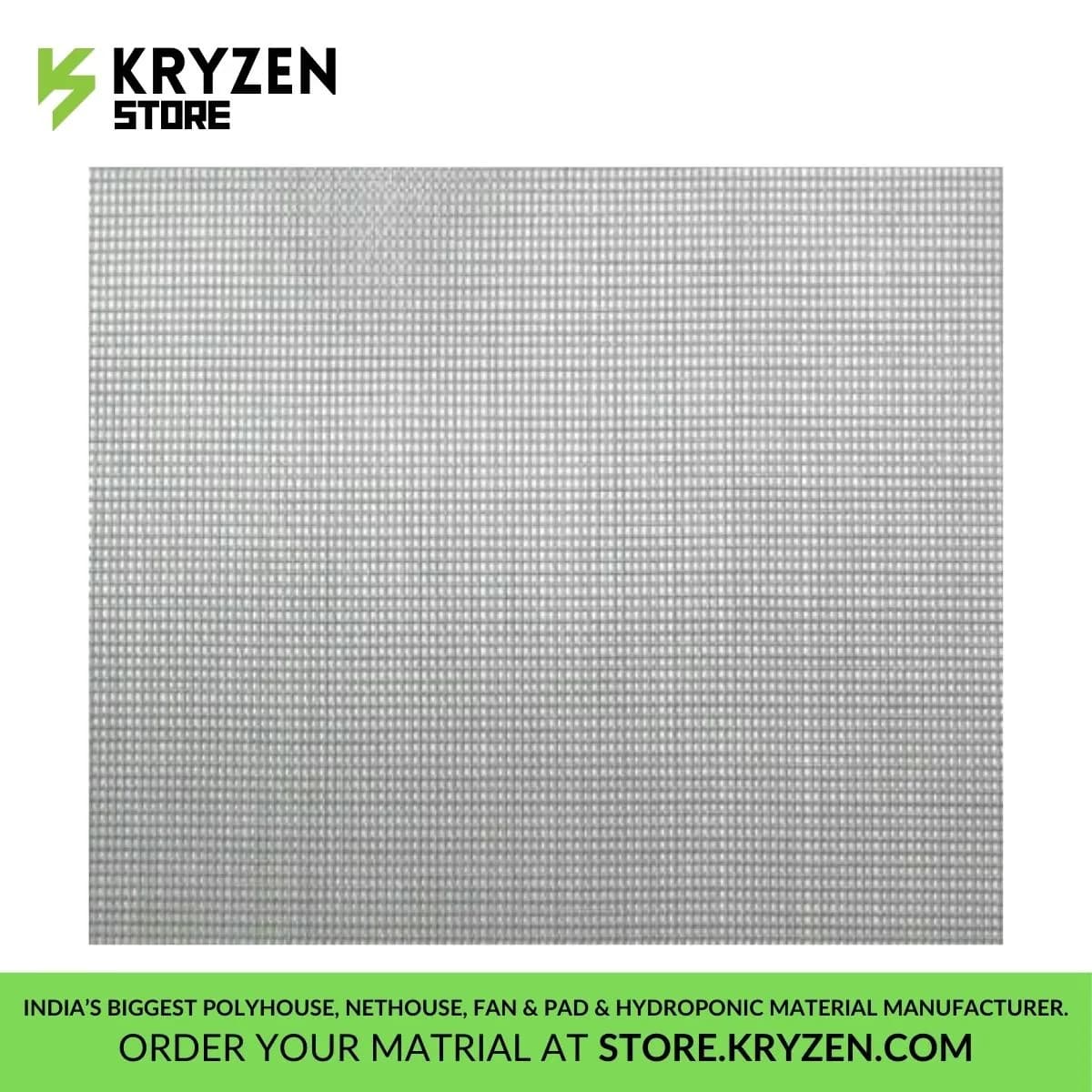
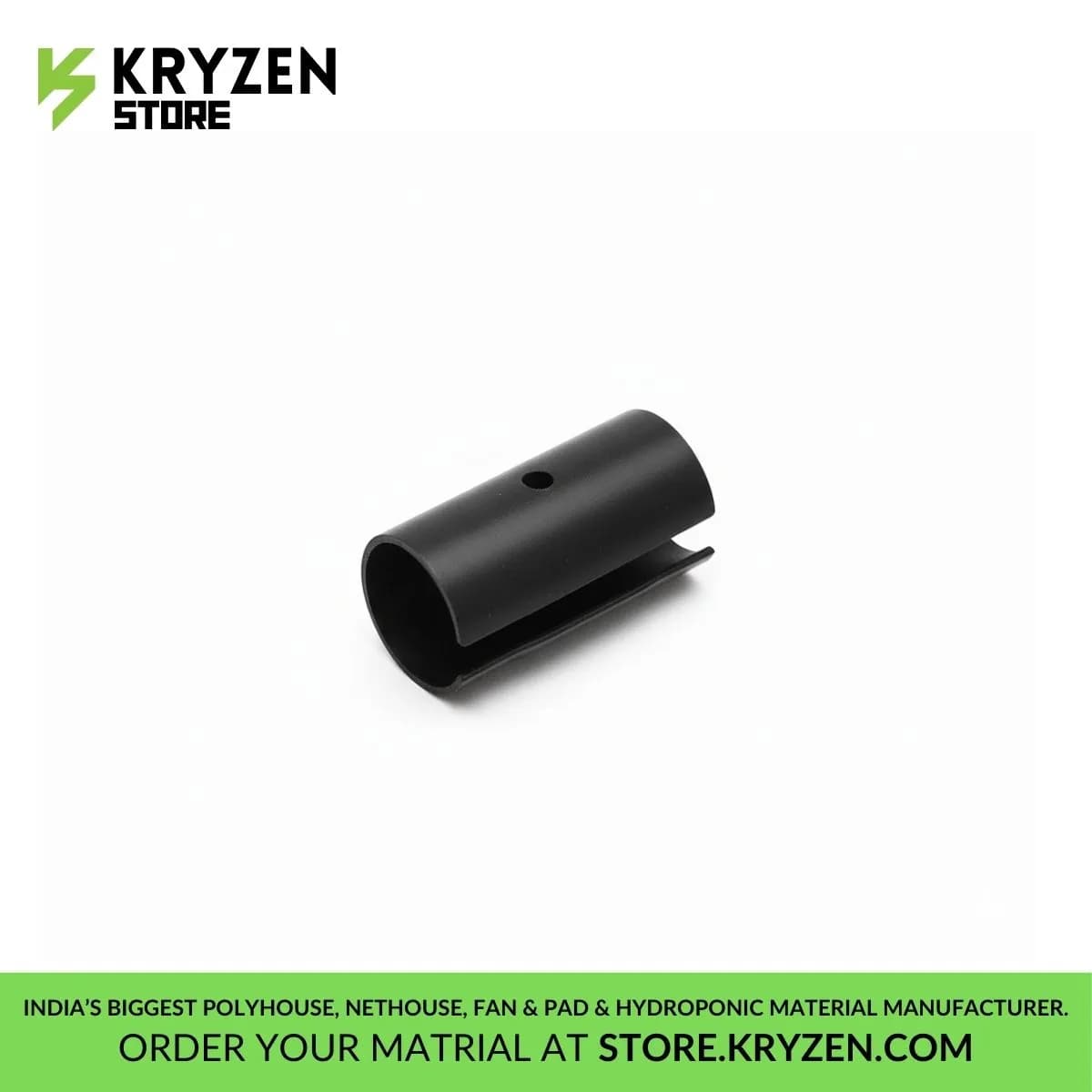
Side insect net helps maintain an insect barrier at the ventilation opening. The 5.2 m side insect net is ₹221 per metre + GST; a 0.75-inch circular curtain clamp is ₹11 per piece + GST. Check that the chosen house system actually uses these components: the roll-up curtain is used in NVPH, while side insect net is used in NVPH and square nethouses.
Do not treat air circulation as a substitute for side ventilation. Fans help move the air within the crop, while curtains and openings are the equipment that allow humid air to leave.
Prepare rain equipment before September
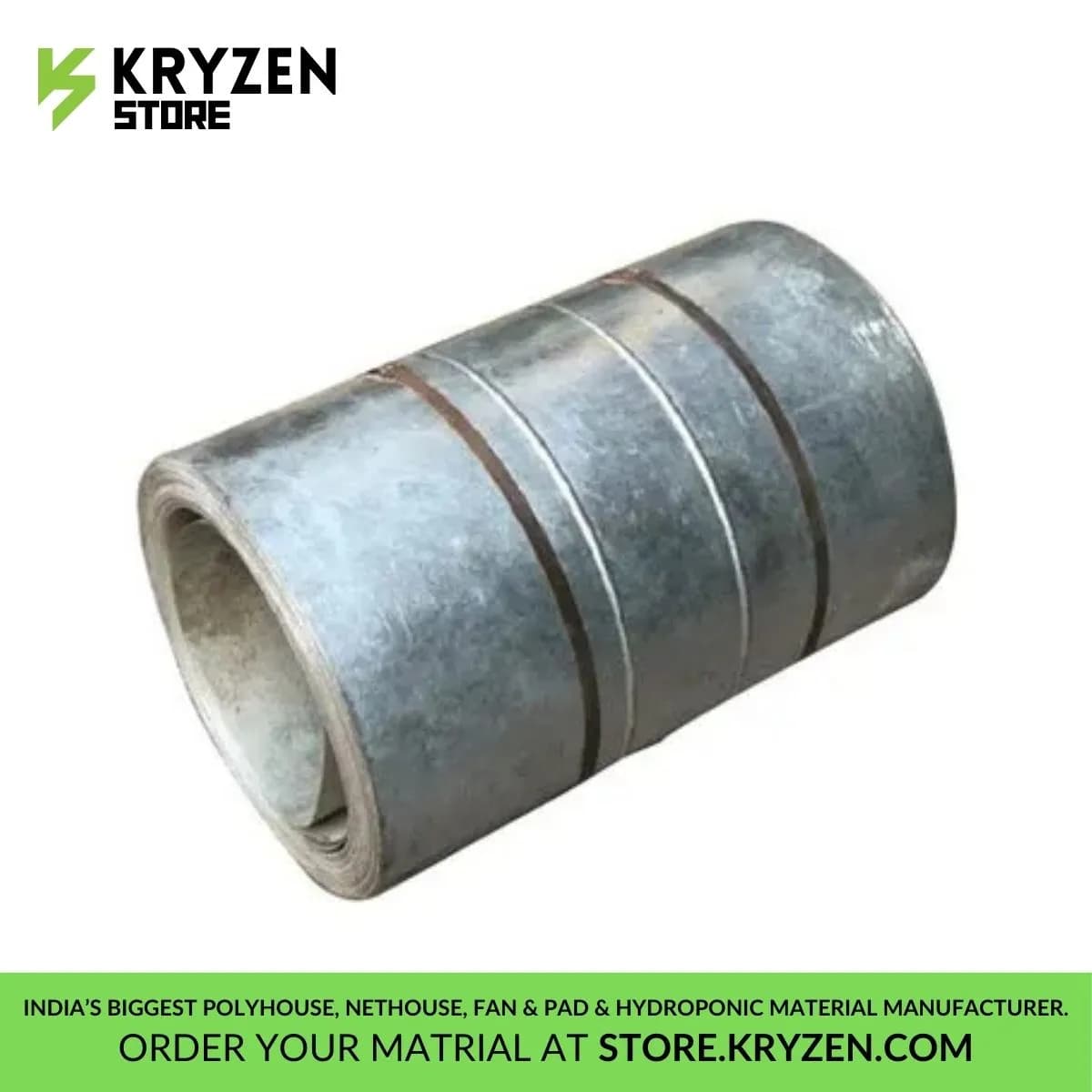
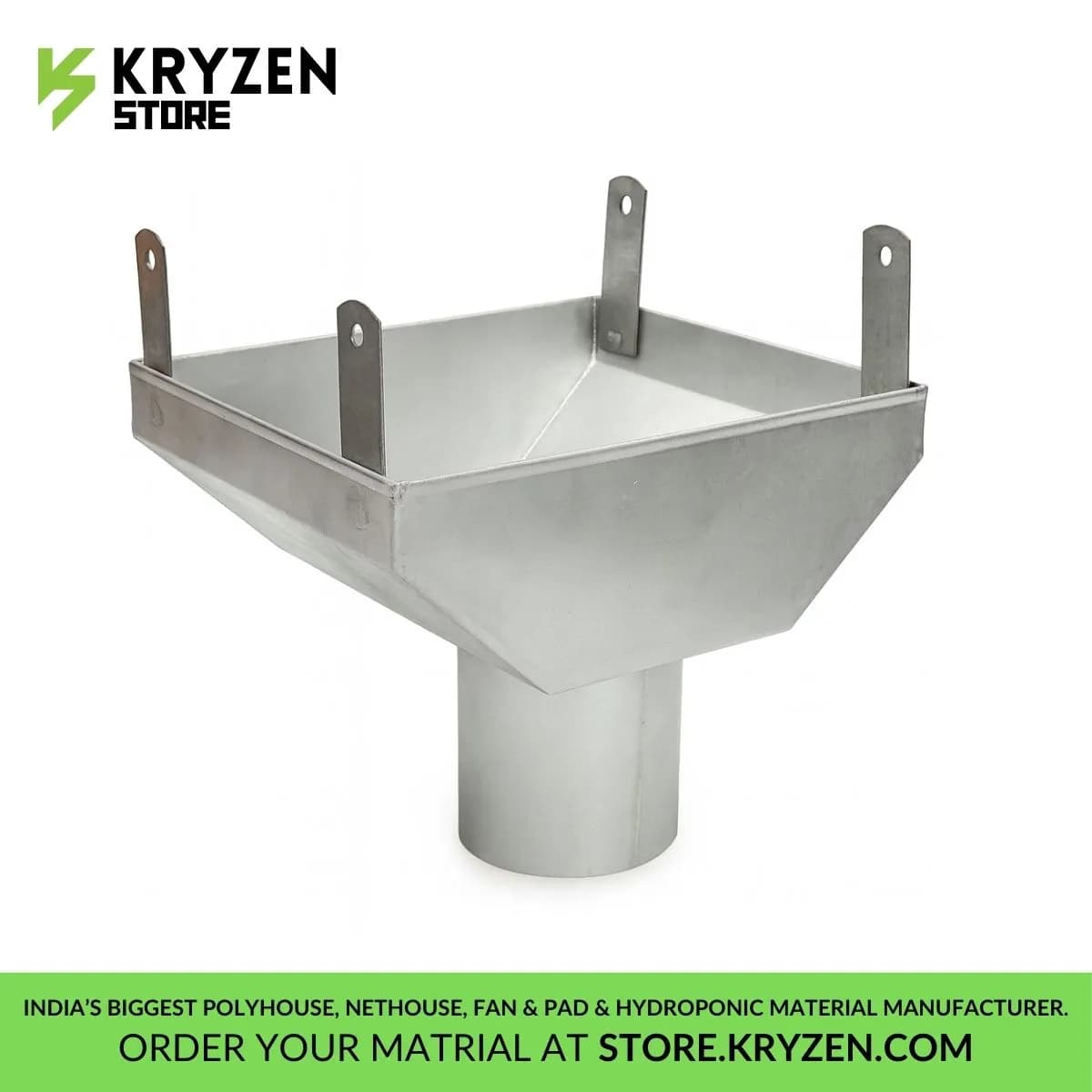
September is the wettest month at about 224 mm, so gutter inspection should happen before that month rather than after leaks appear. A GI Gutter Sheet is ₹335 per metre + GST, a Gutter Funnel is ₹1,350 per piece + GST, and a 1.5 m Side Skirting Apron is ₹64 per metre + GST. Gutters are used in both NVPH and fan-and-pad systems; the apron is also used in square and curved nethouses.
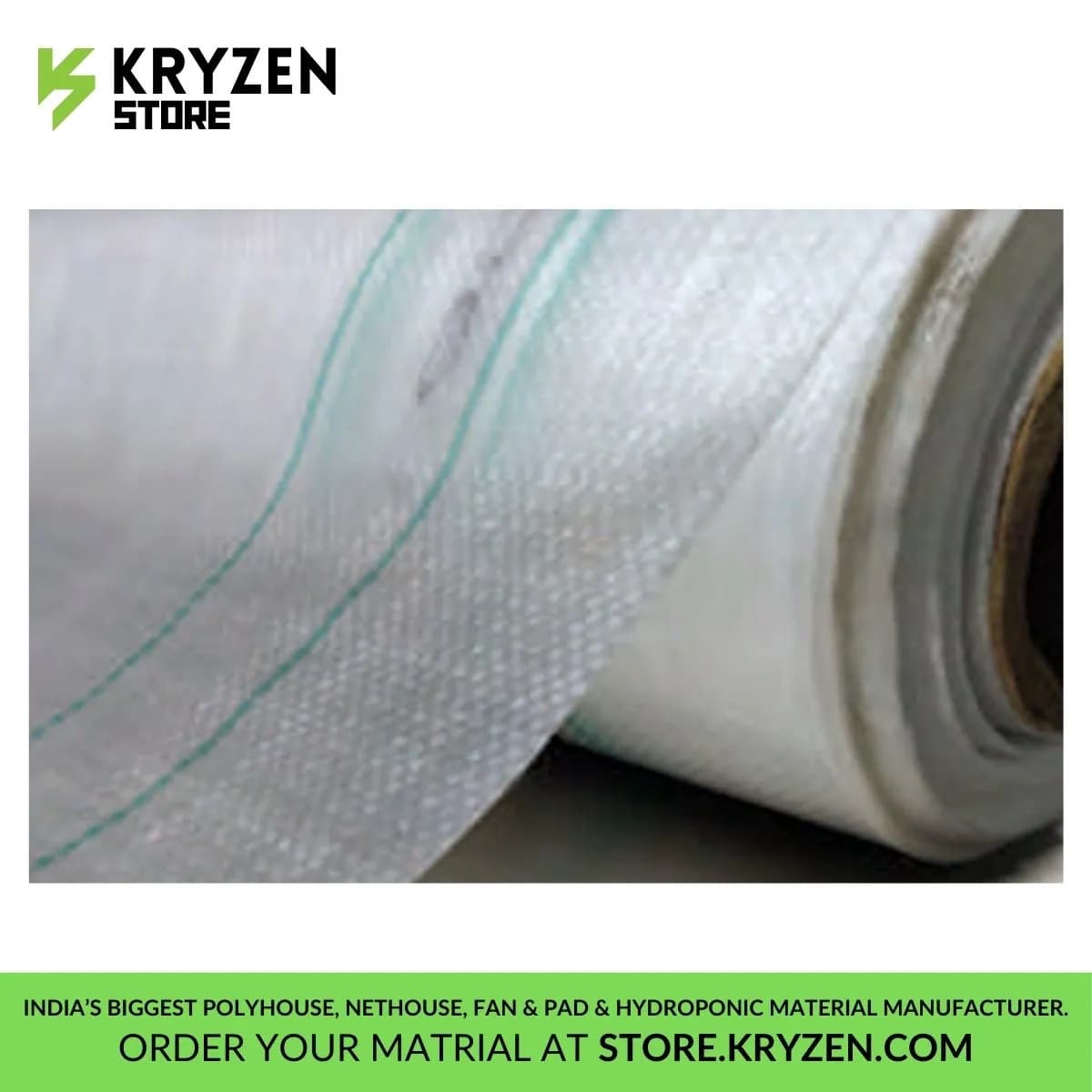
For a polyhouse cover, Polyfilm White Diffused 250 Micron (4.5 m) is ₹254 per metre + GST. White Shade Net 50% is ₹27 per metre + GST. Do not choose cover material only by its per-metre rate: the system type, intended crop protection and ability to manage rain and humidity should decide the combination.
A calendar for equipment care in this town
Before September, clear the gutters and funnels, re-seat the side skirting apron, and check film tension. This is the direct preparation for the month with about 224 mm of rain.
From June to November, run air circulation fans in the mornings, grease curtain gear units and inspect insect net for tears. This is the humid period, when stagnant damp air can contribute to fungal disease and pest pressure. Make curtain operation part of routine crop work rather than waiting for a weather event.
From November to May, tighten clamps and bolts, inspect GI springs in aluminium profiles, and order replacement film or net before the next season. This is also the stated nethouse season, making it a practical period to address damaged material.
- 1
Before September
Clear gutters and funnels, re-seat the side skirting apron and check film tension; September brings about 224 mm.
- 2
June to November
Run air circulation fans in the mornings, keep curtain gear units greased and check insect net for tears; humid air brings fungal disease and pests.
- 3
November to May
Tighten clamps and bolts, check GI springs in the aluminium profiles, and order replacement film or net before the next season.
Material checks, documentation and warranty
A structure should be assessed on the material evidence supplied with it. Polyhouse Constructions uses ISI-marked branded steel from Tata, Jindal and JSW, with in-house engineering and manufacturing. Every dispatch has a lab test certificate, and every product has a technical data sheet. The manufacturing process includes a 32-point QA checklist for every part.
For a humid coastal setting, corrosion-related checks are particularly relevant. The quality material below covers tensile testing of GI pipe steel, salt-spray testing for corrosion resistance, and chemical analysis of steel composition. The GI structure has a 15-year manufacturing warranty, polyfilm has a 2.5-year warranty, and shade and insect nets have a 3-year warranty.
The material is manufactured at Degaon on the Pune–Bangalore Highway, Tal. Wai, Satara, Maharashtra. This is not a Visakhapatnam office; material is supplied from the factory and construction is undertaken by Kryzen Biotech’s team.

Tensile test
Strength of the GI pipe steel, by a third-party lab.
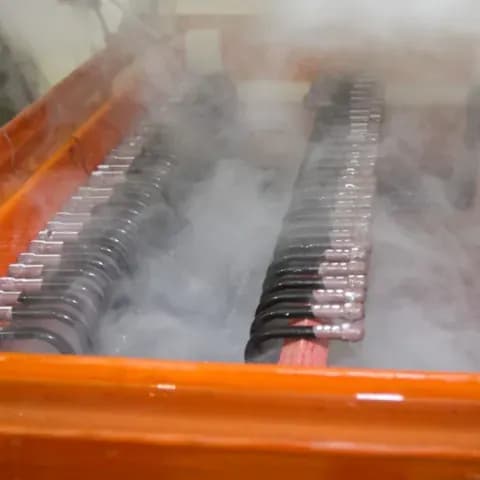
Salt spray test
Corrosion resistance; worth it in humid Visakhapatnam.
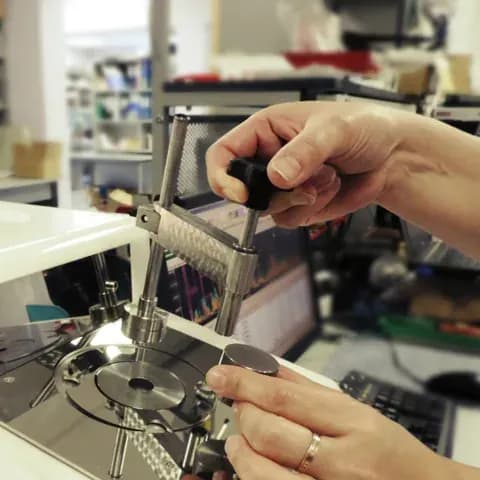
Chemical analysis
Spectrometer check of the steel composition.
| Part | Warranty |
|---|---|
| GI structure | 15 years |
| Polyfilm | 2.5 years |
| Shade and insect nets | 3 years |
Order a full kit or replace only the item that failed
A complete material kit can include GI structure, polyfilm, nets and fittings for an NVPH, fan-and-pad polyhouse, square nethouse or curved nethouse. Farmers can build the kit online and see every listed item, its quantity and the current weekly rate. Booking is with 5% advance and 95% before dispatch.
Individual items are also available for repairs, extensions and routine replacements: fans, pads, nets, gutters, curtain components and fittings can be ordered separately at the weekly rate. A 5% bulk discount applies on 10 or more units of an item. Delivery to Visakhapatnam is stated as 5 days after dispatch.
Need only a few items?
Every fan, pad, net and fitting is sold on its own at the weekly rate, for repairs and extensions.
Buy from India's biggest CEA manufacturing company
Choose your structure and size and get the complete material list, priced this week.
FAQs
Should I install a fan-and-pad polyhouse in Visakhapatnam?
It is not the recommended default here because pad cooling does not work well in this climate. Humidity runs from 78% in June to 85% in August and remains high through November, so shade, open curtains and air movement are the stated priorities.
What equipment is most important before the September rains?
Clear and inspect gutters and funnels, re-seat the side skirting apron, and check polyfilm tension before September, which averages about 224 mm of rain. GI gutters are used in NVPH and fan-and-pad systems, while the skirting apron is also used in nethouses.
How can I manage humidity inside an NVPH from June to November?
Use the roll-up curtains to keep ventilation functional, inspect side insect net for tears, and run air circulation fans in the mornings. Curtain gear should be greased during this period so it remains usable when weather changes.
What are the current prices for some key ventilation and cooling items?
The listed rates are ₹1,050 per Manual Gear Roll Up Curtain Unit, ₹221 per metre for 5.2 m side insect net, and ₹8,999 per air circulation fan, all + GST. Rates follow weekly GI and plastic prices updated every Friday, so confirm the online rate when ordering.
What warranty and test documents come with the material?
The GI structure has a 15-year manufacturing warranty, polyfilm 2.5 years, and shade and insect nets 3 years. Each dispatch includes a lab test certificate, with tensile, salt-spray and chemical-analysis checks described for the steel material.
Equipment supply near Visakhapatnam
Nearby towns on the same route, and whether pad cooling works there.
| Town | From Visakhapatnam | Pad cooling | Humid months | Hottest month |
|---|---|---|---|---|
| Equipment supplier in Anakapalle | ~30 km | Limited | 6 | May, 34°C |
| Equipment supplier in Bheemunipatnam | ~50 km | Limited | 6 | May, 33°C |
| Equipment supplier in Vizianagaram | ~70 km | Limited | 6 | Apr, 38°C |
| Equipment supplier in Narsipatnam | ~80 km | Limited | 7 | Apr, 37°C |
| Equipment supplier in Tuni | ~100 km | Limited | 7 | Apr, 38°C |
| Equipment supplier in Salur | ~120 km | Works (~33°C) | 5 | Apr, 40°C |