
Equipment · Hyderabad district, Telangana
Protected cultivation equipment for Hyderabad farms
By Editorial Team, Kryzen Biotech · Updated 13 November 2026
For Hyderabad, protected-cultivation equipment has to handle a dry, high-sun summer, then wet and humid conditions from August to October. Polyhouse Constructions supplies complete material kits and individual equipment from its Satara factory; construction and erection are done by Kryzen Biotech’s construction team.
- Pad cooling
- Works: ~31°C inside
- Humid months
- 3
- Shading need
- High
- Delivery
- ~3 days
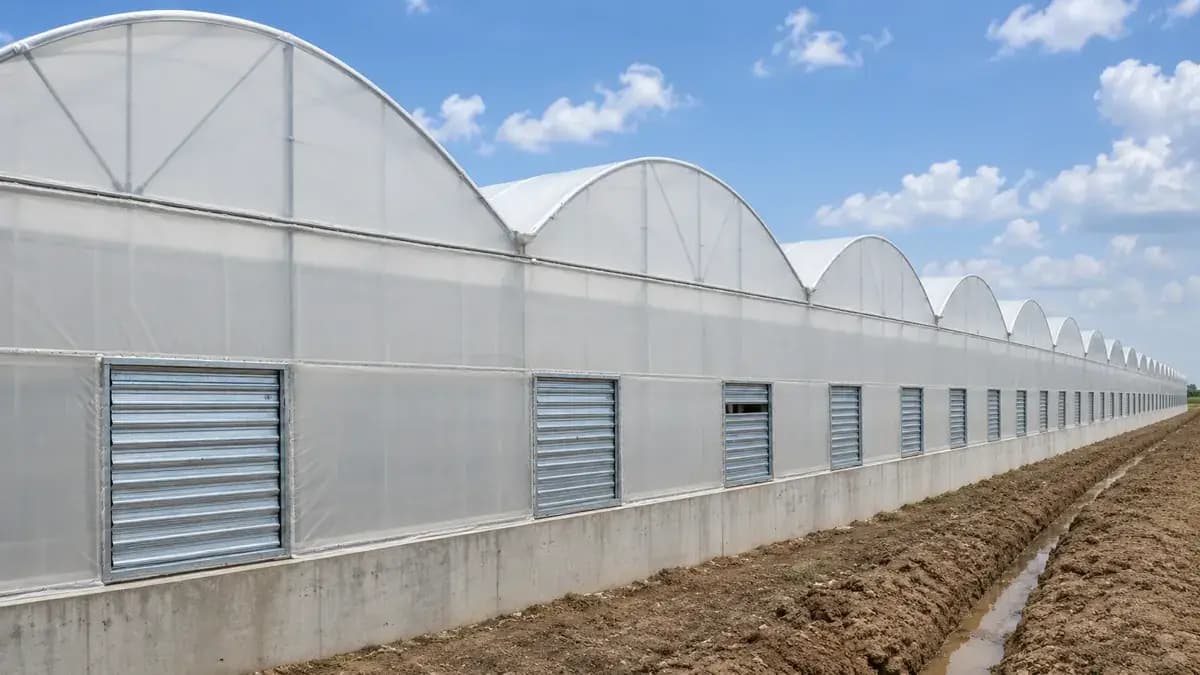
Start with Hyderabad’s heat, humidity and rain pattern
May is the key design month. Hyderabad’s average afternoon high reaches 39.9°C, with 6.7 kWh/m²/day of sun in both April and May. March is already hot at 36.8°C, while April averages 39.2°C. A crop house that relies only on a cover without planned shade, air exchange and crop-specific management can become difficult to operate through this period.
The weather changes sharply with the monsoon. Rain rises from 108 mm in June to 169 mm in July and 190 mm in August; September still receives 151 mm. Humidity is highest from August to October, averaging 80% in August, 83% in September and 78% in October. This is the period when side ventilation, insect-net condition, drainage and internal air movement deserve close attention.
Winter is comparatively dry: December has an average night low of 13.9°C and only 3 mm of rain. Hyderabad receives about 807 mm annually. The month-by-month table below is useful for matching equipment operation to the local season rather than treating every month alike.
- May: 39.9°C average afternoon high; strongest sun period.
- August–October: humid months, requiring dependable ventilation and clean insect-net openings.
- December: 13.9°C average night low; the equipment priority is not extra night heating.
| Month | Afternoon high | Night low | Humidity | Rain | Sun (kWh/m²/day) | Wind (m/s) |
|---|---|---|---|---|---|---|
| Jan | 29.1°C | 14.1°C | 53% | 7 mm | 4.9 | 1.9 |
| Feb | 32.9°C | 16.8°C | 44% | 5 mm | 5.8 | 2.1 |
| Mar | 36.8°C | 20.6°C | 37% | 20 mm | 6.2 | 2.2 |
| Apr | 39.2°C | 24.2°C | 38% | 24 mm | 6.7 | 2.2 |
| May | 39.9°C | 26.7°C | 38% | 30 mm | 6.7 | 3 |
| Jun | 33.6°C | 24.1°C | 62% | 108 mm | 5.5 | 4 |
| Jul | 30.6°C | 22.4°C | 74% | 169 mm | 4.6 | 4.2 |
| Aug | 29.3°C | 21.8°C | 80% | 190 mm | 4.6 | 3.5 |
| Sep | 28.9°C | 21.4°C | 83% | 151 mm | 4.9 | 2.3 |
| Oct | 28.7°C | 19.4°C | 78% | 86 mm | 5 | 1.8 |
| Nov | 28°C | 16.2°C | 72% | 14 mm | 4.9 | 1.8 |
| Dec | 27.6°C | 13.9°C | 62% | 3 mm | 4.7 | 1.7 |
What should be included in a Hyderabad kit?
The choice begins with the cultivation system and crop, but Hyderabad’s climate gives clear equipment priorities. A naturally ventilated polyhouse (NVPH) needs effective roof and side ventilation, roll-up curtains and insect-net protection. A fan & pad house adds forced cooling for the hottest period. Square and curved nethouses use shade net where a lighter protected structure suits the crop and season.
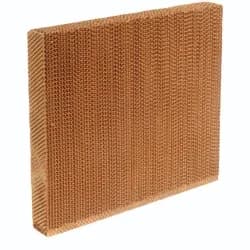
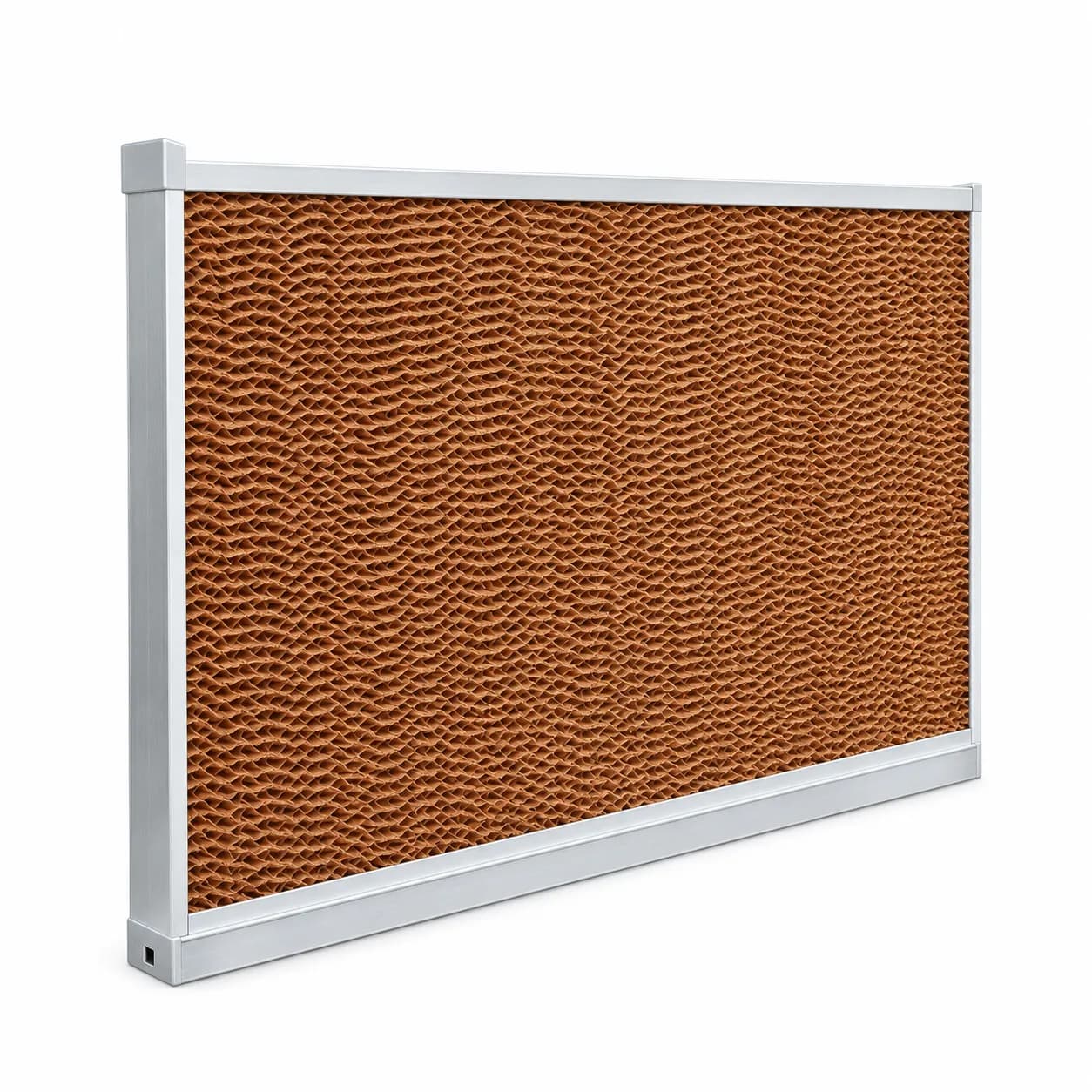
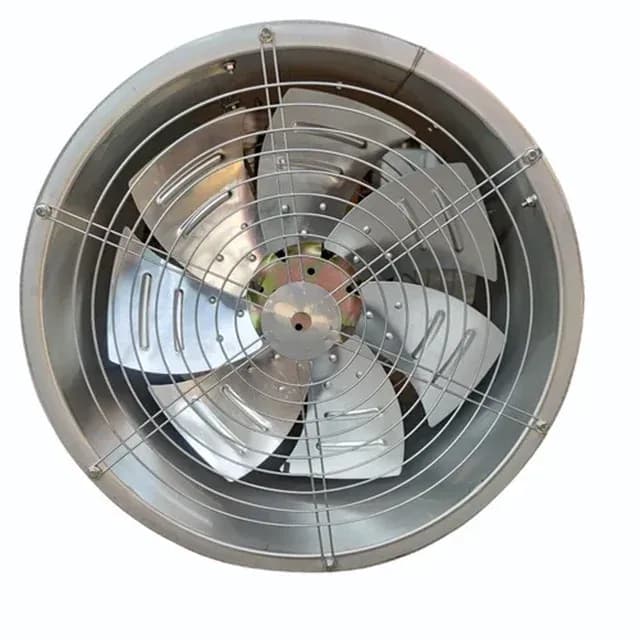
For peak summer, exhaust fans with cellulose pads are the specified cooling approach. For air movement in the humid period, roof vents and curtains are the important first measures; air-circulation fans can be added to NVPH or fan & pad houses. May’s high solar load makes aluminium shade net or a double-layer net option worth evaluating for the crop and system. Standard gutters are appropriate for the annual rainfall, while no additional night-temperature equipment is identified as a priority for this climate.
- NVPH: polyfilm, side insect net, manual curtain system, guttering and optional air-circulation fans.
- Fan & pad: polyfilm, exhaust fans, cellulose pads, pad frame, guttering and optional circulation fans.
- Nethouse: select the shade-net arrangement to suit the crop and season; Hyderabad’s stated nethouse season is October–February.
| Need | For Hyderabad | Why |
|---|---|---|
| Cooling | Exhaust fans + cellulose pads | Pads bring 40°C to ~31°C in May |
| Air movement | Roof vent + curtains | Humid from August to October |
| Shading | Aluminium or double-layer net | Sun peaks at 6.7 kWh/m² in May |
| Rain | Standard gutters | 807 mm a year |
| Nights | No extra need | — |
Does fan & pad cooling make sense in Hyderabad?
Yes, fan & pad cooling works in Hyderabad because the April–May conditions are hot and relatively dry. The equipment priority table indicates that pads can bring approximately 40°C outside conditions to about 31°C inside in May. That temperature difference is why fan & pad is worth considering where the crop, production plan and budget require more summer control than a naturally ventilated house can provide.
Whether it pays for an individual farm cannot be decided from temperature alone. Compare the crop calendar, expected market window, power requirement, water availability for the pads and the cost of the complete system. Hyderabad district price history shows, for example, tomato’s highest recorded month in the supplied data as December at ₹2,405/q, cucumber’s as December at ₹2,338/q, and green chilli’s as October at ₹4,092/q. These are past modal prices, not assured future prices.
For a sizing reference only, the fan & pad figures below are for a 52 × 76 m house, or 3,952 m²: 12 exhaust fans and 82 cellulose pads. The listed material including GST for that reference is ₹32,48,775. A farm should use a design made for its chosen house and crop rather than apply this example to a different area.
- Exhaust Fan: ₹22,700 per piece + GST.
- Cellulose Pad (600X150X1800): ₹2,616 per piece + GST.
- Aluminium Pad Frame (150 mm): ₹815 per metre + GST.
- Air Circulation Fan: ₹8,999 per piece + GST; an optional upgrade in NVPH and fan & pad houses.
Ventilation and cover decisions for the wet months
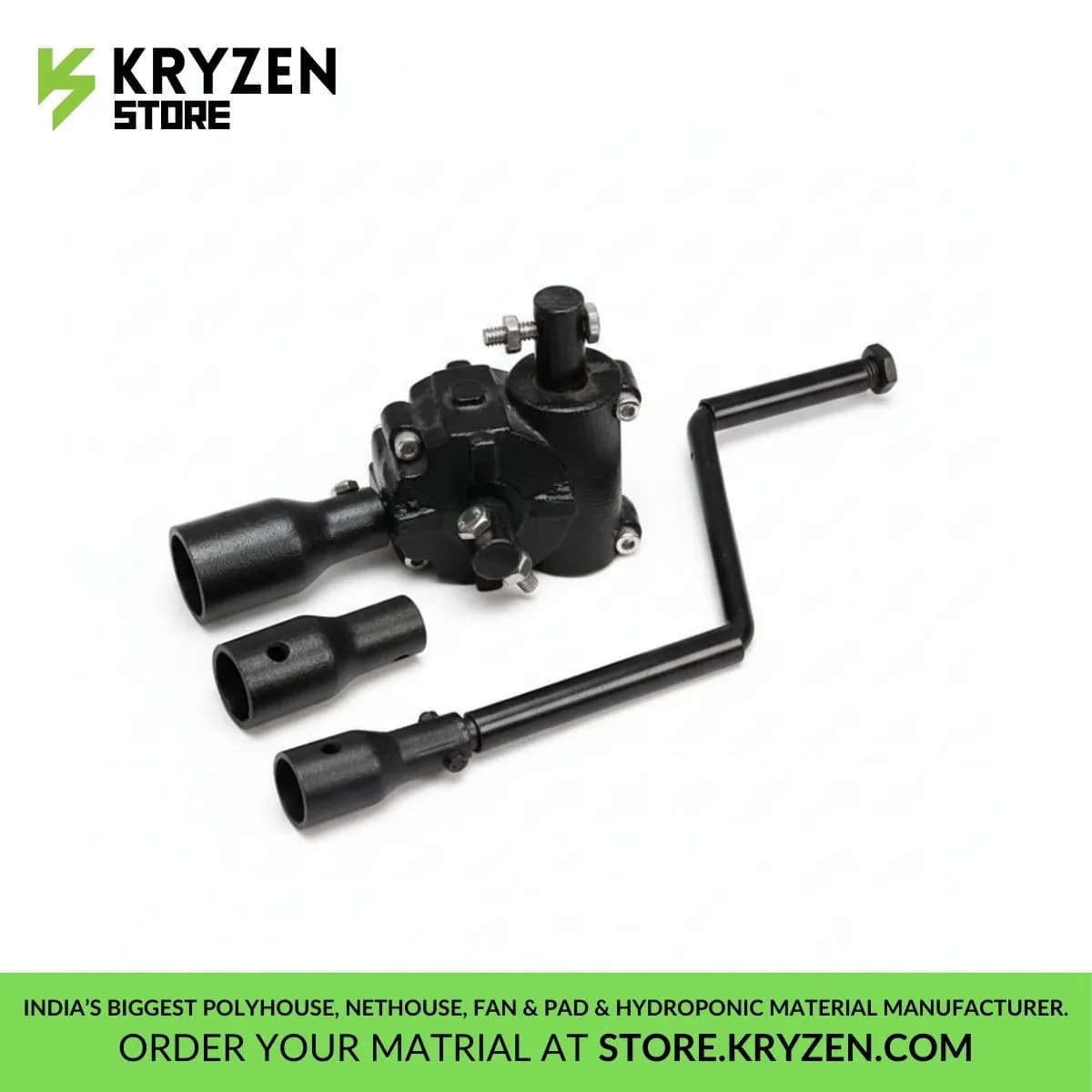
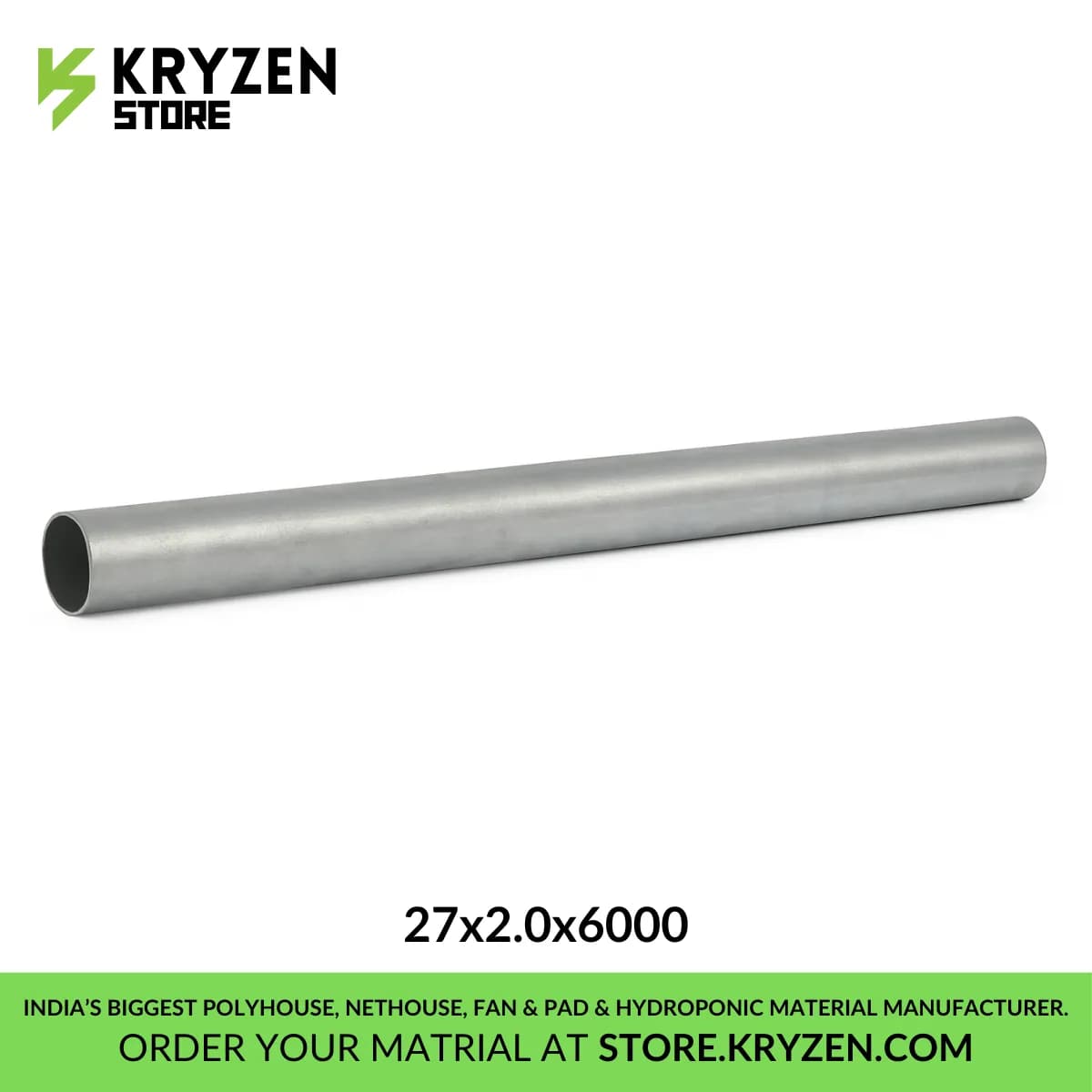
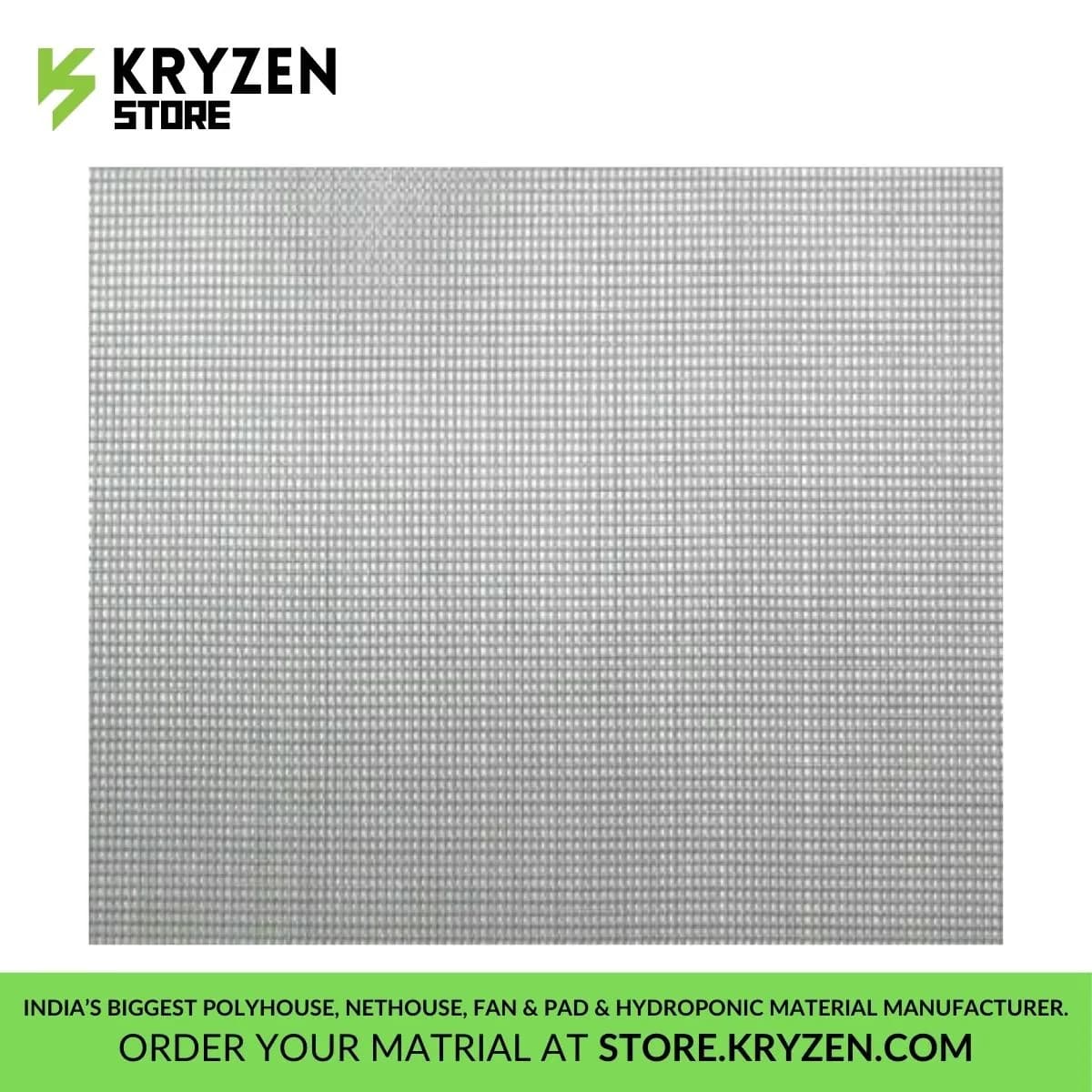
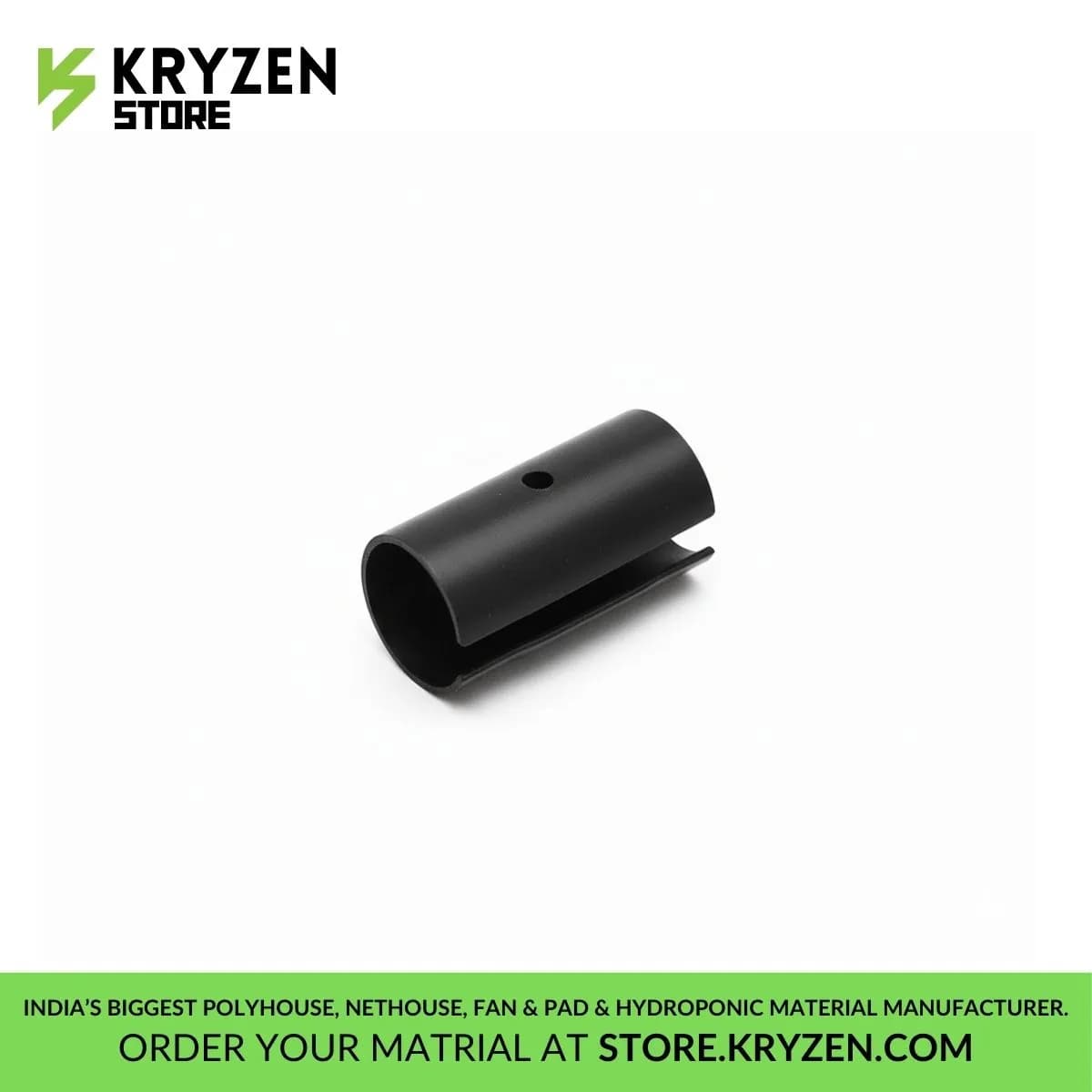
From June onward, rain and humidity replace peak dry heat as the operating concern. In an NVPH, open and close the side curtains according to the weather while maintaining protected openings through side insect net. The manual gear roll-up curtain unit is ₹1,050 per piece + GST, the Curtain Pipe (27X2.0X6000) is ₹758 per piece + GST, the Side Insect Net (5.2 m) is ₹221 per metre + GST, and the Curtain Clamp 0.75-inch is ₹11 per piece + GST.
For covered polyhouses, Polyhouse Constructions supplies UV-stabilised 250-micron white diffused polyfilm. The Polyfilm White Diffused 250 Micron (4.5 m) is listed at ₹254 per metre + GST. White Shade Net 50% is ₹27 per metre + GST; aluminium shade net (4 m), a reflective shading option for strong sun, is ₹315 per metre + GST. These prices follow weekly GI and plastic rates, which are updated every Friday, so confirm the current week’s rate when building the kit online.
Do not treat insect net as a fit-and-forget item. In Hyderabad’s August–October humidity, tears or loose curtain edges reduce insect exclusion and make crop-house management harder. Check nets, clamps and curtain travel before this season.
Rain handling is a practical part of the structure
The 807 mm annual rainfall is not extreme by itself, but Hyderabad’s rain is concentrated in June to September. August alone averages 190 mm and September 151 mm. Gutters therefore need to be considered along with cover, side skirting and the site’s water-outlet arrangement; they are not merely finishing accessories.
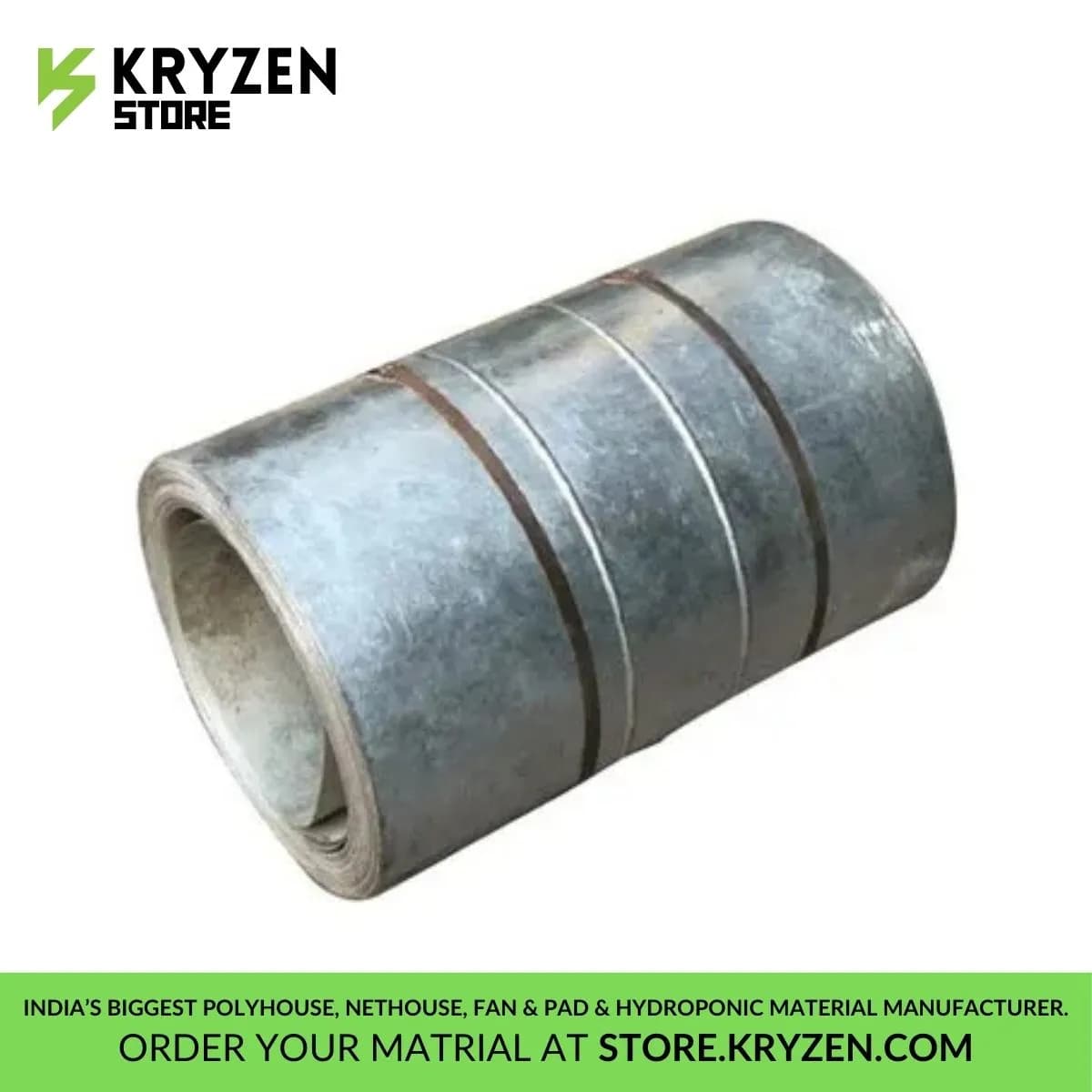
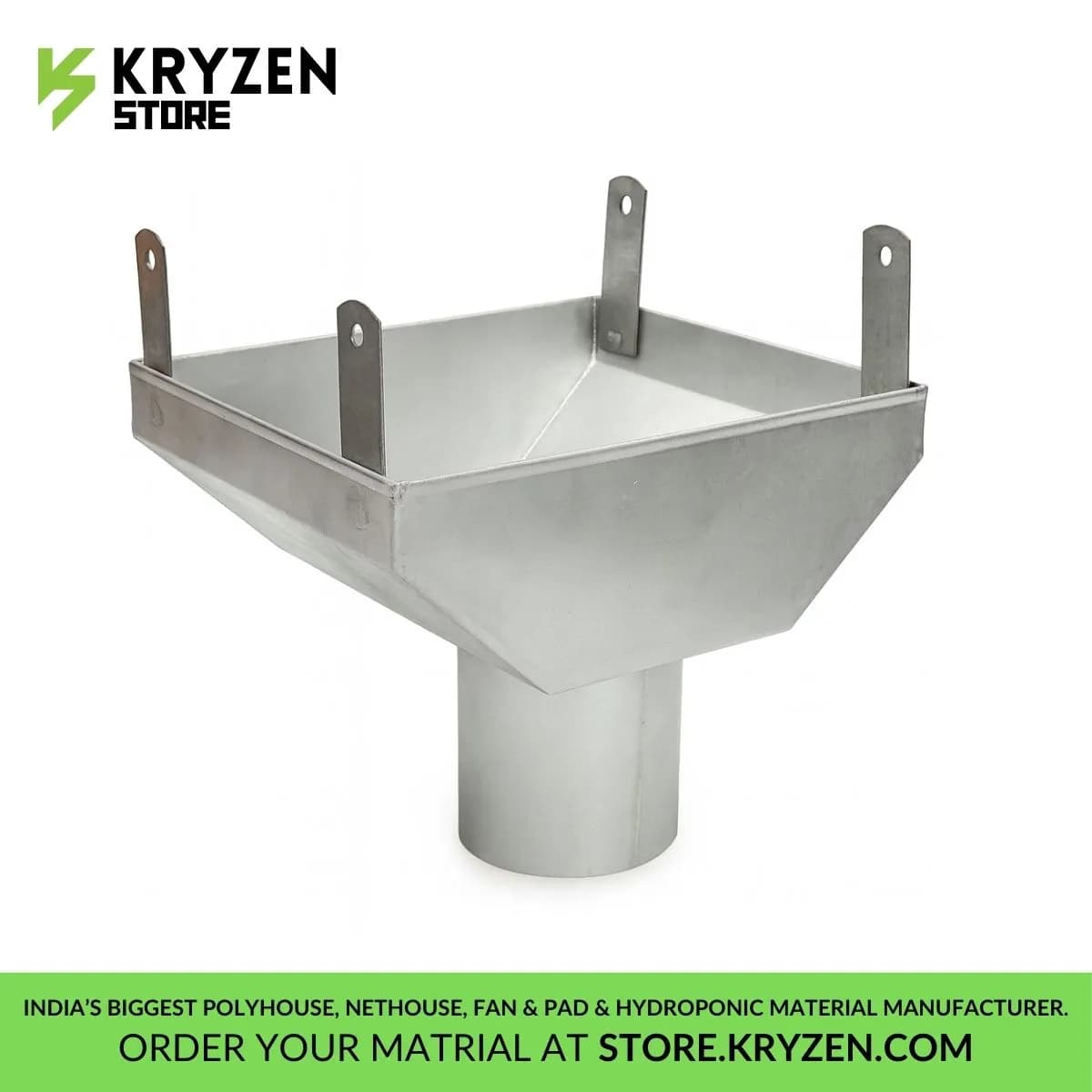
The material list includes GI Gutter Sheet at ₹335 per metre + GST, Gutter Funnel at ₹1,350 per piece + GST, and Side Skirting Apron (1.5 m) at ₹64 per metre + GST. GI gutter sheets and funnels are used in NVPH and fan & pad houses. The side skirting apron is used across NVPH, fan & pad, square nethouse and curved nethouse systems.

Plan crop windows with Hyderabad market information
Equipment creates a managed growing environment; it does not guarantee a market price. Before choosing a cooling-intensive crop or an October–February nethouse cycle, check the expected harvest window against the Hyderabad district market pattern and your buyer route. Markets in the district data include Gudimalkapur APMC, Bowenpally APMC, L B Nagar APMC, Gaddiannaram APMC, Hyderabad (F&V) APMC, Rythu Bazar Mehdipatnam and Rythu Bazar Erragadda.
The supplied two-year district data covers 15 markets for beans, brinjal, green chilli, cabbage, tomato and bitter gourd. Beans had an average modal price of ₹3,697/q and a recorded high of ₹4,950 in December. Bitter gourd averaged ₹2,841/q, also with its recorded high in December at ₹4,123. Brinjal’s recorded high was ₹2,220 in November. Use such patterns as a planning input, while remembering that the data is historical and market prices move.
- Tomato: average modal price ₹1,490/q; recorded high ₹2,405 in December and low ₹656 in February.
- Cucumber: average modal price ₹1,552/q; recorded high ₹2,338 in December and low ₹1,092 in April.
- Okra: average modal price ₹2,254/q; recorded high ₹3,788 in December and low ₹1,592 in April.
| Crop | Markets | Average modal price | Highest month | Lowest month |
|---|---|---|---|---|
| Beans | 15 | ₹3,697/q | Dec (₹4,950) | Jan (₹2,392) |
| Brinjal | 15 | ₹1,670/q | Nov (₹2,220) | Apr (₹1,060) |
| Green chilli | 15 | ₹3,104/q | Oct (₹4,092) | Apr (₹2,332) |
| Cabbage | 15 | ₹1,029/q | Dec (₹1,549) | Mar (₹613) |
| Tomato | 15 | ₹1,490/q | Dec (₹2,405) | Feb (₹656) |
| Bitter gourd | 15 | ₹2,841/q | Dec (₹4,123) | Apr (₹2,475) |
| Cauliflower | 14 | ₹1,769/q | Jun (₹2,232) | Jan (₹1,195) |
| Bottle gourd | 14 | ₹629/q | Oct (₹901) | Apr (₹477) |
| Cucumber | 14 | ₹1,552/q | Dec (₹2,338) | Apr (₹1,092) |
| Okra (bhindi) | 12 | ₹2,254/q | Dec (₹3,788) | Apr (₹1,592) |
A Hyderabad care calendar for equipment
Before May, prepare cooling equipment rather than waiting for the first very hot week. Wash or replace cellulose pads, clean the pad gutter and filter, and inspect every exhaust-fan belt and shutter before the 40°C peak. This is also the time to review the shading arrangement because April and May have the strongest average sun levels.
From August to October, run air-circulation fans in the mornings where they are installed. Keep curtain gear units greased and inspect insect nets for tears. The local humidity averages 80% in August, 83% in September and 78% in October, making regular inspection more important than it is in the dry months.
In the October–February nethouse season, tighten clamps and bolts, inspect GI springs in aluminium profiles, and arrange replacement film or net before the following season. Ordering planned replacements early avoids a rushed repair when summer arrives.
- 1
Before May
Wash or replace cellulose pads, clean the pad gutter and filter, and check every exhaust fan belt and shutter before the 40°C peak.
- 2
August to October
Run air circulation fans in the mornings, keep curtain gear units greased and check insect net for tears; humid air brings fungal disease and pests.
- 3
October to February
Tighten clamps and bolts, check GI springs in the aluminium profiles, and order replacement film or net before the next season.
Material quality, warranty and traceability
A protected structure should be assessed as an engineered material package, not only by pipe weight or an initial quote. Polyhouse Constructions uses ISI-marked GI pipes made from branded steel from Tata, Jindal and JSW. Its in-house engineering and manufacturing process includes a 32-point QA checklist, a technical data sheet for every product and lab test certificates with dispatch.
The supplied quality documentation covers tensile testing for GI pipe steel strength, salt-spray testing for corrosion resistance and chemical analysis through a spectrometer check of steel composition. Salt-spray resistance is relevant for a humid season such as Hyderabad’s August–October period.
Warranty is 15 years for the GI structure, 2.5 years for polyfilm and 3 years for shade and insect nets. Complete kits can include GI structure, polyfilm, nets and fittings for NVPH, fan & pad polyhouses, square nethouses or curved nethouses.

Tensile test
Strength of the GI pipe steel, by a third-party lab.
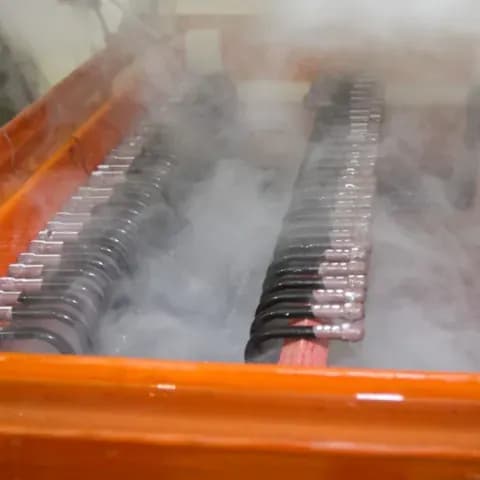
Salt spray test
Corrosion resistance; worth it in humid Hyderabad.
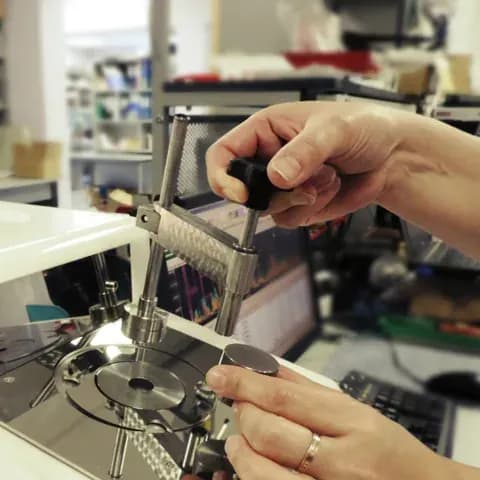
Chemical analysis
Spectrometer check of the steel composition.
| Part | Warranty |
|---|---|
| GI structure | 15 years |
| Polyfilm | 2.5 years |
| Shade and insect nets | 3 years |
Ordering individual parts and getting them to Hyderabad
Farmers can build a complete kit online at polyhouseconstructions.com and see each item, quantity and the week’s rate. Equipment is also sold individually, which is useful for repairs, extensions or replacement of a fan, pad, net or fitting. A 5% bulk discount applies on 10 or more units of an item.
Material is manufactured at the Degaon factory on the Pune–Bangalore Highway, Tal. Wai, Satara, Maharashtra, and supplied to Hyderabad; this is not a Hyderabad office. Hyderabad is 630 km from the factory, and stated delivery is 3 days after dispatch. Booking is with 5% advance and 95% before dispatch. For erection, Kryzen Biotech’s construction team performs the construction work.
For growers also comparing nearby options, Secunderabad is the other town listed within Hyderabad district.
Need only a few items?
Every fan, pad, net and fitting is sold on its own at the weekly rate, for repairs and extensions.
Buy from India's biggest CEA manufacturing company
Choose your structure and size and get the complete material list, priced this week.
FAQs
Which protected-cultivation system is suitable for Hyderabad’s May heat?
For higher summer temperature control, fan & pad cooling is the relevant system: Hyderabad reaches an average 39.9°C afternoon high in May, and pads can bring about 40°C conditions to approximately 31°C inside. An NVPH can use ventilation, curtains, shade and optional air-circulation fans, but its suitability depends on the crop and production plan.
What equipment should I service before summer?
Before May, wash or replace cellulose pads, clean the pad gutter and filter, and check exhaust-fan belts and shutters. Review the shading arrangement as well, since April and May each average 6.7 kWh/m²/day of sun.
How should I manage a polyhouse during Hyderabad’s humid months?
August through October is the humid period, with humidity averaging 80%, 83% and 78% respectively. Run installed circulation fans in the mornings, grease curtain gear units, and inspect insect nets for tears while maintaining ventilation.
What are the warranties on the structure, film and nets?
The GI structure has a 15-year manufacturing warranty. Polyfilm has a 2.5-year warranty, while shade and insect nets have a 3-year warranty.
Can I buy only replacement fans, pads, nets or fittings in Hyderabad?
Yes. Every fan, pad, net and fitting is sold individually at the weekly rate for repairs and extensions, in addition to complete material kits. Rates are updated every Friday, and the stated delivery time to Hyderabad is 3 days after dispatch.
Equipment supply near Hyderabad
Nearby towns on the same route, and whether pad cooling works there.
| Town | From Hyderabad | Pad cooling | Humid months | Hottest month |
|---|---|---|---|---|
| Equipment supplier in Secunderabad | ~10 km | Works (~31°C) | 3 | May, 40°C |
| Equipment supplier in Bhongir | ~60 km | Works (~31°C) | 3 | May, 40°C |
| Equipment supplier in Farooqnagar | ~60 km | Works (~30°C) | 4 | May, 39°C |
| Equipment supplier in Sangareddy | ~60 km | Works (~30°C) | 4 | May, 40°C |
| Equipment supplier in Sadasivpet | ~80 km | Works (~30°C) | 4 | May, 40°C |
| Equipment supplier in Vikarabad | ~80 km | Works (~30°C) | 4 | May, 40°C |