
NVPH materials · Panchkula district, Haryana
Naturally Ventilated Polyhouse Materials Seller in Panchkula
By Editorial Team, Kryzen Biotech · Updated 12 November 2026
We sell the complete NVPH material kit to growers in Panchkula straight from our Satara factory: the GI frame cut and drilled to drawing, 250-micron diffused film, side insect net, curtains with gear units, gutters and every fitting. Below is the live list and price, and what Panchkula's weather changes in it.
- Hottest month
- May, ~40°C
- Humid (75%+)
- Rarely
- NVPH material, 1 acre
- ₹734/m²
- Delivery
- ~6 days

How natural ventilation copes with Panchkula's weather
In May the air is dry enough (25% humidity) for an NVPH to vent well, but afternoons of 40°C are hard on leafy crops. Most growers here run an NVPH for capsicum, cucumber and flowers and add shade net in peak summer; for greens through May, compare with a fan and pad house below.
| Measure | Panchkula | Haryana average (37 towns) | What it means for the NVPH |
|---|---|---|---|
| Hottest-month high | 40°C (May) | 42.3°C | 2.3°C cooler than the state average |
| Humidity in that month | 25% | 24% | Dry air vents easily |
| Rain a year | 1,054 mm | 698 mm | 356 mm more than the state average |
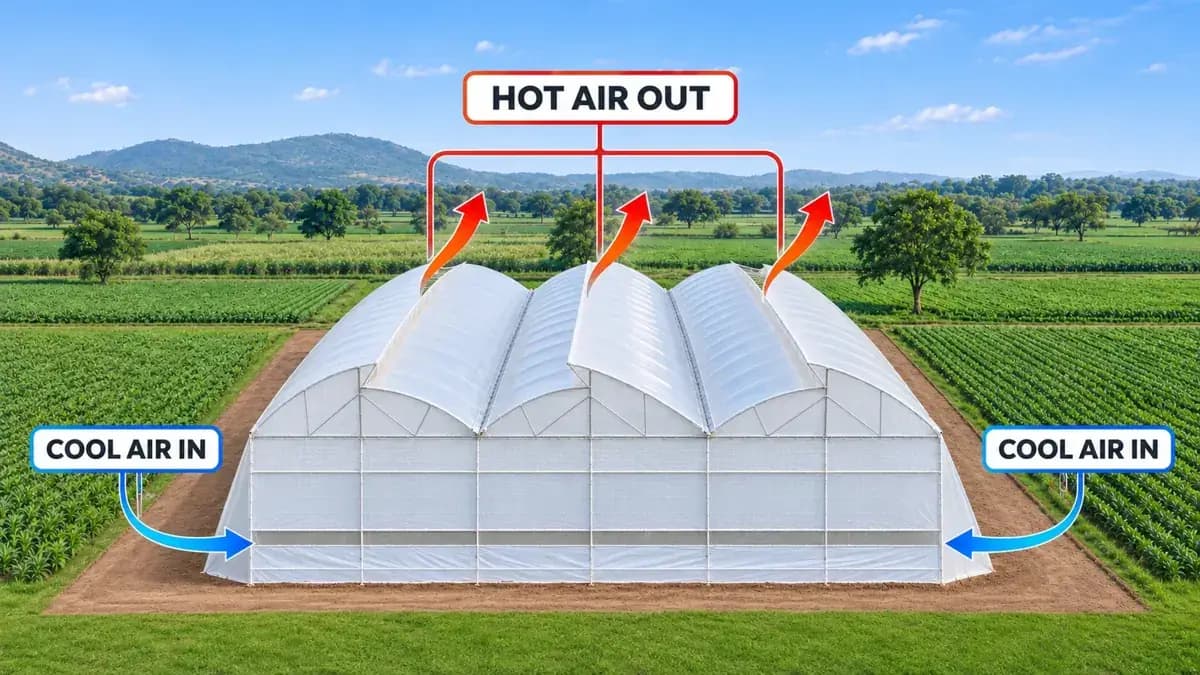
NVPH material list: 20 × 24 m in Panchkula
To make it concrete, here is the material for a 20 × 24 m NVPH (480 m²), a common size for growers around Panchkula. Each item links to its product page with specifications and this week's rate.
| Group | Item | Quantity | Weight |
|---|---|---|---|
| GI structure | Side Hockey (60X2.0X5500) | 22 nos | 378 kg |
| GI structure | Small Column (76X2.0X4500) | 18 nos | 305 kg |
| GI structure | Big Bottom (60X2.0X8000) | 8 nos | 200 kg |
| GI structure | Hockey Runner (42X2.0X4000) | 18 nos | 150 kg |
| GI structure | Big Arc (42X2.0X5200) | 12 nos | 130 kg |
| Film & nets | Polyfilm White Diffused 250 Micron (4.5 m) | 158 mtr | — |
| Film & nets | Polyfilm White Diffused 250 Micron (5.5 m) | 73 mtr | — |
| Film & nets | Side Insect Net (5.2 m) | 90 mtr | — |
| Film & nets | Side Skirting Apron (1.5 m) | 90 mtr | — |
| Film & nets | White Shade Net 50% | 80 mtr | — |
| Fittings & accessories | Aluminium Profile | 500 mtr | — |
| Fittings & accessories | GI Spring | 900 mtr | — |
| Fittings & accessories | Manual Gear Roll Up Curtain Unit | 4 nos | — |
| Fittings & accessories | Fibre Door | 2 nos | — |
| Fittings & accessories | F Bracket | 24 nos | — |
Local market prices for polyhouse crops near Panchkula
Across 9 mandis in Panchkula district, 8 polyhouse and nethouse crops trade regularly. Tomato has the most arrivals; Cauliflower has the widest price swing (437%), peaking in September.
| Crop | Markets | Average | Highest month | Lowest month | Swing |
|---|---|---|---|---|---|
| Tomato | 9 | ₹2,085/q | Dec · ₹2,775 | Mar · ₹1,431 | 94% |
| Cauliflower | 5 | ₹2,164/q | Sep · ₹3,704 | Feb · ₹690 | 437% |
| Brinjal | 7 | ₹1,487/q | Sep · ₹1,682 | Jan · ₹1,365 | 23% |
| Bottle gourd | 5 | ₹1,334/q | Jul · ₹1,649 | Apr · ₹1,039 | 59% |
| Okra (bhindi) | 6 | ₹2,488/q | Mar · ₹4,667 | Jun · ₹1,825 | 156% |
| Cucumber | 5 | ₹1,657/q | Oct · ₹1,920 | Mar · ₹1,456 | 32% |
| Capsicum | 5 | ₹1,879/q | Nov · ₹2,274 | Feb · ₹1,558 | 46% |
| Green chilli | 5 | ₹2,676/q | Nov · ₹2,963 | Jun · ₹2,100 | 41% |
Timing your crop for the Panchkula market
Working back from the month each crop sells highest locally, with typical days from transplanting to first harvest under cover. For example, tomato peaks in December; at about 75 days to first harvest, transplant in September.
| Crop | Sells best | Days to first harvest | Transplant / sow in | Avoid harvesting in |
|---|---|---|---|---|
| Tomato | Aug, Nov, Dec | ~75 | September | Mar |
| Cauliflower | Aug, Sep | ~75 | June | Feb |
| Brinjal | Jul, Aug, Sep, Oct | ~60 | July | Jan |
| Bottle gourd | Mar, Jul | ~55 | May | Apr |
| Okra (bhindi) | Mar | ~45 | January | Jun |
| Cucumber | Jul, Aug, Sep, Oct, Nov | ~40 | August | Mar |
| Capsicum | Aug, Sep, Oct, Nov, Dec | ~90 | August | Feb |
| Green chilli | Feb, Mar, Apr, Jul, Aug, Sep, Oct, Nov, Dec | ~75 | August | Jun |
Panchkula's weather, month by month
May is the hottest month, with afternoons around 40.4°C; January nights drop to about 6.7°C. July is the wettest (279 mm of 1,054 mm a year), and humidity stays at 75% or more for 1 month. The mildest growing months, with afternoons of 20–32°C and little rain, are Feb, Mar, Oct, Nov, Dec.
| Month | Afternoon high | Night low | Humidity | Rain | Sun (kWh/m²/day) | Wind (m/s) |
|---|---|---|---|---|---|---|
| Jan | 19.6°C | 6.7°C | 45% | 35 mm | 3.2 | 1.8 |
| Feb | 23.1°C | 9.5°C | 45% | 39 mm | 4.3 | 2 |
| Mar | 29.2°C | 14.4°C | 38% | 36 mm | 5.7 | 2.2 |
| Apr | 35.9°C | 20.5°C | 29% | 27 mm | 6.6 | 2.3 |
| May | 40.4°C | 25.5°C | 25% | 39 mm | 7.3 | 2.4 |
| Jun | 40.1°C | 27.6°C | 38% | 136 mm | 6.7 | 2.2 |
| Jul | 35°C | 26.3°C | 66% | 279 mm | 5.6 | 1.8 |
| Aug | 32.2°C | 24.9°C | 77% | 277 mm | 5.4 | 1.5 |
| Sep | 31.3°C | 22.2°C | 72% | 157 mm | 5.5 | 1.4 |
| Oct | 29.9°C | 17.5°C | 52% | 12 mm | 5.2 | 1.5 |
| Nov | 25.5°C | 12.5°C | 43% | 6 mm | 4.1 | 1.7 |
| Dec | 21.2°C | 8.3°C | 42% | 11 mm | 3.3 | 1.7 |
What NVPH material costs this week
| Size | Span × bay | Area | Material incl. GST | Per m² |
|---|---|---|---|---|
| Small | 20 × 24 m | 480 m² | ₹4,68,814 | ₹977 |
| Medium | 28 × 36 m | 1,008 m² | ₹8,59,963 | ₹853 |
| About 1 acre | 52 × 76 m | 3,952 m² | ₹28,99,897 | ₹734 |
Price your own size for Panchkula
Choose span and bay and get the full list with quantities, weights and rates in a minute.
Changes we would make for Panchkula
The standard kit suits most of India. For Panchkula's weather we would adjust a few items — here is the standard choice, what we would pick instead, and why.
| Part | Standard kit | For Panchkula | Why |
|---|---|---|---|
| Roof film | 250-micron white diffused polyfilm | Keep | Spreads May's 7.3 kWh/m²/day of sunlight evenly |
| Shade net | White 50% | Aluminium Shade Net (4 m) | Reflects heat back out at 40°C |
| Second net layer | None | Add (double layer) | Open or close it by the season with ropes and pulleys |
| Air circulation | Roof vent + curtains | Keep | Natural airflow is enough |
| Doors | FRP (fibre) doors | Keep FRP | FRP lasts well in this climate |
| Gutters | GI gutter sheet + funnels | Keep | July brings ~279 mm; clean before June |
| Entry cabin | Optional | Optional | A double door keeps whitefly and thrips out when people walk in |
A season-by-season NVPH plan for Panchkula
| Month | Jan | Feb | Mar | Apr | May | Jun | Jul | Aug | Sep | Oct | Nov | Dec | Detail |
|---|---|---|---|---|---|---|---|---|---|---|---|---|---|
| Peak heat | ~40°C highs | ||||||||||||
| Strongest sun | 7.3 kWh/m²/day | ||||||||||||
| Wettest month | ~279 mm |
- 1
Before July
Clear gutters and funnels, check the film for tears and tighten the GI springs. July brings about 279 mm, the heaviest rain of the year.
- 2
May
Peak heat, about 40°C. Roll the curtains fully up, close the shade net or second layer over the crop, and irrigate early in the day.
Crops for an NVPH in Panchkula
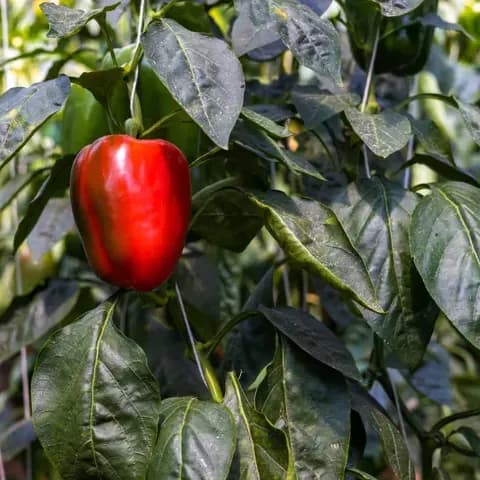
Coloured capsicum
NVPHGrow under shade net through May, when highs reach 40°C.
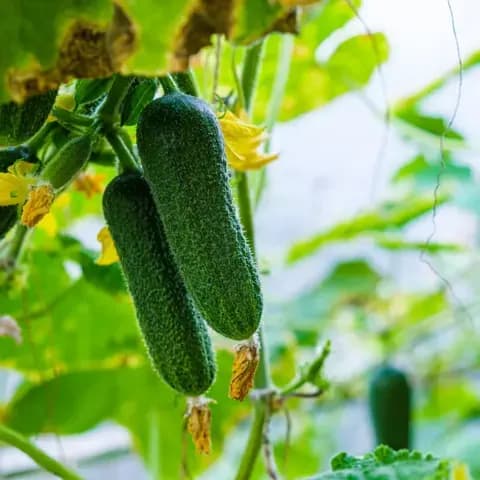
Cucumber (parthenocarpic)
NVPHFast 3–4 month crop; drip irrigation keeps it going in dry spells.

Gerbera and rose
NVPHCut flowers with year-round demand from city florists and events.
NVPH or fan & pad in Panchkula?
Panchkula is one of the towns where a fan and pad house can earn its running cost: dry May air lets wet pads take 40°C down to about 29°C. Choose it only if you grow crops that need that cooling.
| Naturally ventilated | Fan & pad | |
|---|---|---|
| Cooling | Roof vent and side curtains (no power) | Exhaust fans and wet pads, ~29°C inside in May |
| Running cost | None for cooling | Electricity for fans and a pump |
| Material price, 1 acre | ₹28,99,897 (₹734/m²) | ₹32,48,775 (₹822/m²) |
| Suits in Panchkula | Capsicum, cucumber, tomato, flowers | Leafy greens and crops needing tight control in summer |
Subsidy and delivery
NVPHs qualify for 50% assistance on the government cost norm under MIDH, and larger commercial projects can apply to the National Horticulture Board.
Subsidy for a project in Panchkula
Which scheme fits your size, a worked example and the steps to apply.
From our Satara factory to Panchkula is about 1,880 km by road, so a dispatched load normally arrives in about 6 days. Each vehicle is insured for the full invoice value and carries the lab certificates for your order.
Across Panchkula district
Among the 37 towns we supply in Haryana, Panchkula ranks 36th for summer heat and 4th for yearly rain. Other Panchkula district towns on our list:
Buy from India's biggest CEA manufacturing company
Choose your structure and size and get the complete material list, priced this week.
FAQs
Is a naturally ventilated polyhouse enough for Panchkula's summer?
For capsicum, cucumber, tomato and flowers, yes, with shade net in May. For leafy greens through May (40°C), a fan and pad house cools better because the air is dry.
What does NVPH material cost in Panchkula?
This week about ₹734 per m² for an acre-sized house (₹28,99,897 incl. GST, material only, ex-factory). Smaller houses cost more per m². Freight and erection are extra.
How long does delivery to Panchkula take?
About 1,880 km by road from our Satara factory, so usually in about 6 days after dispatch.
Which steel is used?
ISI-marked GI pipes from Tata, Jindal or JSW steel, with a 15-year manufacturing warranty on the structure, 2.5 years on polyfilm and 3 years on nets.
Do I need an entry cabin in Panchkula?
It is optional here, but it is cheap insurance against pests coming in with people.
Can I buy only the film or nets for an existing NVPH?
Yes. Film, nets, curtains and every fitting are sold individually on our Buy individual items page, at the same weekly rates.
NVPH materials near Panchkula
Neighbouring towns on the same delivery route, and how their summers compare.
| Town | From Panchkula | Hottest month | Humid months | Suits |
|---|---|---|---|---|
| NVPH materials in Chandigarh | ~10 km | May, 40°C | 0 | NVPH + fan & pad |
| NVPH materials in Zirakpur | ~10 km | May, 40°C | 0 | NVPH + fan & pad |
| NVPH materials in Pinjore | ~20 km | May, 38°C | 0 | NVPH + fan & pad |
| NVPH materials in Mohali | ~20 km | May, 40°C | 0 | NVPH + fan & pad |
| NVPH materials in Kharar | ~30 km | May, 40°C | 0 | NVPH + fan & pad |
| NVPH materials in Solan | ~40 km | May, 32°C | 0 | NVPH |